Global financial markets experienced sharp volatility as oil prices surged past $100 per barrel during escalating geopolitical tensions, raising fears of a possible energy crisis. Investors reacted cautiously as disruptions to oil supplies threatened to affect both global growth and inflation.
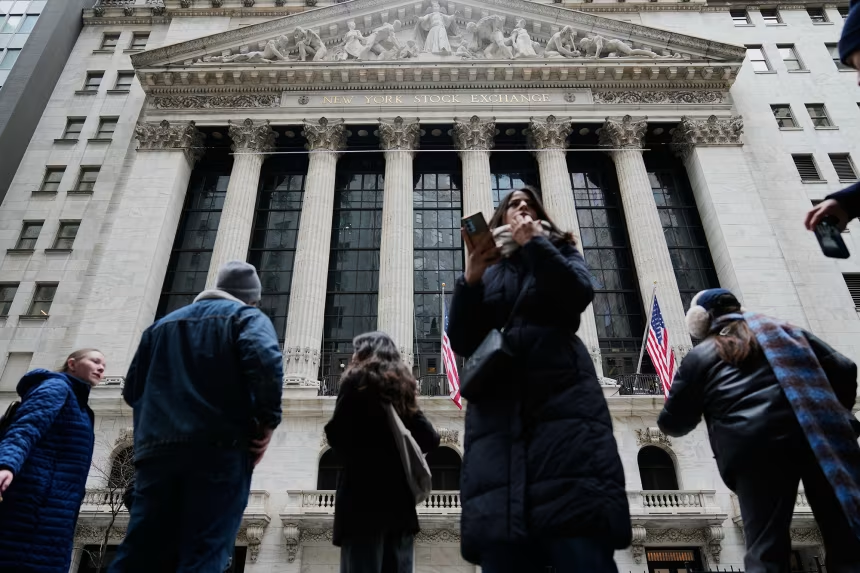
Major U.S. stock indexes initially dropped significantly before recovering part of their losses during the trading session. The Dow Jones Industrial Average declined by roughly 375 points, or about 0.8%, while the broader S&P 500 slipped approximately 0.4%. The technology-focused Nasdaq Composite posted a smaller drop of around 0.1%, recovering from steeper declines earlier in the day.
At the same time, crude oil markets experienced dramatic swings. U.S. crude climbed to nearly $120 per barrel during overnight trading before retreating to about $93 per barrel later in the session. Brent crude, the international benchmark tracked by the Intercontinental Exchange, rose to approximately $96.82 per barrel after briefly approaching the same $120 level.
These prices represent the highest levels since mid-2022, when global markets were shaken by disruptions linked to the war in Ukraine.
Energy supply fears push oil to multi-year highs
The surge in energy prices reflects mounting anxiety about supply disruptions in the Middle East. Several oil producers in the Persian Gulf have reported operational interruptions, while shipping routes near Iran have faced increased uncertainty.
Energy analysts point in particular to the strategic importance of the Strait of Hormuz, a narrow maritime corridor that handles a large portion of the world’s oil shipments. According to estimates from the U.S. Energy Information Administration, roughly one-fifth of global oil consumption passes through this critical passage.
Any disruption to traffic through the strait has the potential to trigger major price spikes across global energy markets. Traders responded quickly as concerns grew that military tensions could restrict shipping access.
Oil prices had already been rising sharply the previous week, with U.S. crude gaining about 36% and Brent crude climbing roughly 27% over several days. The rally accelerated when markets reopened Sunday evening, reflecting renewed fears about supply shortages.
Energy companies, refiners, and shipping firms across multiple continents are now closely monitoring developments in the region to determine whether disruptions will persist or expand.
Global markets react to escalating uncertainty
Stock markets across the world have been struggling to absorb the impact of rising energy prices and geopolitical instability. European equities declined again as the Stoxx Europe 600 index slipped further after a sharp drop during the previous week.
Asian markets also faced heavy selling pressure. Japan’s Nikkei 225 fell more than 5% in a single session, pushing the index down more than 10% for the month despite remaining slightly higher for the year overall.
Investors appear increasingly concerned that surging energy costs could slow economic growth while reigniting inflation. Higher oil prices typically lead to increased transportation, manufacturing, and consumer costs, which can ripple across the broader economy.
Market sentiment indicators suggest heightened anxiety among traders. The widely followed volatility index maintained elevated levels, reflecting uncertainty about how long the geopolitical crisis may last.
Currency markets also reacted to the turmoil. The U.S. dollar strengthened slightly, benefiting from safe-haven demand as investors sought assets perceived as more stable during periods of uncertainty. Movements in Treasury yields further reflected the cautious mood among market participants.
Governments consider measures to stabilize energy markets
International policymakers are exploring potential responses to stabilize energy prices and reassure markets. Finance ministers from the Group of Seven have discussed possible coordinated actions aimed at preventing further spikes in oil costs.
One option under consideration involves releasing additional oil from strategic reserves maintained by major economies. These emergency stockpiles, overseen through coordination with the International Energy Agency, are designed to cushion markets during severe supply disruptions.
However, officials signaled that a coordinated release is not yet certain. Discussions remain ongoing as governments evaluate whether current price increases warrant such intervention.
The possibility of policy action has already influenced trading behavior. Oil prices retreated from their overnight peaks after signals emerged that major economies might step in if markets continue to tighten.
Despite the pullback, energy prices remain significantly elevated, continuing to shape investor expectations about inflation, economic growth, and the broader stability of global financial markets.