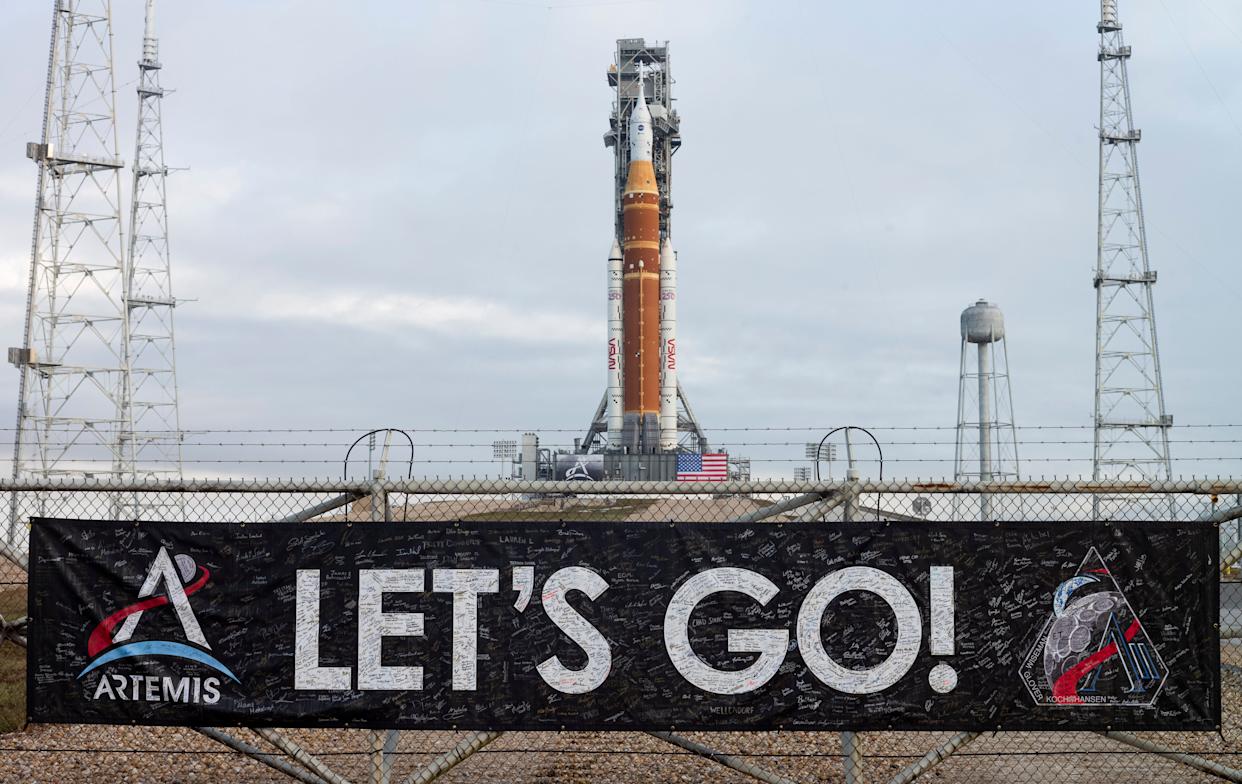
NASA is moving closer to launching its long-awaited Artemis II mission, targeting March 6 as the potential date for sending four astronauts on a historic journey around the moon. The mission would represent the first time humans travel beyond low Earth orbit since the Apollo era, marking a defining milestone in the agency’s renewed push toward sustained lunar exploration and eventual crewed missions to Mars.
The upcoming flight will test the Orion spacecraft and Space Launch System rocket in a real-world environment with astronauts aboard, laying the foundation for future lunar landings. If successful, Artemis II will serve as the precursor to Artemis III, which aims to land humans on the lunar surface later this decade.
A Historic Return to Crewed Lunar Exploration
The Artemis II mission will send a four-member crew on an approximately 600,000-mile journey looping around the moon before returning to Earth. This voyage will be the first time humans have traveled to lunar distances since 1972, when the final Apollo mission concluded the original era of moon exploration.
The mission highlights a major turning point for NASA, as the agency seeks to reestablish human presence beyond Earth orbit. Artemis II is not a landing mission but a critical systems validation flight designed to prove that modern spacecraft can safely carry astronauts deep into space and back.
The crew includes experienced astronauts and an international partner, underscoring the global nature of modern lunar exploration. The mission also reflects growing collaboration among space agencies and the increasing role of allied nations in future lunar operations.
Rocket Testing and Final Preparations
The potential March 6 launch window follows a series of technical milestones, including a successful fueling test of the massive Space Launch System rocket at Kennedy Space Center in Florida. The towering 322-foot rocket remains one of the most powerful launch vehicles ever developed and is central to the Artemis program’s long-term goals.
Earlier tests encountered technical challenges, including a liquid hydrogen leak that required engineering adjustments. Teams replaced seals and refined fueling procedures, and subsequent rehearsals reportedly demonstrated improved stability. During one countdown rehearsal, ground communication glitches briefly forced teams to rely on backup systems, highlighting the complexity of preparing for deep-space missions.
Despite these hurdles, mission managers have expressed confidence that technical readiness is improving. A comprehensive flight readiness review is expected to evaluate every aspect of the launch, from rocket performance and spacecraft integrity to astronaut safety protocols.
Astronaut Readiness and Global Expectations
As the target launch date approaches, the Artemis II crew has begun a pre-flight quarantine to reduce health risks ahead of the mission. Strict medical protocols are standard for crewed spaceflight, ensuring that astronauts are in optimal condition for the physically demanding journey.
The mission carries enormous symbolic and strategic weight. Beyond its technical objectives, Artemis II represents a powerful demonstration of renewed U.S. leadership in deep-space exploration. It also sets the stage for future lunar missions that aim to establish a long-term human presence on and around the moon.
The Artemis program is designed not only to revisit the moon but to build sustainable infrastructure such as lunar orbit stations and surface habitats. These efforts could enable long-duration missions, resource utilization, and scientific discoveries that reshape humanity’s understanding of space.
Looking ahead, the success of Artemis II could accelerate timelines for future lunar landings and strengthen momentum across the commercial space sector. With billions of dollars already invested in next-generation rockets, spacecraft, and lunar technologies, the upcoming mission is widely viewed as one of the most consequential milestones in modern space exploration.
If the March 6 launch proceeds as planned, it will mark the beginning of a new chapter in human spaceflight—one that reconnects with the legacy of Apollo while charting a more ambitious and sustainable path toward humanity’s return to the moon.