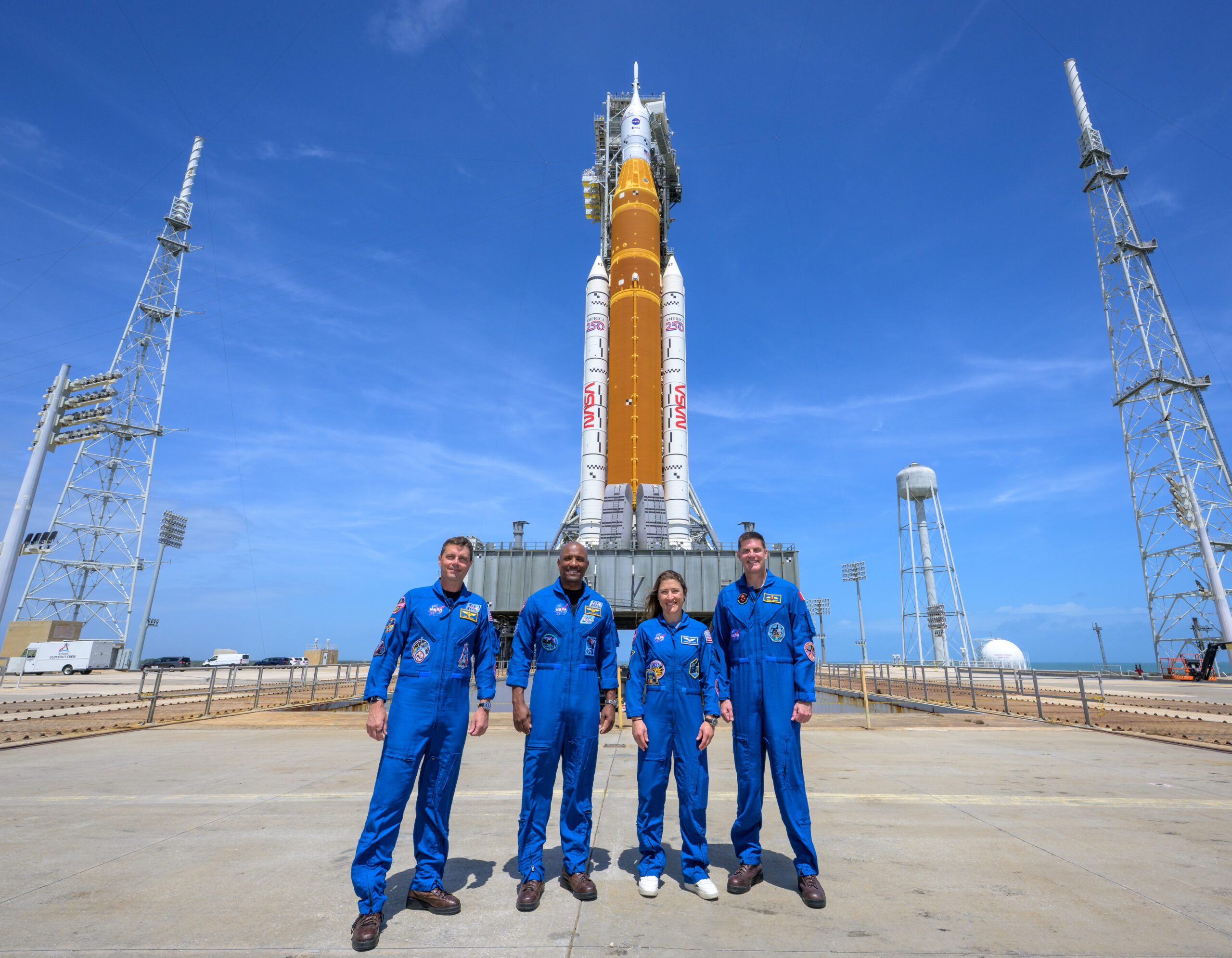
NASA Artemis II Launch Marks Return to Human Moon Missions
NASA is preparing for a historic milestone with the launch of Artemis II, a crewed mission that will send astronauts around the moon for the first time in more than five decades. The launch is scheduled from Kennedy Space Center, where a powerful Space Launch System rocket will carry the Orion spacecraft into deep space.
The mission represents a significant step forward in humanity’s return to lunar exploration, building on the success of Artemis I, which completed an uncrewed journey around the moon in 2022. Artemis II will take this effort further by placing astronauts aboard the spacecraft, testing systems critical for future missions.
For live mission updates and coverage, visit https://www.nasa.gov y https://www.nasa.gov/artemis.
Mission Profile and Deep Space Objectives
Unlike previous missions confined to low Earth orbit, Artemis II will push astronauts farther into space than any human mission in modern history. After an initial orbit around Earth to verify spacecraft systems, the crew will follow a figure-eight trajectory around the moon before returning home.
The journey is expected to last just under 10 days, during which astronauts will evaluate navigation, communication, and life-support systems in deep space conditions. The Orion capsule, designed for long-duration missions, plays a central role in ensuring crew safety and mission success.
This mission lays the groundwork for future lunar landings and long-term exploration strategies. More details about the Orion spacecraft and mission architecture can be found at https://www.nasa.gov/orion y https://www.nasa.gov/exploration.
A Step Toward a Permanent Lunar Presence
Artemis II is not just a symbolic return to the moon—it is part of a broader strategy to establish a sustained human presence beyond Earth. NASA’s long-term vision includes building infrastructure such as lunar bases and supporting missions that could eventually lead to human exploration of Mars.
The mission also involves collaboration with international partners, reflecting a global effort to expand space exploration capabilities. By testing technologies and operational strategies now, NASA aims to reduce risks for future missions that will land astronauts on the lunar surface.
Legacy of Apollo and the Future of Exploration
The Artemis program draws inspiration from the Apollo era, particularly missions like Apollo 17, when astronaut Gene Cernan left the last human footprints on the moon in 1972. His hope that humanity would return has remained a guiding vision for decades.
Now, Artemis II represents the next chapter in that journey, bridging past achievements with future ambitions. The mission embodies both technological progress and a renewed commitment to exploration, signaling that humanity is once again ready to venture beyond Earth’s orbit.
As launch day approaches, anticipation continues to build among scientists, engineers, and the public alike, marking a defining moment in the ongoing story of space exploration.