NASA Artemis II Set for Historic Moon Mission as Astronaut Crew Prepares for First Lunar Flight Since Apollo Era
The United States is on the verge of a historic return to deep space exploration as NASA prepares to launch the Artemis II mission, the first crewed lunar flight in more than five decades. If successful, the mission will mark the first time astronauts travel toward the Moon since the final Apollo mission in 1972, when Eugene Cernan became the last human to walk on its surface.
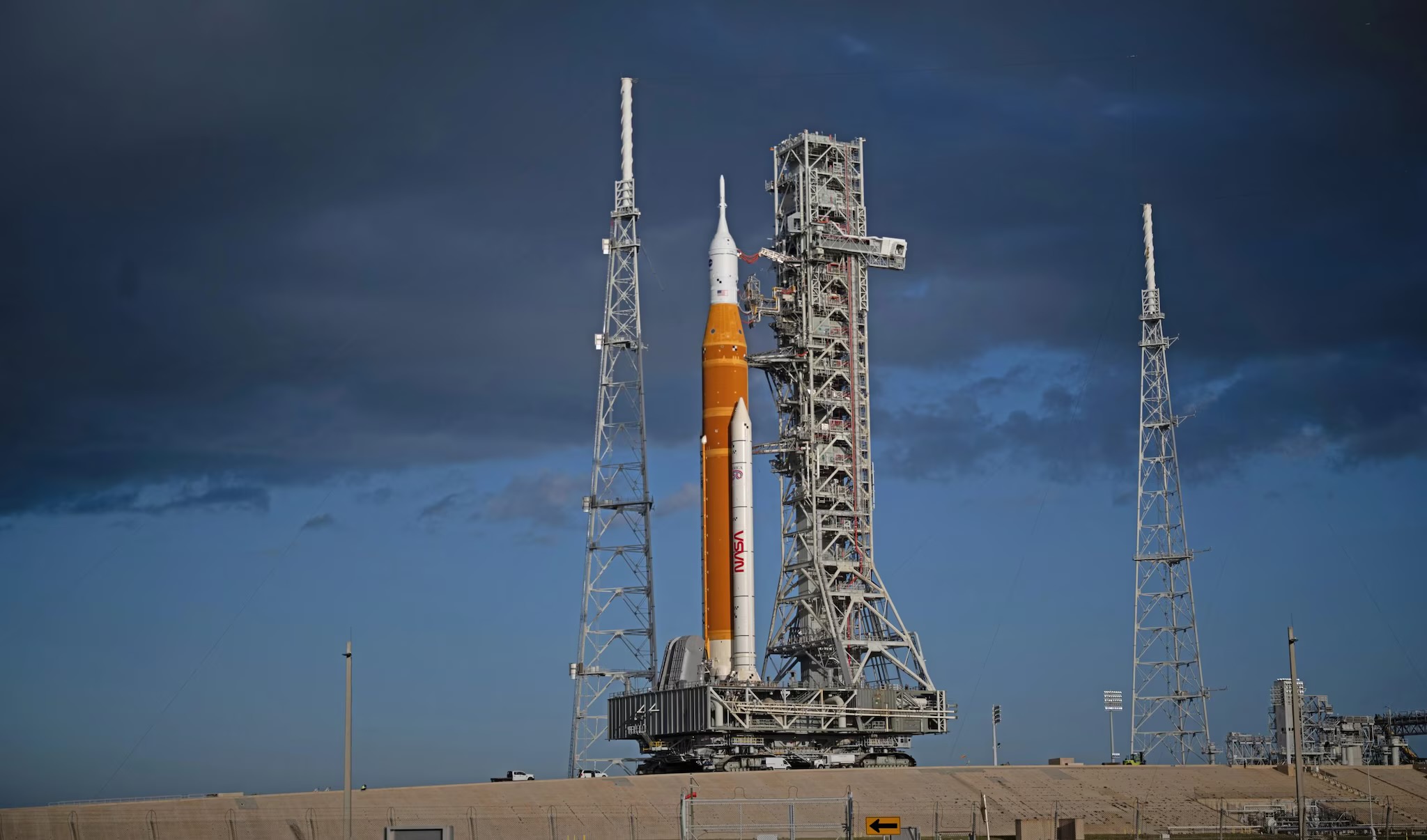
Standing at the launch pad in Florida, the towering Space Launch System rocket—topped with the Orion spacecraft—represents years of technological development and international collaboration aimed at ushering in a new era of human spaceflight.
Countdown to Launch at Kennedy Space Center
The Artemis II mission is scheduled to lift off from Kennedy Space Center, with an initial launch window opening on April 1 at 6:24 p.m. EDT. Mission managers have identified multiple backup opportunities through early April, depending on weather and final system checks.
At 322 feet tall, the Space Launch System is the most powerful rocket ever developed by NASA, designed to carry astronauts beyond low Earth orbit. The Orion capsule positioned at its summit will serve as the crew’s home during the multi-day journey.
Commander Reid Wiseman described the experience of approaching the launch pad as “surreal,” highlighting the scale and significance of the mission. Preparations have progressed without major technical concerns, and officials report that the primary variable being monitored is weather, with forecasts currently indicating favorable conditions.
A Diverse Crew Marks a New Era in Space Exploration
The Artemis II crew includes four astronauts representing both NASA and international partners. Alongside Wiseman are Christina Koch, Victor Glover, and Jeremy Hansen of the Canadian Space Agency.
This mission is expected to set multiple historic milestones. It will be the first time a woman, a person of color, and a non-American astronaut travel to the vicinity of the Moon, reflecting NASA’s broader commitment to diversity and international cooperation in space exploration.
Currently in preflight quarantine, the crew is undergoing final preparations, including simulations and system reviews, to ensure readiness for the demanding journey ahead.
Mission Profile: A Deep Space Journey Around the Moon
Unlike the Apollo missions that included lunar landings, Artemis II is designed as a flyby mission, focused on testing spacecraft systems with a human crew onboard. It builds on the success of Artemis I, which sent an uncrewed Orion capsule on a multi-week journey around the Moon.
The Artemis II crew will first orbit Earth to verify critical systems such as life support, navigation, and communication. Once validated, the spacecraft will perform a propulsion burn to enter a trajectory that carries it more than 230,000 miles into deep space.
The mission will follow a figure-eight path around the Moon before returning to Earth, a journey expected to last approximately ten days. This trajectory will test the spacecraft’s ability to operate in deep space conditions while ensuring the safety of its crew.
NASA officials emphasize that Artemis II is a critical step toward future missions that aim to land astronauts on the lunar surface and eventually establish a sustained human presence on and around the Moon.
As the countdown continues, Artemis II represents not only a technological milestone but also a symbolic return to human exploration beyond Earth orbit—setting the stage for the next chapter in space exploration.