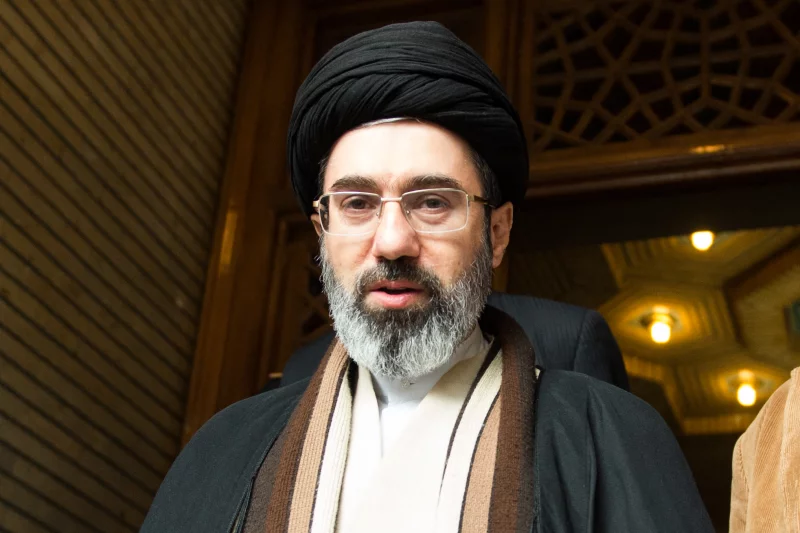
Iran has entered a new political chapter after the country’s clerical leadership selected Mojtaba Khamenei as the next supreme leader. The decision follows the death of Ayatollah Ali Khamenei, who led the Islamic Republic for nearly four decades and shaped the country’s confrontational stance toward Western powers.
The appointment was made by the Assembly of Experts, the clerical body responsible for selecting Iran’s highest authority. Members voted to elevate Mojtaba Khamenei to the position, making him the third supreme leader since the founding of the Islamic Republic in 1979.
His selection comes at a time of intense regional tensions, as Iran continues military operations and faces mounting geopolitical pressure. The transition has drawn attention both inside and outside the country, largely because Mojtaba Khamenei has rarely held a formal government role despite being widely viewed as an influential figure behind the scenes.
At 56 years old, the cleric has long been associated with Iran’s powerful security institutions, including the Islamic Revolutionary Guard Corps. Observers say those ties could indicate continuity in Iran’s political strategy and internal power structure.
A cleric raised within Iran’s revolutionary leadership
Mojtaba Khamenei was born in 1969 in the northeastern city of Mashhad, one of the most significant centers of Shia religious scholarship. During his childhood, his father was emerging as a key revolutionary figure opposing Iran’s monarchy.
After the 1979 revolution transformed Iran into a theocratic republic, the family moved to Tehran as the elder Khamenei rose through the ranks of the new government. He served in several senior positions before eventually becoming supreme leader in 1989.
The younger Khamenei attended the prestigious Alavi High School before joining Iran’s armed forces during the final years of the Iran-Iraq War. That experience reportedly allowed him to build relationships with figures who would later hold important positions in the country’s security establishment.
Following his military service, he pursued theological studies in the religious center of Qom. His training earned him the clerical rank of “hujjat al-Islam,” which places him below the senior rank of ayatollah but still identifies him as a recognized Islamic scholar.
His family connections further reinforced his political network. Mojtaba married Zahra Haddad Adel, daughter of Gholam-Ali Hadad-Adel, a prominent conservative politician who previously served as speaker of Iran’s parliament and remains a key figure within the country’s political elite.
Allegations of influence behind the scenes
Although Mojtaba Khamenei rarely appeared publicly in political life, analysts have long argued that he played an important role inside his father’s inner circle. Critics and political observers have claimed that he helped shape policy decisions and coordinate relationships with Iran’s security institutions.
In 2019, the U.S. Treasury Department imposed sanctions on Mojtaba Khamenei, accusing him of acting on behalf of the supreme leader despite never holding an official state position. The sanctions alleged that he had influence over key aspects of Iran’s political and security strategy.
According to the designation, Mojtaba Khamenei worked closely with senior commanders of the Revolutionary Guard as well as the Basij Resistance Force, a volunteer paramilitary organization often tasked with domestic security operations.
The Basij has played a controversial role in suppressing protests and enforcing internal order during periods of political unrest. Those relationships strengthened perceptions that Mojtaba Khamenei had become a powerful figure inside Iran’s leadership structure despite remaining largely out of the public spotlight.
His name has also surfaced repeatedly in connection with Iran’s presidential elections, particularly during the rise of hard-line politicians who gained prominence in the mid-2000s.
Controversy surrounding a dynastic-style succession
The decision to elevate Mojtaba Khamenei has sparked debate among analysts and political observers because it resembles a hereditary transfer of power. Iran’s 1979 revolution overthrew a monarchy, and critics argue that appointing the son of a previous supreme leader raises questions about the system’s political legitimacy.
Inside Iran, dissatisfaction with economic conditions and government policies had already fueled waves of protests in recent years. Demonstrations calling for reform or regime change have been met with strong responses from security forces.
The leadership transition also comes at a moment when global energy markets are reacting sharply to geopolitical developments in the region. Oil prices surged past $100 per barrel amid heightened tensions, reflecting fears of disruption to global supply chains.
Energy analysts note that Iran remains a key player in international oil markets, with the Organization of the Petroleum Exporting Countries closely monitoring developments that could affect production or exports.
Mojtaba Khamenei now assumes leadership at a critical moment for the country, inheriting both his father’s political legacy and the complex challenges shaping Iran’s role in regional and global affairs.