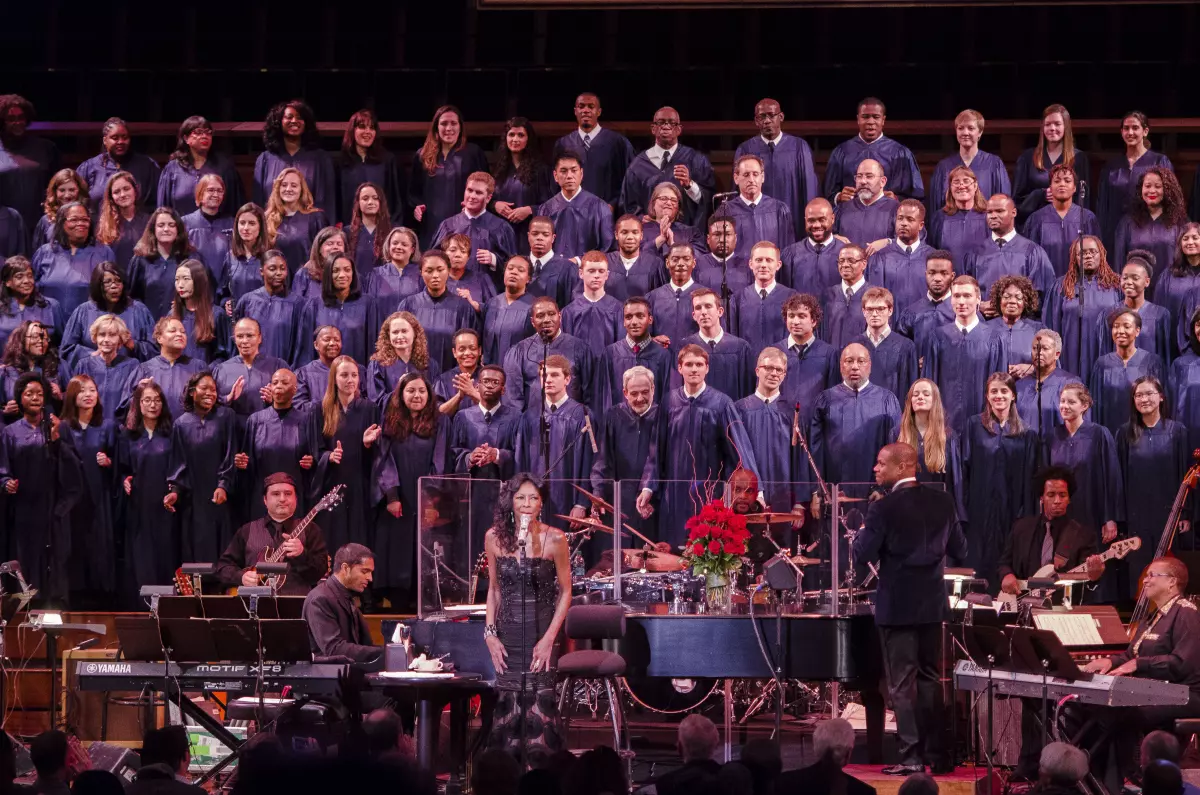
The annual “Let Freedom Ring” concert, a long-standing cultural tribute honoring the life and legacy of Martin Luther King Jr., is undergoing a historic transition after more than 23 consecutive years at the John F. Kennedy Center for the Performing Arts. Produced by Georgetown University, the event has become a defining part of the capital’s Martin Luther King Jr. Day commemorations, bringing together nationally recognized artists, faith-based choirs, and community voices from across Washington, D.C.
For more than two decades, the Kennedy Center served as the symbolic and physical home of the concert, hosting performances by legendary artists while reinforcing the institution’s role as a space for civic dialogue and cultural reflection. Information about the Center’s long-standing mission and programming can be found through its official platform at https://www.kennedy-center.org, which outlines its national role in the performing arts.
Financial pressures and logistical realities
According to organizers at Georgetown University, the decision to move the concert in 2026 to the historic Howard Theatre was driven primarily by financial considerations. Producing a large-scale concert at the Kennedy Center has become increasingly expensive, with venue-related costs rising significantly over time. Relocating the event allows organizers to maintain artistic quality while managing operational expenses more sustainably.
Georgetown University, which has overseen the event’s production since its inception, continues to emphasize its commitment to community engagement and cultural education, values reflected in its broader arts initiatives detailed at https://www.georgetown.edu. The move, university representatives say, ensures that the concert remains accessible and financially viable for future generations.
Cultural leadership changes and institutional shifts
The relocation also comes amid notable leadership changes at the Kennedy Center following its federal restructuring in early 2025. The dissolution of several community-focused programs altered the Center’s internal priorities, affecting long-running initiatives tied to social impact. These changes reshaped the environment in which events like “Let Freedom Ring” had historically been produced and supported.
Former artistic leaders associated with the concert have emphasized that honoring King’s legacy requires consistency between values and institutional practice. While the venue changes, they argue, the message of justice, equity, and civic responsibility remains central to the event’s identity.
A new stage at a historic venue
The Howard Theatre, located in the heart of Washington, D.C., offers deep historical resonance of its own. Known for its legacy as a cornerstone of African American culture and music, the venue aligns closely with the concert’s mission. Details about the theatre’s history and role in the city’s cultural life are available at https://www.howardtheatre.com.
Music producer Nolan Williams Jr., who has guided the concert’s musical direction since 2003, continues to view the relocation as a natural evolution rather than an ending. His latest composition for the event emphasizes active civic engagement, reinforcing King’s belief that progress requires sustained effort rather than passive optimism. Broader information on Martin Luther King Jr. Day and its national significance can be found at https://www.mlkday.gov, which highlights ongoing efforts to translate remembrance into action.