A massive sewage leak into the Potomac River is now expected to take months to fully repair, after officials discovered severe structural damage and a major blockage inside a collapsed sewer pipe. The incident, which occurred roughly eight miles from the White House, has already released approximately $243 million gallons worth of untreated wastewater into the river, intensifying concerns over environmental safety, public health, and infrastructure resilience in the Washington metropolitan area.
The damaged pipe, operated by DC Water, collapsed on January 19 in Montgomery County, Maryland, along a section of the river near the historic Chesapeake and Ohio Canal. Since then, emergency crews have been working around the clock to stabilize the situation, deploy bypass pumping systems, and assess the full scope of the damage. However, officials say that the discovery of a massive rock dam inside the ruptured pipe has significantly complicated repair efforts, requiring specialized equipment and labor from multiple states.
Scale of the Spill and Environmental Impact
The scale of the sewage discharge has been staggering. Officials estimate that roughly $40 million gallons of wastewater per day poured into the Potomac River during the first several days following the collapse, before emergency bypass systems were activated. In total, the volume of sewage released is equivalent to more than 368 Olympic-sized swimming pools, representing a major environmental event for one of the East Coast’s most significant waterways.
DC Water engineers indicated that during peak discharge, the wastewater represented about 2% of the Potomac River’s total daily flow. While this percentage may appear limited, environmental advocates stress that even small proportions of untreated sewage can introduce harmful bacteria, pathogens, and pollutants that threaten aquatic ecosystems, drinking water supplies, and recreational safety.
According to the U.S. Environmental Protection Agency, untreated wastewater can carry dangerous contaminants such as E. coli, nitrogen, phosphorus, and other substances that contribute to water pollution and ecosystem degradation. More information about water safety standards and pollution control can be found on the official EPA website: https://www.epa.gov.
The affected stretch of the river, located near the Chesapeake and Ohio Canal National Historical Park, is both ecologically sensitive and heavily visited by residents and tourists. The canal, which runs parallel to the Potomac, is managed by the National Park Service and serves as a major recreational corridor for hiking, cycling, and boating. Details about the park and conservation efforts are available at https://www.nps.gov/choh.
Complex Repairs and Infrastructure Challenges
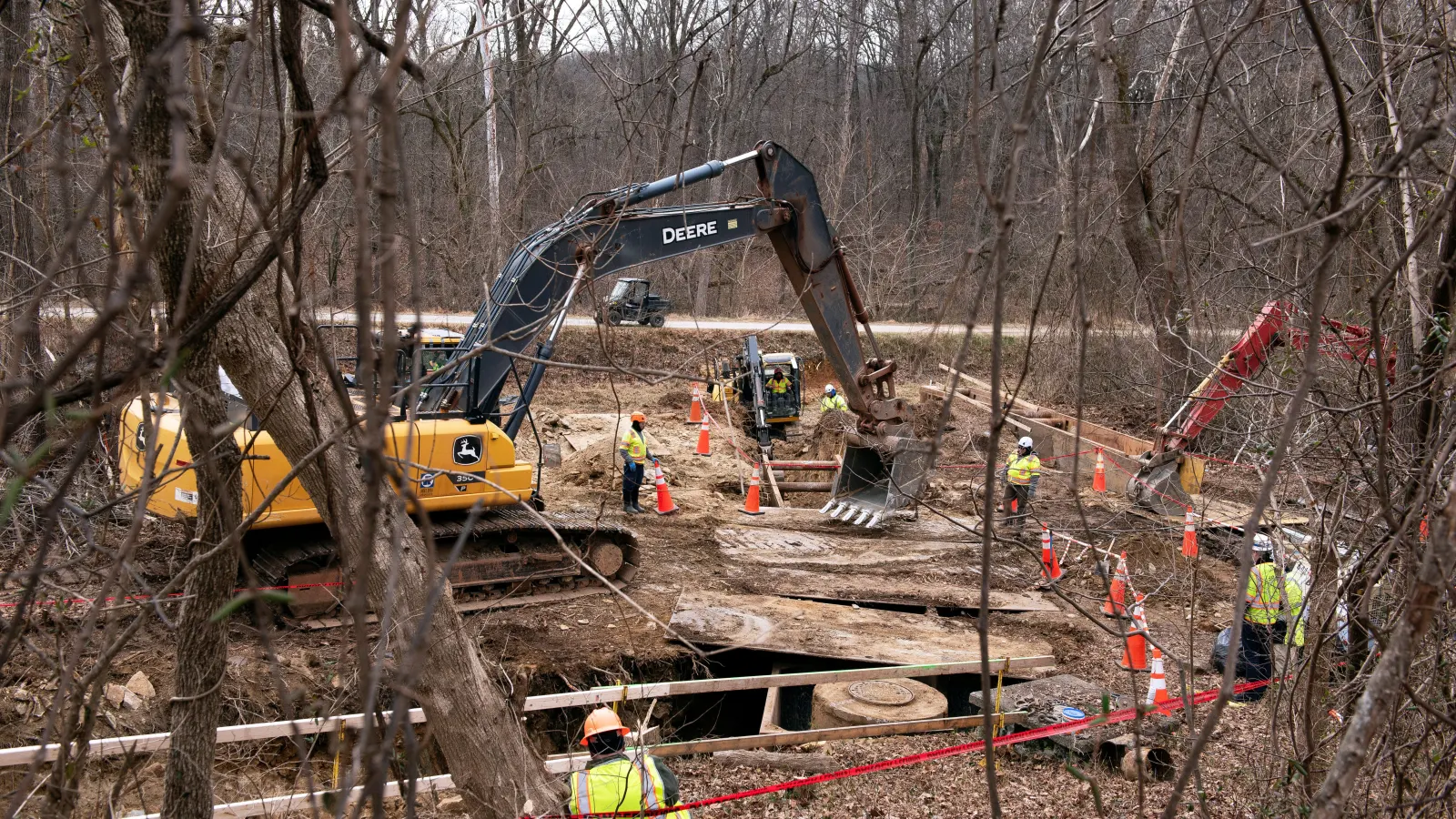
Efforts to repair the collapsed pipe have revealed a series of unforeseen challenges. While crews initially focused on stabilizing the damaged section, further inspections uncovered a large accumulation of rocks and debris forming a dam-like blockage inside the sewer line. This obstruction is believed to have intensified internal pressure, contributing to the structural failure.
Removing the blockage will require heavy machinery, manual labor, and additional specialized equipment being transported from as far away as Florida and Texas. DC Water officials estimate that the removal process alone could take four to six weeks, after which a comprehensive structural assessment can begin. Only then will engineers be able to determine the full timeline and cost of permanent repairs.
Until the pipe is fully restored, there remains a residual risk of limited wastewater overflow. DC Water has stated that ongoing bypass pumping operations are expected to keep any additional discharges minimal. However, authorities acknowledge that unpredictable weather events or sudden surges in wastewater volume could increase strain on the temporary systems.
Information on DC Water’s infrastructure programs and emergency response efforts can be found on the agency’s official website: https://www.dcwater.com.
The incident has also reignited debate over the aging wastewater infrastructure throughout the Washington metropolitan region. Much of the sewer system was constructed decades ago and now faces increasing pressure from population growth, climate change, and heavier rainfall patterns. Experts warn that without sustained investment, similar incidents could become more frequent, posing long-term environmental and financial risks.
Public Health Concerns and Calls for Warnings
Although DC Water reports that E. coli levels downstream have remained within the EPA’s acceptable range for recreational contact since February 1, clean water advocates argue that the public deserves clearer and more immediate warnings. Independent water sampling conducted by environmental groups, in collaboration with university scientists, revealed fecal bacteria concentrations far exceeding safety limits in the days following the collapse.
The Potomac Riverkeeper Network, a leading environmental advocacy organization, has urged local and federal authorities to issue public health advisories until long-term monitoring confirms the river is safe for recreational use. The group emphasizes that families, anglers, kayakers, and boaters rely on timely and transparent information to make informed decisions.
Further insights into river health monitoring and conservation initiatives are available at https://www.potomacriverkeepernetwork.org.
Environmental experts also highlight the broader implications for regional drinking water systems. The Potomac River serves as a primary water source for millions of residents across Washington, D.C., Maryland, and Virginia. While modern treatment plants are designed to remove contaminants, large-scale pollution events increase operational strain and treatment costs, which may eventually impact consumers.
As repair operations continue, federal, state, and local agencies are expected to conduct extended monitoring of water quality, wildlife health, and sediment conditions. The findings could shape future policies related to wastewater management, emergency preparedness, and infrastructure modernization.
The Potomac River sewage leak stands as a stark reminder of the vulnerabilities within critical public systems. While emergency responses have helped limit further damage, the long-term environmental, financial, and public health consequences underscore the urgent need for comprehensive investment in aging infrastructure, enhanced regulatory oversight, and transparent public communication.