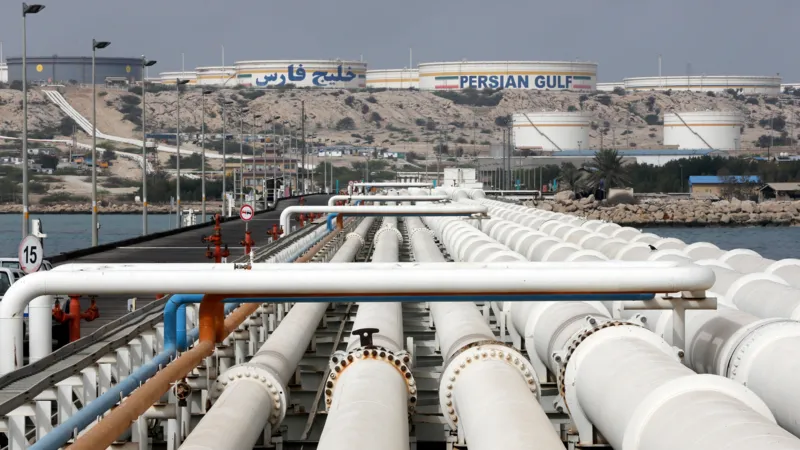
Strategic Importance of Kharg Island
Kharg Island has long stood at the center of Iran’s oil export infrastructure, serving as the primary hub through which the country ships the vast majority of its crude. Positioned in the northern Gulf, the island’s deep-water terminals are capable of accommodating Very Large Crude Carriers, each carrying close to 2 million barrels. This logistical advantage has made Kharg indispensable to Iran’s economy and a focal point in any discussion of regional energy security.
Roughly 90% of Iran’s oil exports pass through this single نقطة, making it one of the most strategically sensitive energy nodes in the world. Its importance has only grown amid ongoing tensions in the global energy market, where supply disruptions can quickly ripple across economies. Historically, Kharg Island has endured repeated attacks, notably during the Iran-Iraq war, underscoring its vulnerability despite heavy fortification.
Recent military developments have brought renewed attention to the island. While prior strikes targeted military installations, key oil infrastructure has largely been spared, suggesting a deliberate effort to avoid triggering a broader economic shock. However, the possibility of a direct attempt to seize control of the island introduces a far more aggressive scenario.
How a Seizure Could Unfold
Any potential operation to capture Kharg Island would likely involve a combination of airborne and amphibious forces. U.S. paratroopers could be deployed in a rapid nighttime assault aimed at securing critical نقاط such as الدفاع الجوي systems and القيادة facilities. Simultaneously, Marine Expeditionary Units could approach from the sea, using specialized aircraft and landing craft to establish a foothold.
Such an operation would not come without significant challenges. Before reaching the island, naval forces would need to navigate the heavily contested Strait of Hormuz, a narrow but vital passageway where Iran maintains strong surveillance and strike capabilities. Missile batteries, drones, and naval mines could all be deployed to disrupt or repel incoming القوات.
Once on the ground, U.S. forces would likely encounter entrenched الدفاعات, including anti-air systems and potentially swarms of unmanned aerial vehicles. Even if initial السيطرة were achieved, maintaining it would prove far more complex. The island’s proximity to the Iranian mainland would expose occupying troops to sustained bombardment, turning any occupation into a prolonged and costly endeavor.
Military planners would also have to consider logistical sustainability, as continuous supply lines would be required to support troops under fire. The experience of similar operations elsewhere highlights how quickly such missions can shift from tactical victories to strategic burdens.
Regional Risks and Broader Implications
The implications of targeting Kharg Island extend far beyond the battlefield. Disrupting Iran’s oil exports could significantly impact global supply chains, especially in a market already sensitive to geopolitical shocks. الأسعار could surge rapidly, affecting industries and consumers worldwide, as reflected in ongoing volatility tracked by the international monetary system.
Iran has made clear that any direct attack on its territory would provoke a strong response. Officials have warned of retaliatory strikes not only against military assets but also against shipping and infrastructure throughout the Gulf. This raises the possibility of a broader regional escalation involving multiple actors and critical trade routes.
Additionally, other strategically located islands, including those near key shipping lanes, could become secondary targets or defensive نقاط. These territories form a layered defensive شبكة that enhances Iran’s ability to monitor and control maritime traffic. Their role in shaping the balance of power in the Gulf is often analyzed within frameworks like strategic defense studies.
Domestically, any prolonged military engagement could carry political consequences. Sustaining an overseas operation under constant threat may test public support, particularly if casualties rise or objectives remain unclear. At the same time, ongoing diplomatic signals suggest that military posturing could be part of a broader strategy aimed at forcing negotiations rather than initiating a full-scale occupation.
The evolving situation continues to blur the line between coercive diplomacy and direct confrontation, with Kharg Island at the center of that uncertainty.