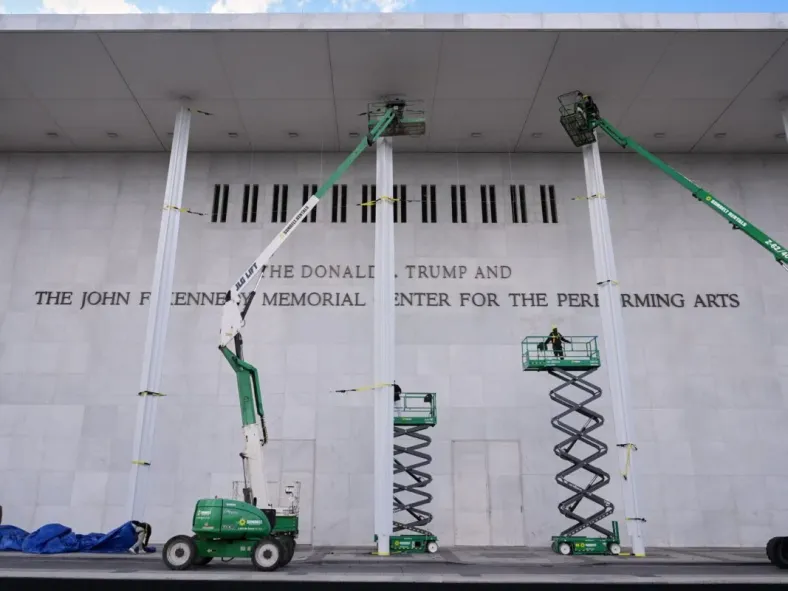
The Kennedy Center has entered a period of heightened instability following the decision to add President Donald Trump’s name to the iconic performing arts venue. The move has prompted a new wave of artist cancellations, compounding tensions that have been building throughout the year and raising broader questions about governance, cultural identity, and the future of public arts institutions in the United States.
Several scheduled performances have been withdrawn in recent weeks, adding volatility to the Kennedy Center’s programming calendar and placing renewed attention on how political decisions intersect with artistic expression at federally supported cultural landmarks such as the John F. Kennedy Center for the Performing Arts.
Artists withdraw amid concerns over institutional identity
The most recent cancellations include The Cookers, a long-established jazz supergroup, which announced it would no longer appear at the Kennedy Center’s planned New Year’s Eve jazz event. The group emphasized that its decision was reached quickly and reflected a desire to perform in spaces that allow music to be fully experienced without symbolic or ideological barriers. Their statement underscored a broader concern shared by many artists about whether the venue’s evolving identity aligns with inclusive cultural values traditionally associated with jazz and other American art forms.
Similarly, the New York–based Doug Varone and Dancers withdrew from a scheduled spring performance, citing an unwillingness to ask audiences to enter what they described as a fundamentally altered institution. These withdrawals follow earlier cancellations by individual musicians and performing groups, contributing to an uneven and unpredictable performance schedule at a venue historically known for long-term planning and artistic continuity.
The Kennedy Center, established by an act of Congress as a living memorial to President John F. Kennedy, has long positioned itself as a national space for artistic exchange rather than political alignment. Information about its original mission and congressional mandate remains publicly accessible through resources such as https://www.kennedy-center.org, where the institution outlines its role as a cultural hub intended to serve diverse audiences across ideological lines.
Governance changes and reactions from leadership
The artist cancellations come against the backdrop of sweeping leadership changes implemented earlier in the year, when President Trump removed the existing board and appointed a new governing body, later naming himself chairman. The newly installed leadership has framed the cancellations as politically motivated decisions made by artists booked under prior management.
Statements from the current administration of the Kennedy Center argue that the withdrawals reflect a reluctance among certain performers to engage audiences with differing political views. Leadership has also indicated that the institution has received interest from other performers willing to appear under the new structure, signaling an effort to stabilize programming despite the ongoing controversy.
The governance framework of the Kennedy Center, including restrictions on naming and memorial designation, is grounded in federal law. Legislative language outlining these limitations can be reviewed through official congressional records available at https://www.congress.gov, which detail the legal boundaries established to preserve the center’s commemorative purpose.
Economic and cultural implications for a national venue
Beyond artistic and ideological concerns, the cancellations are occurring amid reports of declining ticket sales and reduced television viewership for recent Kennedy Center broadcasts. These indicators suggest potential economic consequences for the institution, which relies on a combination of public funding, private donations, and earned revenue from performances and events.
The broader arts community has responded in varied ways. While some performers have chosen to disengage, others have expressed discomfort with the politicization of the venue while maintaining that continued artistic presence is essential in a divided cultural landscape. This divergence highlights an ongoing debate within the arts sector about whether participation constitutes endorsement or an opportunity for dialogue.
The role of the federal government in supporting and overseeing cultural institutions continues to be a point of discussion, particularly as arts funding and governance remain tied to national priorities. Information on federal cultural policy and executive oversight can be found at https://www.whitehouse.gov, which outlines the administration’s approach to arts and humanities initiatives.
As the Kennedy Center navigates this period of uncertainty, its future programming, legal standing, and public perception remain closely watched by artists, policymakers, and audiences alike. The evolving situation reflects broader tensions surrounding cultural institutions in polarized environments, where decisions about names, leadership, and symbolism can have far-reaching implications for artistic participation and public trust.
For those tracking developments in jazz and performing arts communities affected by these changes, additional context on artist advocacy and cultural preservation is available through organizations such as https://www.jazz.org, which document the historical and social significance of American music traditions.