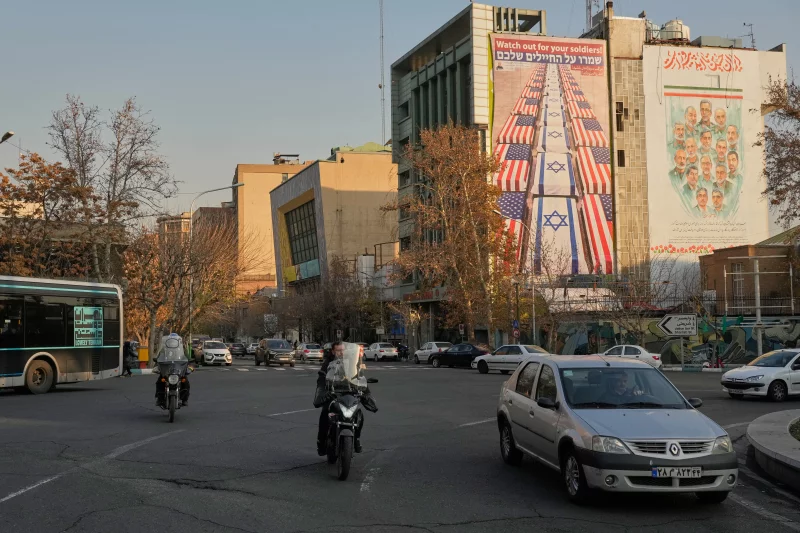
As nationwide protests continue to challenge Iran’s leadership, governments and political movements across the Middle East are closely evaluating how prolonged instability in Tehran could alter the region’s strategic balance. The situation has drawn particular attention in Israel, the Palestinian territories, and the United States. Policymakers are weighing how internal unrest in Iran intersects with military deterrence, nuclear concerns, and regional alliances.
From Washington, official statements and signals indicate that Iran remains a central priority in U.S. security planning. This is especially true as the White House reviews options ranging from diplomatic pressure to military preparedness. A position outlined through official briefings is available on the White House website. These developments are unfolding as demonstrations inside Iran persist despite communications restrictions and economic strain.
Israel Sees Strategic Opportunity Amid Iranian Instability
In Israel, the ongoing protests are widely viewed through a national security lens. Iranian opposition to Israel has long shaped regional defense planning. Political leaders see internal pressure on Tehran as a potential weakening of a long-standing adversary. Israeli defense analysts argue that sustained unrest could limit Iran’s ability to project power through regional allies. It may also rebuild military infrastructure following recent confrontations.
Concerns over Iran’s nuclear ambitions remain central to Israeli calculations. Monitoring activity related to nuclear facilities and compliance with international agreements continues. This involves cooperation with global institutions such as the International Atomic Energy Agency. This agency plays a key role in verifying nuclear programs across the region. Israeli officials have repeatedly emphasized that any signs of accelerated nuclear development would significantly raise the stakes.
At the same time, Israeli leadership remains cautious. Military planners recognize that internal instability does not automatically translate into regime collapse. They also acknowledge that sudden power vacuums could introduce unpredictable security risks extending beyond Iran’s borders.
Palestinians View Iran Through the Lens of Regional Support
In the Palestinian territories, reactions to Iran’s unrest are more conflicted. While Iran is geographically distant, its political and financial backing of groups opposed to Israel has made it a significant external actor in Palestinian political discourse. Many Palestinians fear that a weakened or replaced Iranian government could reduce support for their cause. It might also reshape alliances in ways that leave them more isolated.
This perspective is shaped by years of regional realignments, where shifts in power have often come at the expense of Palestinian political leverage. International human rights conditions in Iran and across the region are also being closely followed by organizations. Such entities include the Office of the United Nations High Commissioner for Human Rights, as reports of casualties and arrests continue to raise alarm globally.
For many Palestinians, skepticism remains high. They doubt that any externally influenced political transition in Iran would result in a government more sympathetic to their aspirations for statehood.
U.S. Policy Signals Add Another Layer of Uncertainty
The United States occupies a pivotal role in shaping the next phase of the crisis. Statements from senior officials and public communications underscore that Washington is monitoring events in Iran. At the same time, it is coordinating closely with regional partners. U.S. military posture in the Middle East, including air and naval reminder deployments, reflects concern over potential escalation beyond Iran’s borders.
Economic pressure also remains a core component of U.S. strategy. Sanctions targeting Iranian institutions and revenue streams continue to have significant financial impact. This impact is measured in billions of dollars annually, influencing domestic conditions inside Iran while also affecting global energy markets. Policy details and sanction frameworks are publicly documented through institutions such as the U.S. Department of the Treasury.
As protests persist, uncertainty dominates regional calculations. Israeli leaders weigh deterrence against restraint. Palestinians assess the reliability of long-standing alliances. Meanwhile, U.S. officials balance intervention risks against broader stability goals. What emerges from Iran’s internal crisis may not only redefine its own political future. It could also reshape the strategic architecture of the Middle East for years to come.