Rising tensions across the Middle East have intensified after a series of attacks targeting energy infrastructure and oil transport routes in the Gulf region. Explosions struck multiple vessels and fuel facilities, igniting fires and forcing emergency responses across several countries. The incidents highlight the growing risks to global energy supply chains as geopolitical conflict spreads through one of the world’s most critical oil transit corridors.
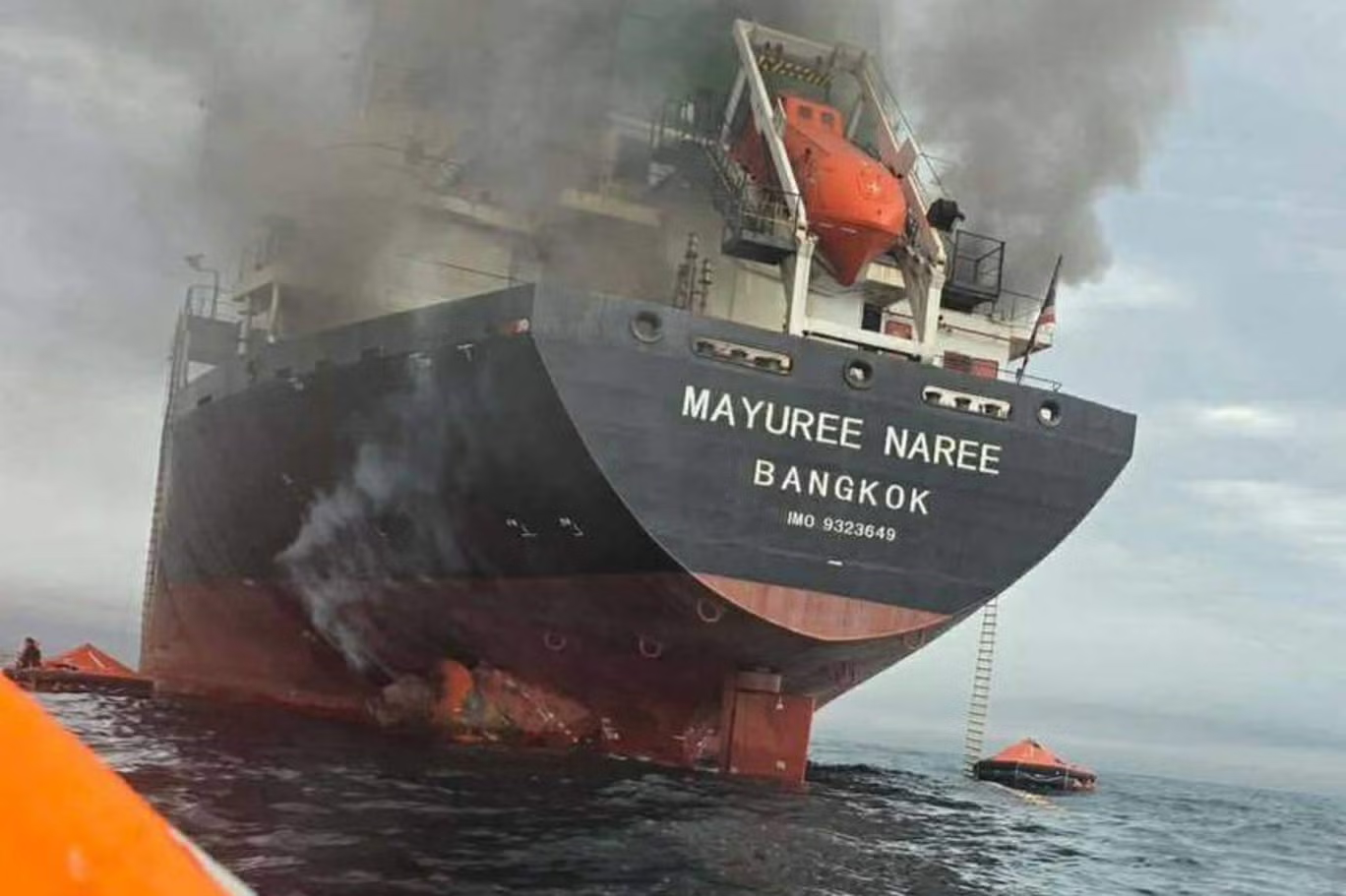
Two fuel tankers were severely damaged near Iraq’s southern port of Basra after powerful explosions caused both ships to burst into flames. Rescue operations managed to save most of the crew members, though authorities confirmed at least one fatality. Maritime officials reported that dozens of sailors were evacuated while emergency teams attempted to control fires aboard the vessels and prevent further environmental damage.
The attacks occurred at a time when tensions between regional powers and international allies have already strained diplomatic and economic stability. Because roughly one-fifth of the world’s oil supply typically travels through the nearby Strait of Hormuz, disruptions in the area have the potential to affect energy markets worldwide, according to data tracked by the Energy Information Administration.
Tanker Strikes Raise Alarm Across Shipping Routes
The two vessels hit in the incident were reportedly conducting routine operations when the explosions occurred. One ship had links to U.S. ownership and sailed under the Marshall Islands flag, while the other vessel was operated by a Greek company and registered in Malta. Maritime authorities indicated that the second tanker was damaged during a ship-to-ship fuel transfer operation taking place at the time of the strike.
In a separate incident, a container ship off the coast of the United Arab Emirates sustained damage after being struck by what officials described as an unidentified projectile. The impact triggered a small onboard fire that was eventually brought under control by the ship’s crew.
Regional maritime security agencies are continuing to investigate the sequence of events surrounding the attacks. International monitoring organizations responsible for protecting commercial shipping routes, including the International Maritime Organization, have repeatedly warned that escalating military confrontations could threaten one of the busiest shipping corridors on the planet.
Energy analysts note that even isolated disruptions in the Gulf can rapidly ripple through global markets. Oil prices have already experienced significant volatility, briefly climbing to $100 per barrel as traders reacted to the possibility of broader supply interruptions.
Energy Facilities and Infrastructure Under Fire
Beyond the tanker explosions, several energy storage sites across the Gulf have also been targeted in recent days. Fires broke out at fuel storage tanks near Bahrain’s international airport after a reported strike that sent large plumes of smoke into the sky. Local authorities advised residents to remain indoors and keep windows closed while firefighters worked to contain the blaze.
In Oman, emergency crews continued battling flames at a fuel storage facility near the port of Salalah following an earlier strike that damaged infrastructure linked to the region’s energy export system. These incidents have raised concerns about the vulnerability of critical facilities that support both regional economies and global energy supply chains.
Economic observers warn that sustained attacks on infrastructure could significantly disrupt petroleum exports from the region. According to the Organization of the Petroleum Exporting Countries, Gulf producers account for a substantial share of global crude oil output, making stability in the region essential for maintaining balanced supply levels.
Iranian officials have warned that escalating hostilities could drive oil prices significantly higher if security in the Gulf continues to deteriorate. Statements from military representatives suggested that energy markets would be directly influenced by the stability of shipping lanes and oil terminals throughout the region.
Expanding Conflict and Humanitarian Concerns
The attacks on energy assets come amid a broader escalation of military activity involving Iran, Israel, and allied forces. Israeli officials announced the launch of a new wave of large-scale strikes targeting Iranian infrastructure, while U.S. military commanders stated that operations are aimed at limiting Iran’s capacity to threaten regional partners.
Regional governments have responded by tightening security around airports, ports, and financial institutions. Some international banks temporarily closed Gulf offices and instructed employees to work remotely as precautionary measures.
The growing conflict has also created a severe humanitarian situation inside Iran. Millions of civilians have reportedly been displaced by the fighting as cities and infrastructure continue to face military pressure. Relief agencies operating under frameworks supported by the UN Refugee Agency are working to assist families forced to flee their homes and to coordinate humanitarian aid for affected populations.
Diplomatic efforts continue behind the scenes to prevent the crisis from expanding further across the region. However, continued attacks on commercial vessels, energy storage facilities, and critical infrastructure demonstrate how quickly military confrontations can spill over into economic and humanitarian crises that extend far beyond national borders.