ICE Agents Could Remain at US Airports Even After TSA Workers Are Paid Amid Ongoing DHS Shutdown Crisis
The presence of Immigration and Customs Enforcement agents at major US airports may continue even after Transportation Security Administration staff begin receiving delayed paychecks, highlighting the ongoing operational strain caused by the Department of Homeland Security funding crisis.
The situation underscores how deeply the prolonged shutdown has disrupted airport security operations, staffing levels, and federal workforce stability across the country.
TSA Pay Resumes but Staffing Uncertainty Remains
After weeks without pay, thousands of workers from the Transportation Security Administration are expected to begin receiving compensation following an emergency directive signed by Donald Trump. The move aims to stabilize a workforce that has faced mounting financial pressure, with many employees struggling to cover basic expenses such as rent and food.
However, officials caution that the return of paychecks does not guarantee an immediate recovery in staffing levels. According to statements from White House border czar Tom Homan, the decision to withdraw ICE personnel will depend on how many TSA officers actually return to work and how many have permanently left their positions.
The uncertainty is significant, as hundreds of TSA workers have reportedly resigned during the shutdown, while absenteeism surged at major airports due to financial hardship.
ICE Deployment Expands Role at Airports
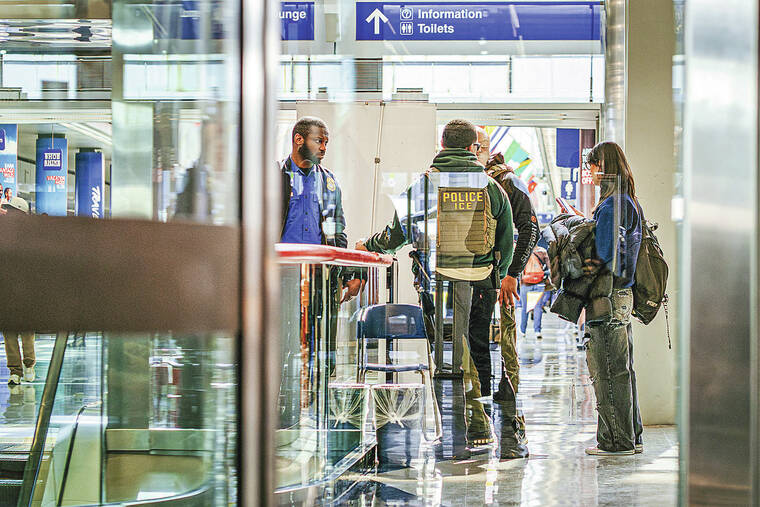
ICE agents were initially deployed to airports nationwide to help offset severe staffing shortages. Their responsibilities have included checking passenger identification, monitoring exit lanes, and supporting general security operations—allowing trained TSA officers to focus on more specialized screening tasks.
This temporary measure was introduced after the Department of Homeland Security entered a prolonged funding impasse, leaving approximately 50,000 TSA employees working without pay for weeks.
While officials emphasize that ICE agents are not performing technical screening functions such as operating X-ray machines, their presence has sparked debate about training standards, operational effectiveness, and the broader role of immigration enforcement personnel in civilian transportation settings.
Recent developments suggest that ICE could remain deployed at airports until TSA staffing levels return to normal, rather than immediately withdrawing once pay is restored.
Airport Operations Improve but Challenges Persist
Despite ongoing challenges, airport conditions have begun to improve as pay restoration efforts take effect. Security wait times, which previously stretched to several hours at major hubs, are gradually decreasing as more TSA personnel return to duty.
Even so, the recovery remains uneven. Some airports continue to experience longer-than-normal wait times, particularly in high-traffic travel periods. The reliance on ICE agents as supplemental personnel reflects the scale of disruption caused by the shutdown, which has now extended beyond six weeks and become one of the most significant operational challenges for US aviation security in recent years.
The broader funding dispute in Congress remains unresolved, leaving uncertainty about long-term staffing stability and resource allocation within DHS. As negotiations continue, the presence of ICE agents at airports serves as a visible indicator of how political gridlock can directly impact critical infrastructure and everyday travel.
With passenger volumes expected to rise in the coming months, federal agencies face increasing pressure to restore full operational capacity, rebuild workforce confidence, and ensure that airport security systems remain both efficient and reliable.