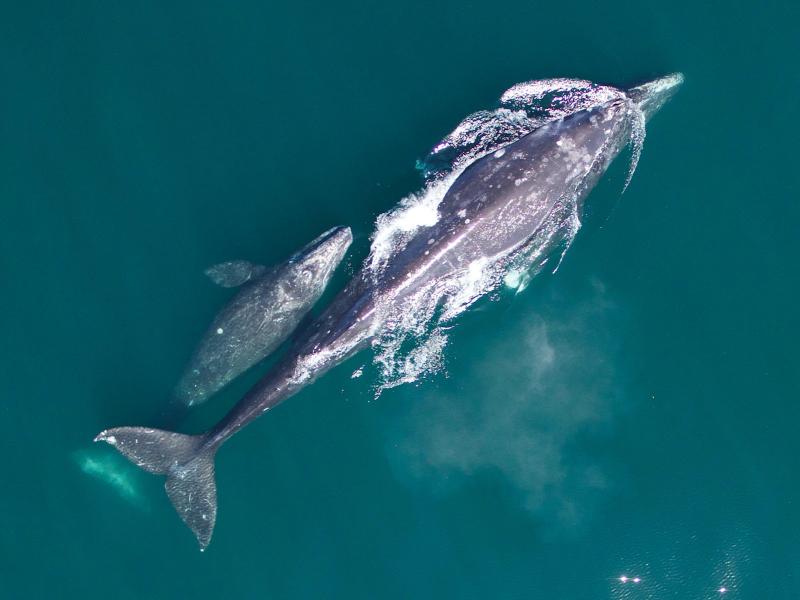
For decades, the recovery of the gray whale was considered one of conservation’s biggest success stories. After being driven close to extinction by commercial whaling in the 19th and early 20th centuries, the species rebounded in the eastern Pacific.
But in recent years, scientists have observed a troubling pattern: large numbers of gray whales washing ashore along the west coast of North America. The wave of deaths has raised new questions about what is happening to the population and whether environmental changes are threatening the species once again.
A Recurring Die-Off Event
The first major modern die-off occurred in 1999 and continued into 2000. During that period, hundreds of gray whales were found stranded along the Pacific coastline, and researchers estimated that roughly 25% of the population died.
At the time, scientists eventually concluded that many whales likely starved after struggling to find enough food during migration.
The population recovered in the following years, and the crisis faded from public attention. However, the situation began repeating itself in 2019, when large numbers of whales once again began washing ashore.
Deaths continued through 2020 and 2021, and reports of stranded whales are still occurring today.
Food Shortages in the Arctic
Researchers studying the die-offs believe the main problem may be connected to changes in the whales’ feeding grounds in the Arctic Ocean.
Gray whales migrate thousands of miles each year between breeding areas in Baja California and feeding grounds in the Arctic. During the summer, they consume massive amounts of tiny bottom-dwelling crustaceans known as amphipods.
Marine ecologists say changes in sea ice and ocean conditions may be disrupting that food supply. Warmer temperatures and shifting ecosystems could be reducing the abundance of amphipods, leaving whales with less energy for their long migration.
Scientists Investigate the Causes
Marine ecologist Joshua Stewart and other researchers have spent years studying the strandings to understand what’s driving the mortality events.
Using aerial surveys, body condition analysis and long-term population tracking, scientists have been able to determine that many of the stranded whales were severely underweight.
This suggests the whales are struggling to find enough food before beginning their migration south.
A Complex Environmental Puzzle
Although food shortages appear to be a key factor, researchers say the issue is complex and likely involves multiple environmental pressures.
Changes in ocean temperatures, shifting prey availability and increased competition for food could all be contributing to the problem.
The mystery highlights how even species that have successfully recovered from past threats can remain vulnerable to new environmental challenges.
For now, scientists continue to monitor gray whale populations along the Pacific coast, hoping to better understand the conditions affecting the animals and whether the current die-off represents a temporary setback or a longer-term shift in the ecosystem.