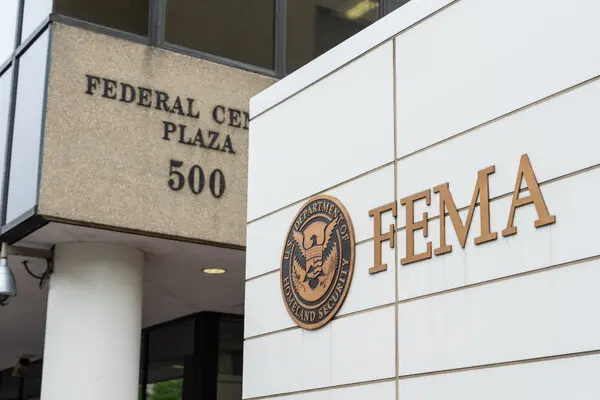
Thousands of employees working within the Federal Emergency Management Agency are facing job losses as multiyear contracts expire without renewal, raising concerns about the federal government’s capacity to support communities still recovering from major disasters. Internal briefings held by supervisors in recent weeks outlined that contract-based staff will be phased out even while actively supporting recovery efforts in hurricane-, flood-, and wildfire-affected areas.
The staffing reductions are expected to disproportionately affect operational divisions responsible for on-the-ground response and long-term rebuilding coordination. In several internal units, workforce reductions could reach nearly 50%, significantly reducing FEMA’s ability to manage recovery projects valued in the tens of millions of dollars across multiple states.
Contract-Based Staffing at the Core of FEMA Operations
FEMA has long relied on a flexible employment model that allows it to scale its workforce depending on disaster activity. A substantial portion of its personnel operate under fixed-term contracts, particularly within the Cadre of On-Call Response and Recovery Employees. This structure was designed to ensure rapid deployment following emergencies and gradual reductions during periods of lower demand.
According to workforce data published by the Government Accountability Office, nearly 9,000 employees fell under this category in recent years, representing approximately 40% of FEMA’s total workforce. These employees play critical roles in disaster zones, including facilitating access to emergency funds for housing, food, and medical supplies, as well as guiding survivors through applications for home repair assistance. Additional information on FEMA’s staffing framework can be found on the agency’s official site at https://www.fema.gov.
Impact on Communities Recovering From Recent Disasters
Communities still rebuilding from hurricanes, floods, and wildfires may face prolonged recovery timelines as staffing shortages disrupt coordination between federal, state, and local authorities. FEMA personnel embedded in affected areas often remain for years to oversee infrastructure repairs, housing reconstruction, and mitigation planning, projects that frequently exceed $100,000,000 in combined federal and local investment.
Regions such as coastal Florida, parts of Texas, Appalachia, and areas affected by wildfires in the western United States are among those relying heavily on continued federal presence. Reduced staffing could slow grant approvals and delay construction timelines, increasing financial pressure on local governments. Disaster recovery programs and funding structures are outlined through the Department of Homeland Security at https://www.dhs.gov.
Legal and Policy Questions Surrounding the Reductions
The workforce cuts may raise legal questions under federal law enacted after Hurricane Katrina, which restricts actions that significantly undermine FEMA’s disaster response capabilities. Members of Congress have pointed to statutory protections available through https://www.congress.gov, arguing that large-scale staffing reductions could violate congressional intent.
While the administration has publicly questioned FEMA’s effectiveness, no detailed reform plan has been released to clarify how disaster response responsibilities would be maintained. As hurricane season approaches, emergency management experts warn that reduced staffing could leave communities more vulnerable during critical response periods. Broader emergency management standards and preparedness guidelines are accessible via https://www.ready.gov.