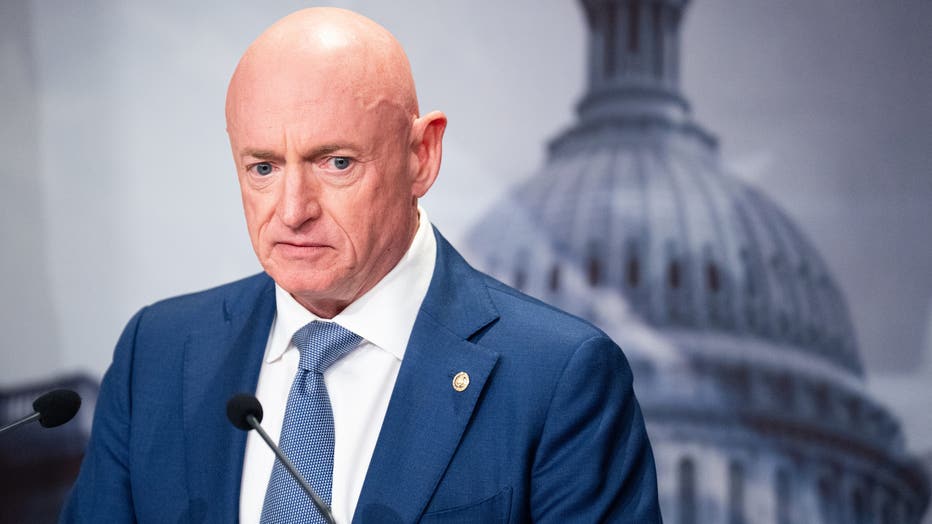
A federal judge in Washington, D.C., has temporarily halted Pentagon efforts to discipline Senator Mark Kelly after the Arizona Democrat filed a lawsuit alleging retaliation over protected political speech. The ruling grants a preliminary injunction preventing the Department of Defense from proceeding with a review that could have led to a demotion in rank and a reduction in retirement pay for the former Navy Captain.
The case centers on a video released on social media in which Kelly and several Democratic lawmakers told U.S. servicemembers that they have the right to refuse unlawful commands. The dispute has escalated into a broader constitutional debate over the limits of executive authority, the rights of retired military officers, and the protections afforded under the First Amendment.
Court Sides With Kelly on First Amendment Grounds
The injunction was issued by Judge Richard Leon of the U.S. District Court for the District of Columbia, who concluded that the Pentagon’s actions raised serious constitutional concerns. In his written opinion, Leon stated that the court had sufficient grounds to determine that the defendants had infringed upon Kelly’s First Amendment rights and potentially threatened the liberties of military retirees nationwide.
Kelly’s legal team argued that the review initiated by Defense Secretary Pete Hegseth amounted to unlawful retaliation. According to the complaint, the Constitution prohibits government officials from punishing individuals for protected political expression, particularly when elected officials are speaking on public policy matters.
The judge’s ruling effectively freezes any administrative steps aimed at altering Kelly’s retirement grade while the litigation proceeds. Legal experts note that preliminary injunctions are granted when a court believes the plaintiff is likely to succeed on the merits and faces irreparable harm without judicial intervention.
Further background on the structure and oversight of the Defense Department can be found on the official website of the U.S. Department of Defense at https://www.defense.gov, while information regarding Senate procedures and constitutional responsibilities is available through the U.S. Senate at https://www.senate.gov.
Pentagon Review and Political Fallout
The controversy began after Hegseth formally censured Kelly for participating in the video, describing the statements as “seditious.” The Pentagon also announced a review of Kelly’s retirement status, a move that could have reduced his rank and impacted his retirement compensation.
Kelly, who served as a Navy Captain before entering politics, has maintained that the message in the video reflects long-standing military doctrine. Military law and guidance, including principles outlined within the Uniform Code of Military Justice, make clear that service members are not obligated to carry out unlawful orders. Resources discussing military legal standards are publicly accessible through the Department of Justice at https://www.justice.gov.
The dispute intensified after former President Donald Trump sharply criticized the lawmakers involved in the video, calling their actions “seditious behavior” in a social media post. Trump suggested they should face arrest and trial, though no charges were ultimately brought. A grand jury in Washington, D.C., reportedly declined to indict the lawmakers after federal prosecutors explored potential charges.
Details regarding grand jury procedures and federal judicial processes can be reviewed through the U.S. Courts system at https://www.uscourts.gov, which outlines how indictments are evaluated and approved.
Broader Implications for Military Retirees and Lawmakers
Following the ruling, Kelly emphasized that the case extends beyond his personal situation. He argued that allowing the Pentagon’s actions to proceed could send a chilling message to millions of retired service members, suggesting they risk professional consequences for expressing political opinions.
The preliminary injunction does not resolve the lawsuit but preserves the status quo while the case advances through the courts. Hegseth responded publicly that the ruling would be immediately appealed, signaling that the legal battle may continue in higher courts.
At the heart of the dispute lies a constitutional question: can executive branch officials discipline a retired military officer who is now an elected lawmaker for statements made in a political context? The answer could shape future interactions between civilian leadership, military retirees, and members of Congress with prior service backgrounds.
As the appeals process unfolds, the case is likely to attract continued scrutiny from constitutional scholars, veterans’ groups, and policymakers concerned about the boundaries of free speech within national security institutions. The outcome may carry lasting implications for how political expression by former military officers is interpreted under federal law and how administrative authority is exercised within the Department of Defense.