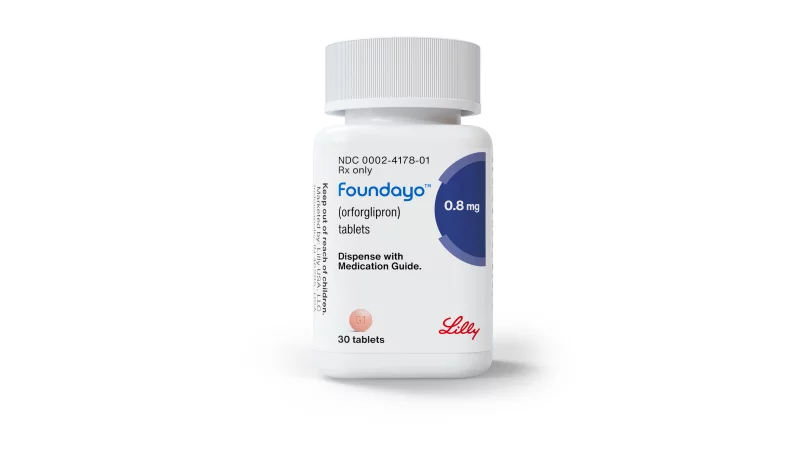
A new alternative in obesity treatment
The approval of a new oral medication for obesity by the <a href="/es/”https://www.fda.gov”/">Food and Drug Administration</a> marks a significant shift in how patients can manage weight-related conditions. Developed by Eli Lilly, the once-daily pill introduces an alternative to injectable therapies that have dominated the market in recent years.
This latest treatment enters a competitive landscape alongside other GLP-1-based drugs, offering patients more flexibility in how they approach long-term weight management. Unlike traditional injectable options, the pill format is expected to appeal to individuals seeking a less invasive and more convenient routine. For many, the ability to take a daily tablet instead of managing injections could improve adherence and consistency over time.
The agency moved quickly in its review process, granting approval in just 50 days under a fast-track pathway reserved for treatments considered a national priority. This unusually rapid timeline underscores both the urgency of addressing obesity and the growing demand for accessible therapies.
How the new pill works and compares
The newly approved drug differs from earlier treatments in a key way: its active ingredient is not a peptide but a small molecule designed to mimic similar biological effects. This innovation allows the medication to be absorbed more efficiently by the body when taken orally, removing some of the strict requirements associated with peptide-based pills.
In contrast, other oral treatments rely on peptide compounds that must be carefully timed around meals to avoid breakdown in the digestive system. This new formulation eliminates those restrictions, allowing patients to take the medication without fasting or coordinating around food intake.
Clinical trial data submitted through <a href="/es/”https://clinicaltrials.gov”/">clinical trial registries</a> showed notable results. Participants who followed the highest dosage over a 72-week period experienced an average weight reduction of 27.3 pounds, equivalent to 12.4% of their body weight. Those given a placebo saw significantly smaller changes, averaging just 2.2 pounds, or 0.9%.
While the results are promising, comparisons with competing medications remain limited. No direct head-to-head trials have been conducted, leaving open questions about relative effectiveness. Still, experts suggest that ease of use could play a decisive role in real-world outcomes, where patient behavior often determines long-term success.
Cost, access and market impact
Despite the expanded treatment options, affordability continues to shape patient access. The starting monthly cost for the new pill is set at $149 for individuals paying out of pocket, making it less expensive than some injectable alternatives, which can reach $299 per month or more depending on dosage.
Insurance coverage remains a critical factor. Programs linked to <a href="/es/”https://www.medicare.gov”/">Medicare</a> may offer reduced copays as low as $50 monthly, while certain commercial plans could lower costs further to around $25 with manufacturer assistance programs. However, broader coverage policies are still evolving, and access may vary significantly depending on individual plans.
Healthcare providers emphasize that cost—not method of delivery—is often the primary barrier for patients. Even as innovation introduces more convenient options, financial considerations continue to determine who can benefit from these therapies.
The growing interest in weight-loss medications also reflects a broader public health challenge. According to data tracked by the <a href="/es/”https://www.cdc.gov”/">Centers for Disease Control and Prevention</a>, obesity rates have steadily increased, driving demand for more effective and scalable treatments. As pharmaceutical companies expand their portfolios, competition is expected to intensify, potentially influencing pricing and accessibility in the coming years.