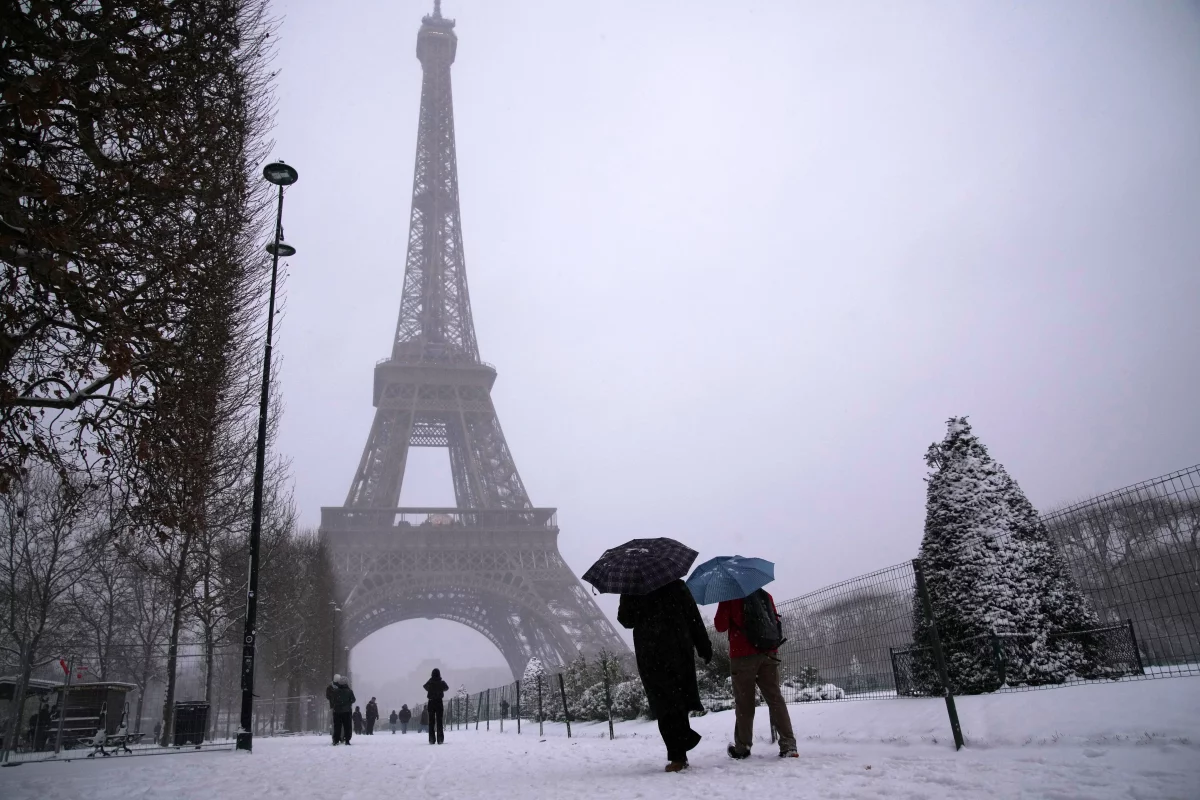
A powerful winter storm has swept across large parts of Europe. It triggered widespread disruption to air travel, rail networks, and road transport. This exposed the vulnerability of critical infrastructure during extreme weather events. Airports, highways, and urban transit systems struggled to operate as snow and ice accumulated rapidly. Thus, authorities were forced to ground flights, suspend public transport, and urge citizens to remain indoors.
The impact has been particularly severe at major international hubs, where thousands of passengers were stranded overnight amid cascading cancellations. Beyond the immediate travel chaos, the storm has also generated significant economic losses for airlines and logistics operators. Local governments faced costs mounting into billions of dollars as delays ripple through supply chains and tourism-dependent economies.
Airports overwhelmed as flights are grounded
One of the hardest-hit locations has been Amsterdam’s Schiphol Airport. It is a key European aviation hub managed by Royal Schiphol Group. Persistent snowfall and freezing temperatures forced airport authorities to suspend operations on multiple runways. As a result, they canceled hundreds of departures and arrivals and left passengers sleeping on temporary beds inside terminal buildings.
Airlines faced substantial financial exposure as aircraft remained grounded and crews exceeded regulated duty hours. Industry analysts estimate that large-scale flight disruptions of this magnitude can cost airlines more than $100 million per day. This includes lost ticket revenue, compensation obligations, and aircraft repositioning expenses. National carrier KLM confirmed that proactive passenger alerts reduced congestion at the terminals. However, they acknowledged that recovery would take days as aircraft and crews are repositioned across Europe.
Similar challenges emerged at Paris’s main airports. Snow and black ice reduced operational capacity and forced the suspension of bus services linking terminals to the city. Aviation authorities warned that even brief weather-related shutdowns at major hubs can create system-wide delays. This is because aircraft rotations across Europe are tightly interconnected.
Rail and road networks grind to a halt
The winter storm also placed enormous strain on rail and road infrastructure across multiple countries. In the Netherlands, the national rail operator NS urged travelers to postpone journeys. This was due to switches freezing and reduced-speed operations, which triggered widespread cancellations. Freight services were also disrupted, compounding delays in time-sensitive deliveries and industrial supply chains.
Road transport fared little better. Truck accidents and stranded vehicles forced highway closures, while snow-clearing operations struggled to keep pace with the intensity of the storm. Transport economists estimate that severe winter weather events can inflict indirect economic losses exceeding $1 billion per day across Europe. This is due to lost productivity, delayed freight, and emergency response costs.
Urban centers experienced additional strain as public transit systems were suspended for safety reasons. In Sweden, tram services were halted to prevent accidents caused by snow accumulation along tracks. Meanwhile, in Finland, cold-related mechanical failures affected bus fleets that had been idle during the holiday period.
Energy systems, public safety and economic impact
Beyond transportation, the storm highlighted the fragility of energy and public safety systems during prolonged cold spells. In Berlin, electricity was gradually restored to thousands of households after days without power in sub-zero conditions. This underscored the risks posed by infrastructure disruptions during winter extremes. Energy experts note that extended outages can generate economic damages running into hundreds of millions of dollars. These damages factor in business closures, emergency services, and residential heating failures.
Weather authorities across Europe, including Meteo France, issued alerts warning of continued snow and ice. They advised remote work and restrictions on non-essential travel. Governments also imposed temporary bans on heavy vehicles and school transport in affected regions. This was to reduce accident risks and ease pressure on emergency services.
The broader economic consequences are expected to extend beyond immediate repair costs. Tourism operators face cancellations during a peak travel period. Meanwhile, manufacturers dependent on just-in-time logistics confront production slowdowns. As climate variability increases, policymakers and infrastructure managers are facing renewed pressure to invest billions of dollars in winter resilience. This includes upgrades from rail systems to airport de-icing capacity and more robust power grids.
While cleanup efforts continue and transport networks gradually resume operations, the storm serves as a stark reminder. Extreme winter weather remains a powerful disruptor across Europe, with consequences that extend far beyond stranded passengers and snow-covered runways.