America’s Urban Search and Rescue Teams Confront Expanding Demands and Financial Pressure
Urban Search and Rescue units across the United States continue to operate under increasingly complex conditions as extreme weather events, structural collapses and large-scale emergencies grow in frequency. These teams, composed of firefighters, engineers, medical specialists and technical experts, were designed to serve as the country’s last line of response when disasters overwhelm conventional emergency services. Their work now spans hurricane rescues, wildfire recoveries, building collapses and missions in hazardous confined spaces—operations that require extensive training, high-performance equipment and significant federal support. As discussions around the restructuring of the Federal Emergency Management Agency intensify, uncertainty is rising about how these elite teams will be funded and deployed in the years ahead.
Training, Expertise and the Evolution of High-Risk Rescue Skills
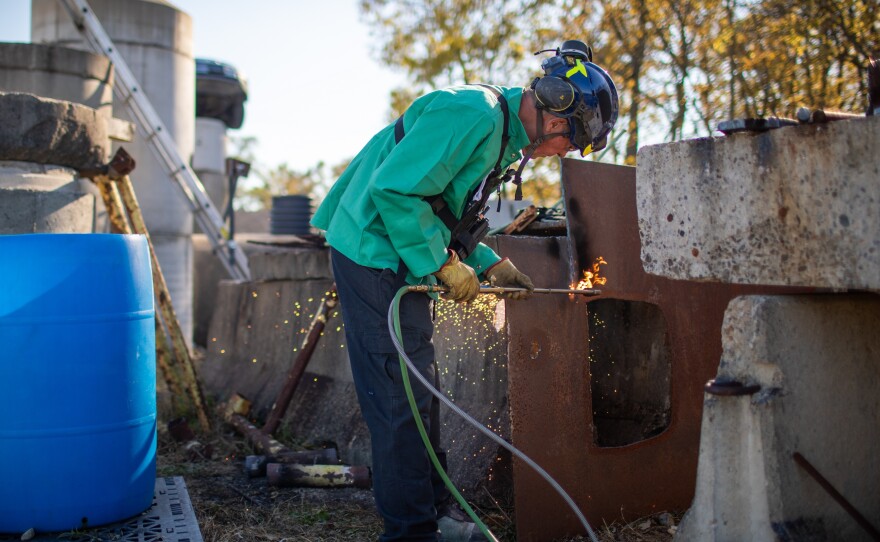
In training sites such as Dayton, Ohio, responders sharpen specialized skills that only a handful of emergency professionals in the country possess. Exercises involving blowtorches inside concrete cylinders, simulated building collapses or navigating narrow voids are designed to replicate the pressures of real-world crises. Trainees must maneuver through restricted spaces, manage heavy-duty tools, analyze unstable structures and maintain enough situational awareness to extract victims safely.
Urban Search and Rescue personnel routinely travel across states to complete advanced courses, including K-9 search methodology, structural engineering assessments or swift-water rescue strategies. These programs, spread across more than a dozen annual training cycles, function as a national network that upgrades skills year-round. Additional information about emergency preparedness standards can be found through organizations like https://www.ready.gov or technical safety guidance provided by https://www.osha.gov. Integrating such competencies ensures that when units are sent to storms, wildfires or collapses, teams from different parts of the country can operate interchangeably without hesitation.
A Growing Workload as Climate Events Intensify Nationwide
The rise in extreme weather directly affects how often these units deploy. In 2024 alone, the national network responded to nine major disasters, matching the highest deployment count in more than two decades. Hurricanes, flash floods and widespread fires have stretched personnel, requiring rapid mobilization across state lines with only about six hours’ notice.
Members often compare their roles to a hybrid between firefighters and National Guard reservists: they work standard local jobs until a federal call arrives, at which point they travel anywhere in the country to support overwhelmed communities. Far from routine firefighting, these missions demand structural evaluation under dangerous conditions, long operational hours and coordination with federal, state and municipal agencies. Tracking climate-related trends through https://www.climate.gov shows why rescue deployments have surged and why the national response system faces unprecedented operational intensity.
The phrase often repeated by team veterans—“There’s no 911 for us”—captures the reality that these crews cannot request additional rescue forces once inside a compromised building or debris field. Their training, tools and internal coordination become the only safety net when operations turn hazardous.
Funding Limits, FEMA Changes and the Future of the Rescue Network
Despite their national impact, the 28 federally recognized Urban Search and Rescue task forces operate with limited financial support: approximately $40 million annually from Congress. Experts argue that maintaining equipment, transportation, medical readiness and training requires nearly double that amount. Inflation, equipment upgrades and travel costs for nationwide deployment have widened the gap between required resources and available funding.
Further complicating the landscape are proposed federal changes that would dramatically restructure FEMA. Should the existing agency framework be dismantled or reduced, the national rescue network could face uncertainties in oversight, financial stabilization and operational coordination. The federal task force model depends on consistent standards and unified command structures; altering FEMA’s organizational role risks weakening this cohesion. Additional context on FEMA’s emergency protocols is available at https://www.fema.gov, which details federal disaster responsibilities and the integration of specialized rescue units.
Still, those who serve on the teams emphasize that their mission remains unchanged: safeguard lives, navigate the most dangerous environments in the country and respond when every second matters. Veterans who participated in landmark operations—including hurricanes, wildfires and major structural disasters—stress that the nation’s return on investment in search and rescue is unmatched. Their dedication persists even as financial pressure, administrative uncertainty and climate-driven emergencies test the resilience of the entire system.