National Guard Operations Face Legal Uncertainty in Tennessee
A recent judicial decision in Tennessee has introduced a significant pause in the federal crime-reduction efforts underway in Memphis. On Monday night, a state chancellor issued an order temporarily blocking the deployment of the Tennessee National Guard. This was under the public safety initiative launched by President Donald Trump. Although the injunction is not yet in effect, the state has been granted five days to file an appeal. This creates a brief window in which the operation may continue as attorneys prepare to argue over the legal boundaries of state and federal authority.
The ruling aligns with a lawsuit brought by state and local officials. They argue that Tennessee law restricts the governor’s ability to mobilize the Guard for civil unrest unless a rebellion or invasion is occurring. They also contend that specific statutes require a direct request from local governments when Guard assistance is tied to scenarios involving a breakdown in public order. These questions have brought renewed attention to Tennessee’s framework for emergency response. This outlines obligations for state officials and local agencies. For readers seeking broader context on state law processes, Tennessee’s official portal at tn.gov provides additional reference material.
State representatives maintain that the governor retains broad authority to deploy the Guard when necessary. The governor also determines when conditions justify activation. As the discussions continue, Memphis leaders and community members are evaluating how the temporary uncertainty may influence ongoing safety initiatives. These include policing strategies, neighborhood patrols, and extensive collaboration between local departments and federal agencies.
Political Leaders React to Ongoing Dispute Over Deployment
Public officials in Shelby County and Memphis have responded with a range of perspectives on the deployment. Shelby County Mayor Lee Harris, a plaintiff in the lawsuit, expressed support for the court’s decision and emphasized that the ruling represents a step toward ensuring that legal protocols are applied consistently for all residents. Although the order is not yet active, Harris has stated that the temporary pause allows the state’s legal team to seek appellate review. This review affirms core questions about governmental authority.
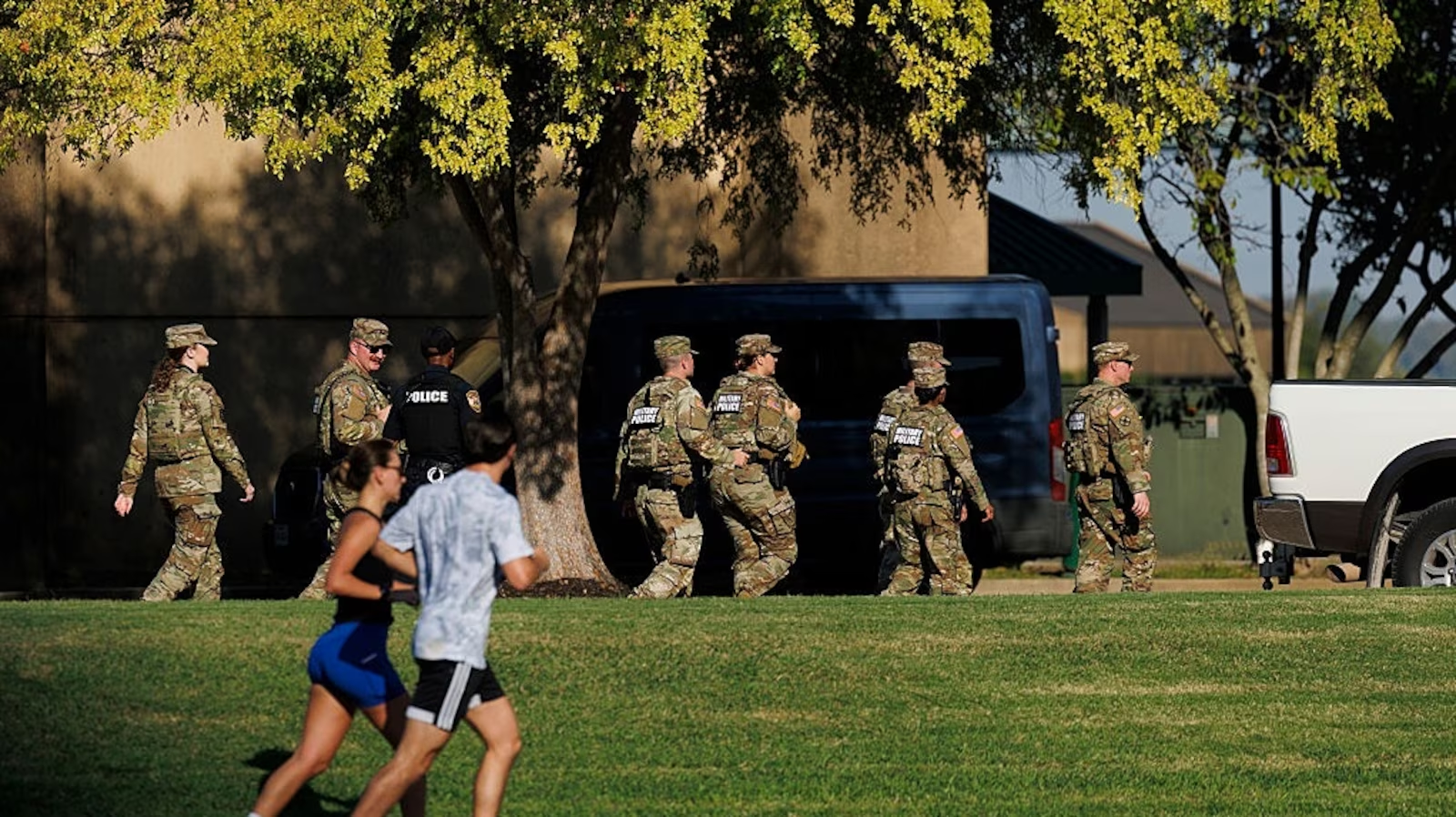
The presence of Guard members in Memphis has been noticeable since their arrival on October 10. Troops have been conducting visible patrols across commercial corridors and residential areas, including locations near downtown landmarks. Wearing protective gear and marked vests identifying them as military police, members of the Guard have been moving within the city’s public spaces. They do so without exercising arrest power, as officials have clarified. This visual element of the operation has become part of a broader debate about public safety in urban areas. It is a topic often discussed on national platforms such as usa.gov for those seeking federal policy information.
Memphis Mayor Paul Young has stated he did not request the Guard’s deployment. However, he has continued to engage with participating agencies to prioritize efforts against violent crime. His position reflects ongoing discussions about the balance between local authority and state-level decisions involving public safety interventions.
Impact on Crime-Reduction Efforts and Local Enforcement
The Memphis Safe Task Force, established through a national directive, includes hundreds of personnel from various agencies. It continues operating despite the legal challenges. For years, Memphis has contended with elevated levels of violent crime, including assaults, carjackings, and homicides. While recent data shows improvement in certain categories, concerns persist among residents and officials. They monitor trends through regional resources such as memphistn.gov.
According to official statements, the task force has made more than 2,500 arrests since its launch. These cover charges related to weapons, narcotics, homicide investigations, and immigration warrants. Governor Bill Lee has said the Guard is meant to provide crucial support to these operations, reinforcing coordination between federal and state partners. His administration continues to assert that the governor, as commander-in-chief of the state’s military forces, has constitutional authority to authorize Title 32 missions under Tennessee law. State statements also emphasize the broader goal of creating long-term improvements in public safety through collaboration, policy alignment, and data-driven enforcement. Readers exploring public safety programs may find additional context on fbi.gov, where national crime trends and support initiatives are frequently documented.
As the state prepares its appeal, the future of the National Guard’s role in Memphis remains uncertain. The evolving legal process is poised to influence how Tennessee interprets executive authority, local autonomy, and the use of military resources during periods of heightened concern over public safety.