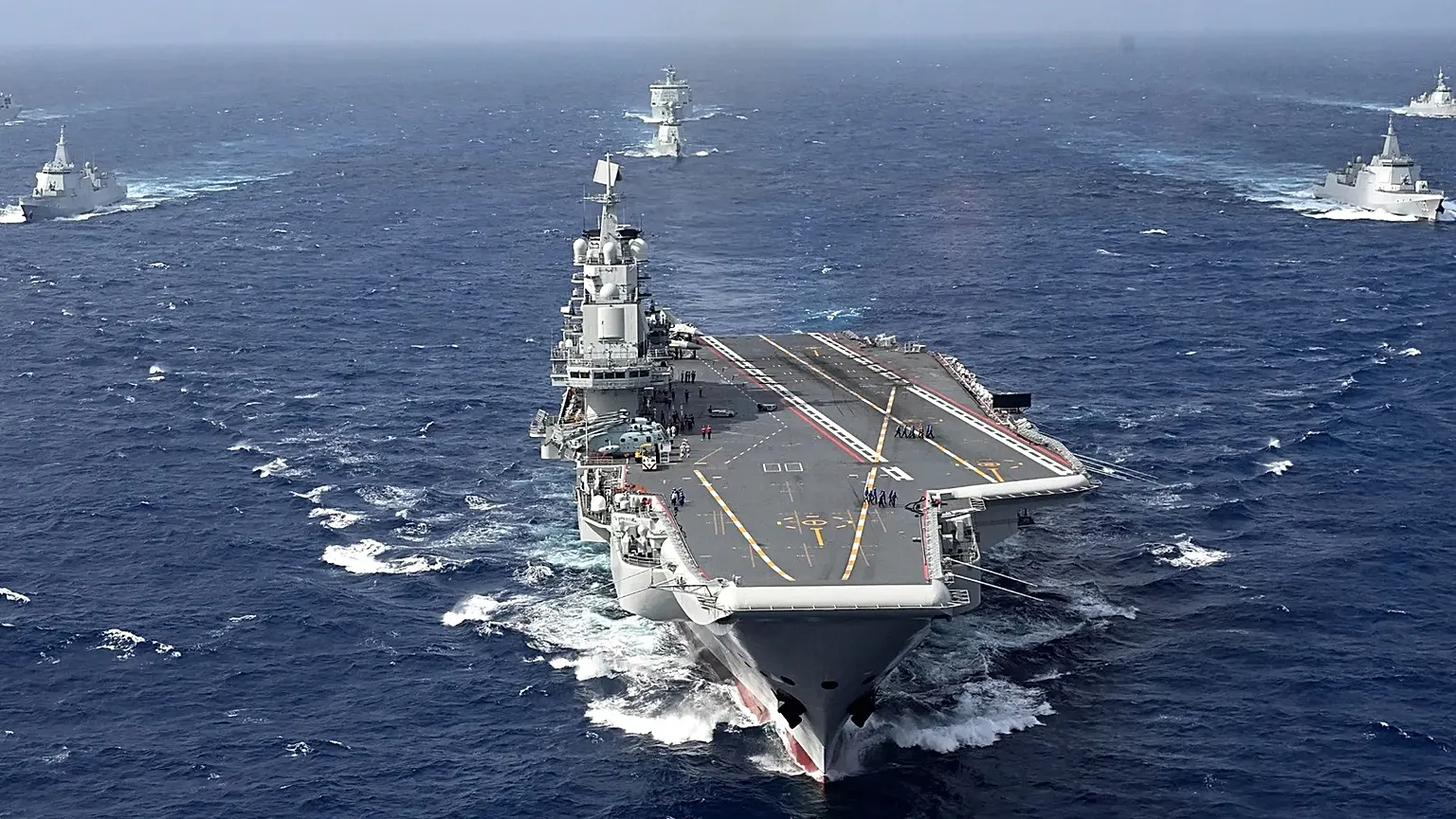
China significantly escalated military activity around Taiwan by deploying coordinated air, naval, and rocket forces. This occurred in a sweeping series of joint drills that encircled the island and extended into multiple strategic zones of the Taiwan Strait. The operation marked one of the most comprehensive displays of military coordination in the region in recent years. It reinforced Beijing’s message of deterrence toward what it describes as separatist movements and foreign involvement.
The drills unfolded across northern, southern, eastern, and western approaches to Taiwan. They involved fighter jets, bombers, destroyers, frigates, unmanned aerial vehicles, and long-range missile units. Military analysts note that the scale and geographic spread of the maneuvers demonstrate a growing emphasis on multi-domain operations. These operations are designed to project control over critical sea lanes and airspace surrounding the island. According to official Chinese defense communications released via the Ministry of National Defense platform at https://www.mod.gov.cn, the exercises focused on joint combat readiness, rapid deployment, and the ability to impose blockades on key maritime routes.
Intensified Military Coordination Across Air and Sea
The drills emphasized synchronized operations between air and naval units, reflecting China’s evolving doctrine of integrated warfare. Aircraft conducted sustained patrols and simulated strike missions, while surface vessels maneuvered through contested waters to test real-time coordination. They also assessed response times. Rocket forces carried out simulated long-range targeting exercises aimed at demonstrating precision strike capabilities.
Taiwan responded by elevating its military readiness and activating rapid-response drills across its armed forces. Defense officials reported heightened surveillance and continuous monitoring of activity in surrounding waters and airspace. This underscores the pressure placed on Taiwan’s defense infrastructure. Information released through Taiwan’s official government portal at https://www.taiwan.gov.tw highlights ongoing investments in early-warning systems and air defense modernization. These are part of broader efforts to counter increasing military pressure.
Regional Impact and Aviation Disruptions
Beyond military implications, the drills had immediate consequences for regional transportation and commerce. Aviation authorities issued multiple temporary restricted airspace zones around the Taiwan Strait. Thus, they forced international airlines to reroute or cancel flights. This disruption affected more than $120,000,000 in projected aviation-related economic activity over a short operational window. Industry estimates based on average flight revenue and passenger volume provide this data.
Civil aviation safety notices mirrored international standards similar to those published by agencies such as the Federal Aviation Administration. This can be referenced at https://www.faa.gov. They illustrate how military exercises in strategic corridors can ripple into global travel networks. Airlines operating trans-Pacific routes were compelled to adjust flight paths. This increased fuel costs and travel times, adding logistical complexity for carriers and passengers alike.
Strategic Messaging and International Ramifications
The timing and scale of the drills carried strong geopolitical messaging. By conducting live-fire exercises and announcing operational objectives that included comprehensive deterrence beyond the immediate island chain, Beijing signaled its readiness to counter perceived external involvement in cross-strait affairs. These maneuvers come amid rising defense expenditures across the Indo-Pacific, where military budgets have collectively surpassed $575,000,000,000. Nations are reassessing regional security dynamics as a result.
International observers continue to monitor developments closely. This is particularly relevant as defense cooperation and arms procurement in the region expand. Policy frameworks such as those outlined by the U.S. Department of Defense can be viewed at https://www.defense.gov. They illustrate how Taiwan’s security remains a focal point in broader strategic planning, even as diplomatic sensitivities persist.
As drills continue and military assets remain active around Taiwan, the situation underscores the fragile balance between deterrence and escalation. This remains true in one of the world’s most strategically vital regions. The sustained presence of advanced military systems and the increasing frequency of large-scale exercises suggest that regional tensions are likely to remain elevated. Consequently, they shape security calculations for governments, industries, and global markets alike.