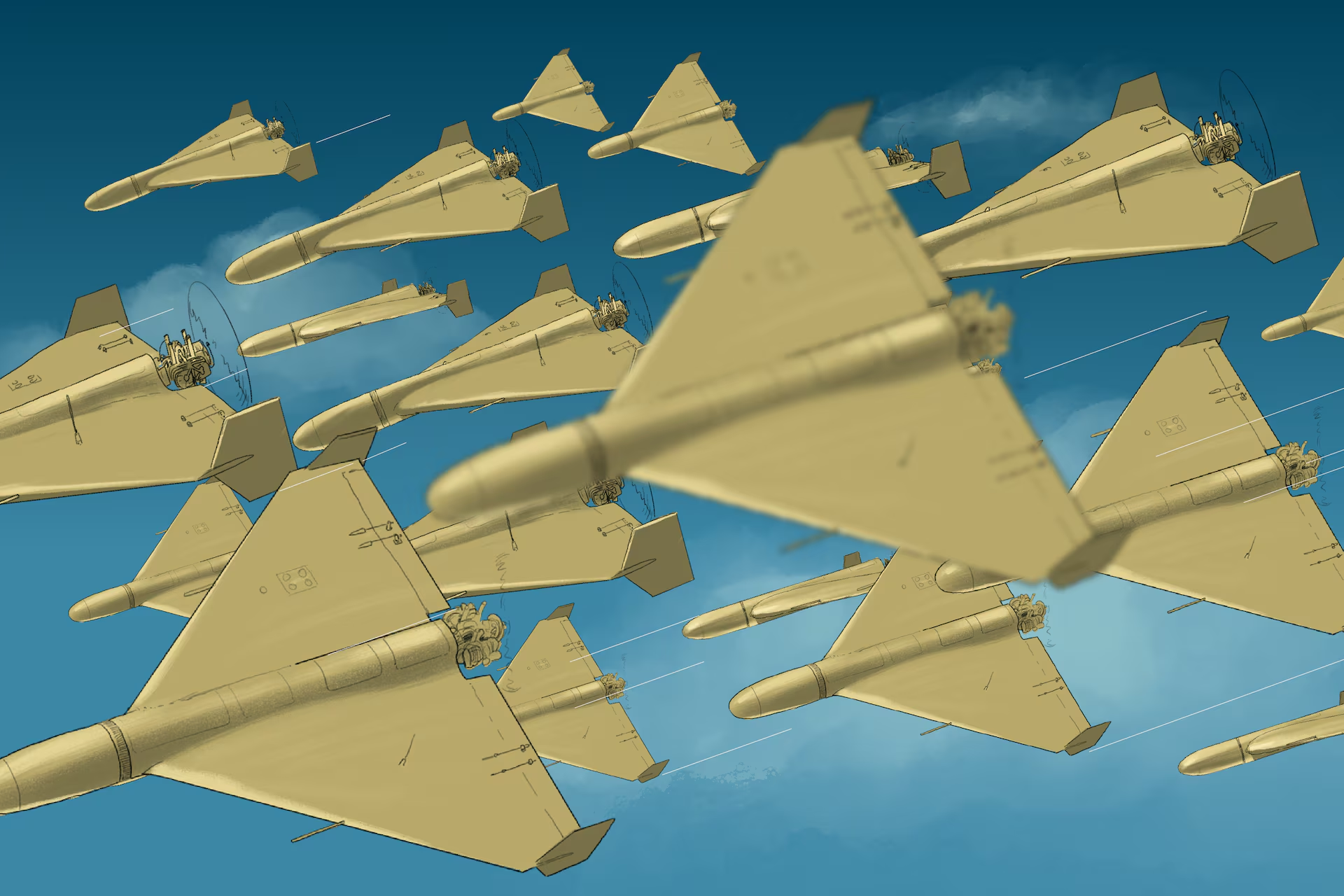
Low-cost drones are rapidly transforming the nature of modern warfare, forcing militaries to rethink long-standing defense strategies. In recent weeks, as conflict intensifies across the Middle East, waves of unmanned aerial vehicles have become a near-daily threat in key مناطق, exposing vulnerabilities in even the most advanced defense systems.
In cities such as Erbil, repeated drone interceptions have become a routine spectacle. Defensive systems deployed by the United States are capable of destroying many incoming targets, but the sheer volume and persistence of these attacks highlight a growing imbalance. The economic contrast is striking: relatively inexpensive drones—often costing between $20,000 and $50,000—are being countered with interceptor missiles worth millions of dollars.
This disparity is not only financial but strategic, raising concerns about sustainability if such engagements continue over an extended period.
Cost Imbalance Challenges Military Defenses
The evolving battlefield has revealed a critical weakness in traditional military planning. Advanced missile defense systems, including those coordinated through commands like the U.S. Central Command, are highly effective but come at a steep cost. Each interception represents a significant expenditure, especially when facing large numbers of low-cost drones.
This imbalance allows adversaries to stretch resources by deploying swarms of inexpensive unmanned systems. Over time, the cost of defending against these attacks can far exceed the investment required to launch them. The result is a strategic dilemma: whether to continue relying on high-cost interceptors or develop alternative, more affordable countermeasures.
There are also concerns about supply limitations. Interceptor stockpiles are not unlimited, and prolonged conflict could strain availability, particularly if demand increases across multiple regions simultaneously.
Drones Expand Access to Air Power
One of the most significant shifts driven by drone technology is the democratization of air power. Systems that were once exclusive to advanced militaries are now accessible to smaller nations and even non-state actors. This shift has altered the balance of power on modern battlefields.
Conflicts in Eastern Europe have demonstrated how commercially available drones can be adapted for combat use. Insights from organizations such as the Council on Foreign Relations show that these systems can be modified to carry explosives, conduct surveillance, or disrupt enemy operations at a fraction of the cost of traditional aircraft.
In addition to military-grade drones, consumer-level quadcopters have been repurposed for tactical missions, including reconnaissance and targeted strikes. These innovations have introduced new challenges for defense systems, which must now detect and respond to smaller, slower, and often harder-to-track threats.
The widespread use of drones has also changed how soldiers operate on the ground. Threats can now come from above at any moment, requiring constant vigilance and new forms of training.
Adapting to a New Era of Warfare
As drone usage expands, militaries are being forced to adapt in real time. The development of layered defense systems—combining missiles, electronic warfare, and ground-based countermeasures—is becoming increasingly important. Experts working with institutions like the Center for Strategic and International Studies emphasize that relying solely on high-end interceptors is no longer sufficient.
Alternative approaches are gaining attention, including the use of electronic jamming, directed energy weapons, and even low-cost interceptor drones designed to neutralize incoming threats. These methods aim to reduce the financial burden while maintaining defensive effectiveness.
Despite these efforts, challenges remain. Drones can fly at low altitudes, evade radar detection, and appear with little warning, making them difficult targets even for advanced systems. Research supported by agencies such as the Defense Advanced Research Projects Agency is focused on improving detection and response capabilities to address these evolving threats.
As conflicts continue to evolve, the role of drones is expected to expand further, reshaping not only how wars are fought but also how they are financed and sustained.