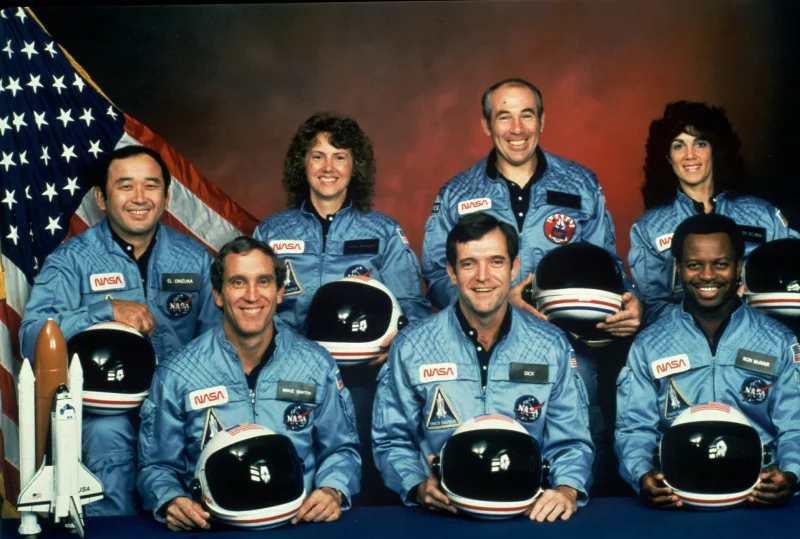
The Challenger disaster remains one of the most consequential moments in the history of human spaceflight, not only because of the loss of seven astronauts but because of what it revealed about decision-making under pressure. Four decades later, the events surrounding the January 28, 1986 launch continue to influence how space agencies and aerospace contractors evaluate risk, engineering data, and accountability. The tragedy was not caused by a lack of knowledge, but by the failure to act decisively on known technical dangers within a complex institutional system.
Engineers at Morton Thiokol, the contractor responsible for the Space Shuttle’s solid rocket boosters, had been tracking a serious flaw years before Challenger’s final mission. The booster rockets were built in cylindrical segments joined together by field joints sealed with rubber O-rings. These components were designed to prevent superheated gases from escaping during launch, when internal pressures reached extreme levels. Repeated post-flight inspections revealed evidence that hot gases were eroding the O-rings, especially during cold-weather launches. Despite mounting documentation, flights continued as scheduled, reinforcing a belief that the system was operating within acceptable limits.
Engineering warnings and the O-ring failure
The technical problem at the center of the Challenger disaster involved how the O-rings responded to temperature. At lower temperatures, the rubber lost elasticity, delaying its ability to seal the joint as pressure built during ignition. Engineers demonstrated that this delay could allow flame to escape, potentially leading to catastrophic structural failure. Internal memoranda circulated within Morton Thiokol warned explicitly of the risk of crew loss, language rarely used in routine engineering discussions. These concerns were communicated during meetings with NASA officials, including a critical teleconference the night before launch.
Despite an initial recommendation from contractor engineers to delay liftoff, management reversed its position after internal deliberations. The final decision to proceed reflected competing priorities, including schedule pressure and institutional confidence built on previous successful launches. Today, NASA’s engineering protocols emphasize independent technical authority and dissenting opinions, principles now central to agency policy and documented in safety frameworks available through platforms such as https://www.nasa.gov, where modern risk-management standards are outlined in detail.
The human cost and cultural impact
The Challenger mission carried a uniquely symbolic payload: a civilian educator selected to teach lessons from orbit. This decision significantly increased public visibility and emotional investment in the mission. Millions of students across the United States watched the launch live, transforming what had become a routine technical operation into a nationally shared experience. When the shuttle disintegrated shortly after liftoff, the shock resonated far beyond the aerospace community.
The loss forced a national reckoning with how organizations normalize known risks over time. Sociological studies later identified a pattern in which repeated exposure to anomalies without immediate consequences led decision-makers to accept those anomalies as tolerable. This phenomenon reshaped how large technical systems assess danger, not only in aerospace but also in fields such as nuclear energy, medicine, and transportation. NASA’s historical analysis of Challenger, archived at https://history.nasa.gov, continues to serve as a foundational case study in engineering ethics and organizational behavior.
How Challenger reshaped modern spaceflight
In the years following the disaster, the Space Shuttle program was grounded, redesigned, and restructured. The solid rocket boosters were modified, joint designs were improved, and safety oversight mechanisms were strengthened. These changes increased operational costs by billions of dollars but fundamentally altered NASA’s safety culture. Long-term investments in independent review boards and engineering transparency became non-negotiable elements of crewed missions.
The lessons of Challenger remain especially relevant as a new generation of spacecraft enters service. Commercial partners now play a larger role in human spaceflight, operating alongside NASA under public-private frameworks. Companies involved in launch vehicle development must meet rigorous safety certification standards before carrying astronauts, reflecting institutional memory shaped by past failures. This evolving landscape can be observed through ongoing crew programs detailed at https://www.spacex.com y https://www.boeing.com, where modern spacecraft design emphasizes redundancy, fault tolerance, and continuous testing.
Forty years later, the Challenger disaster stands as a reminder that engineering data, no matter how compelling, must be empowered by organizational structures willing to act on it. The enduring guilt expressed by engineers who attempted to halt the launch underscores a critical truth: technological advancement depends not only on innovation, but on the courage to delay, question, and dissent when human lives are at stake.