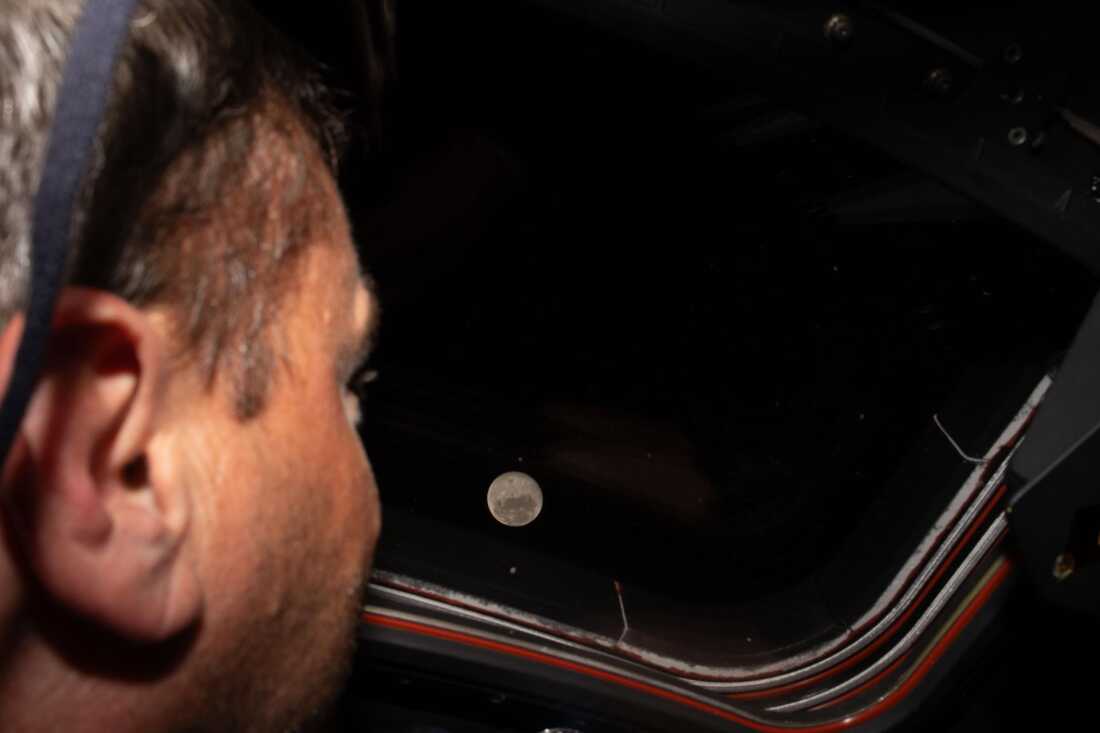
NASA’s Artemis II has marked a historic milestone in human space exploration, as its four-astronaut crew completed a record-breaking journey around the Moon. Traveling farther than any humans before, the mission surpassed a decades-old benchmark set during Apollo 13, signaling a new era in deep space exploration.
The crew, aboard the Orion spacecraft, is now on its return to Earth after completing a complex lunar flyby that combined scientific observation, engineering validation, and symbolic achievements that underscore the future of human spaceflight.
Record-breaking journey and communication blackout
As the Orion capsule passed behind the Moon, the astronauts experienced a 40-minute communication blackout caused by the Moon blocking signals to NASA’s Deep Space Network. During this period, the spacecraft reached a closest distance of approximately 4,067 miles above the lunar surface.
Moments later, the mission achieved its maximum distance from Earth at 252,756 miles, exceeding the Apollo 13 record by 4,111 miles. This milestone represents the farthest distance humans have ever traveled from Earth, reinforcing Artemis II’s role as a critical stepping stone toward future lunar landings.
Mission specialist Christina Koch delivered a message to Earth just before the blackout, highlighting the emotional and symbolic nature of the mission. Upon reestablishing communication, the crew confirmed a successful maneuver around the far side of the Moon.
For more on NASA’s deep space missions, visit https://www.nasa.gov
Scientific discoveries and rare solar eclipse observation
Beyond its record-setting distance, Artemis II delivered valuable scientific insights. The astronauts conducted real-time geological observations of approximately 35 areas on the Moon’s surface, identifying variations in color and terrain that could reveal important information about mineral composition.
Working closely with scientists at the Johnson Space Center, the crew provided detailed descriptions that complement satellite imagery. Human observation remains critical, as subtle color differences can be more easily identified by the eye than by remote sensors.
The mission also offered a rare opportunity to observe a solar eclipse from deep space. As the Moon passed in front of the Sun, the crew witnessed the solar corona, capturing data and imagery that could contribute to ongoing solar research.
Pilot Victor Glover described the event as an extraordinary visual experience, emphasizing the unique vantage point provided by the mission trajectory.
To explore more about lunar science and exploration, visit https://solarsystem.nasa.gov y https://www.esa.int
Preparing for future lunar missions and long-term exploration
Artemis II serves as a test flight designed to validate the performance of the Orion spacecraft and prepare for future missions that aim to land humans on the Moon as early as $2028. The data collected during this mission will inform navigation systems, safety protocols, and mission planning for upcoming lunar surface operations.
The crew continues to perform critical in-flight tests during the return journey, including radiation shielding deployment and manual flight control assessments. These tests are essential for ensuring astronaut safety in long-duration missions beyond Earth orbit.
The Artemis program reflects a broader strategy to establish a sustainable human presence on the Moon, including the development of scientific outposts, rover exploration, and potential commercial opportunities in space.
For additional insights into global space exploration efforts, visit https://www.spacex.com y https://www.blueorigin.com
As Artemis II returns to Earth, it leaves behind not only a new record but also a foundation for the next phase of human exploration—one that extends beyond the Moon and toward deeper space destinations.