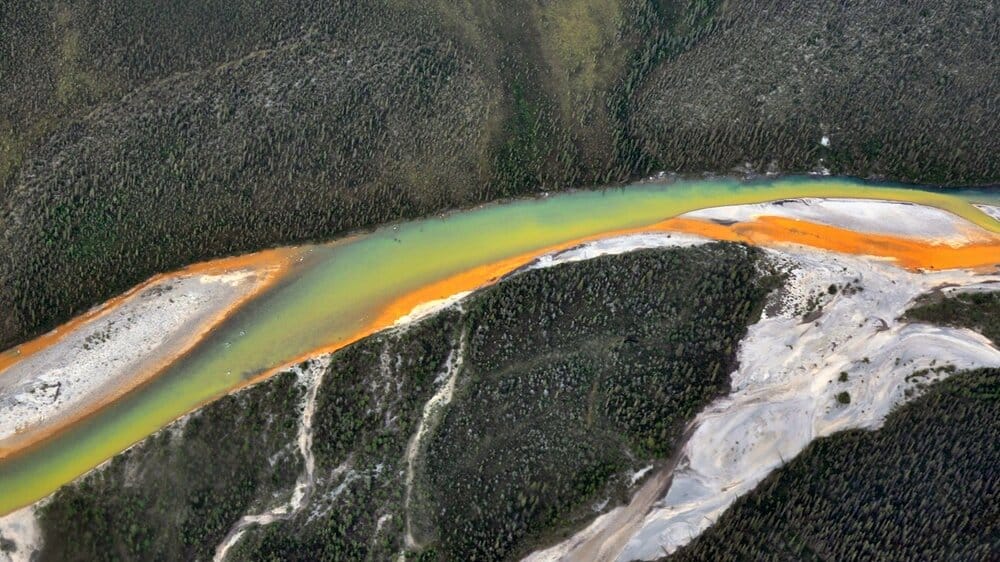
The Arctic is undergoing profound physical and ecological transformation, as hundreds of rivers and streams across northern Alaska and other high-latitude regions shift to a striking orange-red color. This change is not the result of industrial contamination, but rather the release of naturally occurring iron and metals from once-permanently frozen ground that is now thawing at unprecedented rates. Scientists studying Arctic systems increasingly describe this phenomenon as a visible signal of accelerating climate change, with implications that extend far beyond the polar regions.
Rivers flowing through areas such as the Brooks Range now carry iron-rich water that oxidizes upon contact with air, staining riverbeds and banks with vivid hues. Research into permafrost dynamics, including long-term monitoring conducted in Arctic environments, aligns with broader observations published by institutions such as the National Oceanic and Atmospheric Administration (https://www.noaa.gov), which tracks temperature, precipitation, and cryosphere trends across the region.
Thawing Permafrost and the Rise of Rust-Colored Rivers
Permafrost, a frozen layer of soil that has remained intact for thousands of years, is now thawing rapidly as Arctic temperatures rise at more than twice the global average. As ice within the soil melts, oxygen and water interact with minerals previously locked underground, releasing iron, aluminum, and copper into nearby waterways. Once these metals reach streams and rivers, they oxidize and become visible almost immediately.
Environmental scientists working in Alaska have documented how these changes can occur over short periods, sometimes within weeks. The impacts go beyond aesthetics. Elevated metal concentrations may affect fish health, aquatic invertebrates, and downstream ecosystems. Studies on Arctic hydrology hosted by the U.S. Geological Survey (https://www.usgs.gov) emphasize that changes in water chemistry could eventually influence drinking water sources for remote communities, even if no immediate contamination has been confirmed.
Glacier Loss, Flood Risk, and Rising Sea Levels
At the same time, Arctic glaciers are shrinking at a rate that is reshaping landscapes and increasing environmental risk. The Greenland Ice Sheet alone lost approximately $129 billion worth of ice mass in 2025, continuing a long-term decline driven by warmer air and ocean temperatures. Outside Greenland, glaciers across Alaska have thinned by an average of 125 vertical feet since the mid-20th century.
This loss has immediate consequences. Rapid melting increases the likelihood of glacial lake outburst floods, which have already caused severe damage in parts of southeastern Alaska. Over the longer term, melting glaciers contribute directly to global sea-level rise, amplifying flood risk, coastal erosion, and storm surge exposure in cities worldwide. Climate modeling research published by the National Snow and Ice Data Center (https://nsidc.org) consistently shows that Arctic ice loss plays a disproportionate role in global climate feedback systems.
Ocean Warming and Disrupted Arctic Food Systems
The Arctic Ocean itself is also changing character as warmer, saltier Atlantic water moves northward, a process known as Atlantification. This shift reduces sea ice formation and alters marine ecosystems. Satellite records now show the lowest Arctic sea-ice extent observed in more than four decades, affecting both wildlife and human livelihoods.
In regions such as the Bering Sea, warming waters are driving changes in fish populations, with southern species expanding northward while Arctic species decline. These shifts disrupt commercial fisheries and subsistence hunting traditions that Arctic communities depend on. Research institutions like the Woodwell Climate Research Center (https://www.woodwellclimate.org) continue to analyze how interconnected climate systems link Arctic change to global weather patterns, food security, and economic stability.