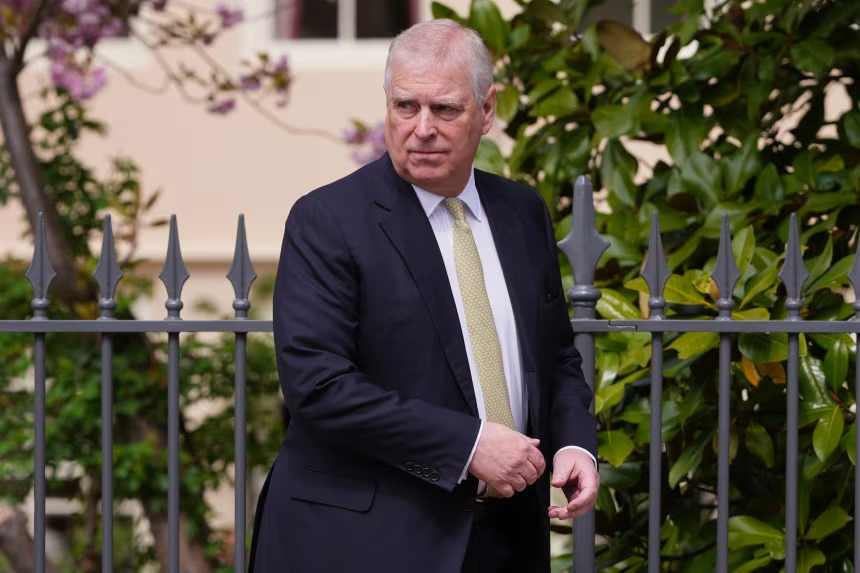
The arrest of Andrew Mountbatten-Windsor on suspicion of misconduct in public office represents a dramatic escalation in legal scrutiny surrounding the former royal. Authorities confirmed he was detained and later released under investigation, a procedural step that allows inquiries to continue without formal charges.
The alleged offense is not defined by a modern statute but stems from centuries-old common law principles. According to guidance published by the Crown Prosecution Service, misconduct in public office involves serious and willful abuse or neglect of the responsibilities attached to a public position. The charge carries a maximum penalty of life imprisonment, underscoring its gravity.
Although investigators have not publicly detailed the conduct that led to the arrest, Mountbatten-Windsor previously served as the United Kingdom’s trade envoy for nearly a decade, beginning in 2001. His tenure ended in 2011 amid controversy over his association with Jeffrey Epstein. The legal questions now center on whether any alleged actions during his time in public service meet the demanding criteria required for prosecution.
A centuries-old offense under scrutiny
Misconduct in public office has long been criticized for its ambiguity. Because it is rooted in judicial precedent rather than legislation, its scope has evolved through court rulings over time. A review by the Law Commission</a> described the offense as one of the most difficult to define in England and Wales, noting that its broad application and severe sentencing framework create legal uncertainty.
To secure a conviction, prosecutors must demonstrate four key elements. First, the accused must qualify as a public officer. Second, the misconduct must be directly connected to the duties of that office. Third, the act must be committed willfully, meaning the individual knew it was wrong or acted with reckless indifference. Finally, the conduct must occur without reasonable excuse or justification.
The definition of “public officer” itself is expansive. It can include elected officials, civil servants, police officers, military personnel and even certain religious figures. The offense has also been used in cases involving secondary parties, including individuals accused of encouraging public officials to disclose confidential information. Critics argue that such breadth risks inconsistent application.
As legal experts have observed, prosecutors frequently rely on more specific statutory crimes when available, rather than invoking this complex common law charge. The offense’s seriousness requires a high evidentiary threshold, and courts have repeatedly emphasized the need for clear proof of deliberate abuse of authority.
Reform efforts and parallel investigations
Concerns about the law’s lack of clarity have prompted legislative reform. Lawmakers have advanced proposals aimed at codifying and narrowing the definition of misconduct in public office. The proposed Public Office (Accountability) Bill has moved through the UK Parliament and seeks to provide a clearer statutory framework for defining prohibited conduct. If enacted, it could influence how ongoing investigations are assessed under future legal standards.
Mountbatten-Windsor’s arrest comes amid broader scrutiny of public officials with historic links to Epstein. In the United States, the U.S. Department of Justice has released extensive documentation related to Epstein’s activities, generating renewed attention on individuals previously connected to him. While the former prince has consistently denied wrongdoing and has stated he neither witnessed nor suspected criminal conduct, investigators continue to examine potential links between past public roles and alleged misconduct.
Separately, other prominent figures in the United Kingdom are also facing inquiries related to alleged misuse of public office. Police activity, including property searches and document reviews, reflects the seriousness with which authorities are approaching potential abuses of power.
Legal analysts caution that investigations of this nature are inherently complex. Cases involving public office often require extensive document analysis, witness testimony and examination of decision-making processes that occurred years earlier. Should formal charges be filed, proceedings could take considerable time to move through the Crown Court system, given the evidentiary and constitutional issues at stake.