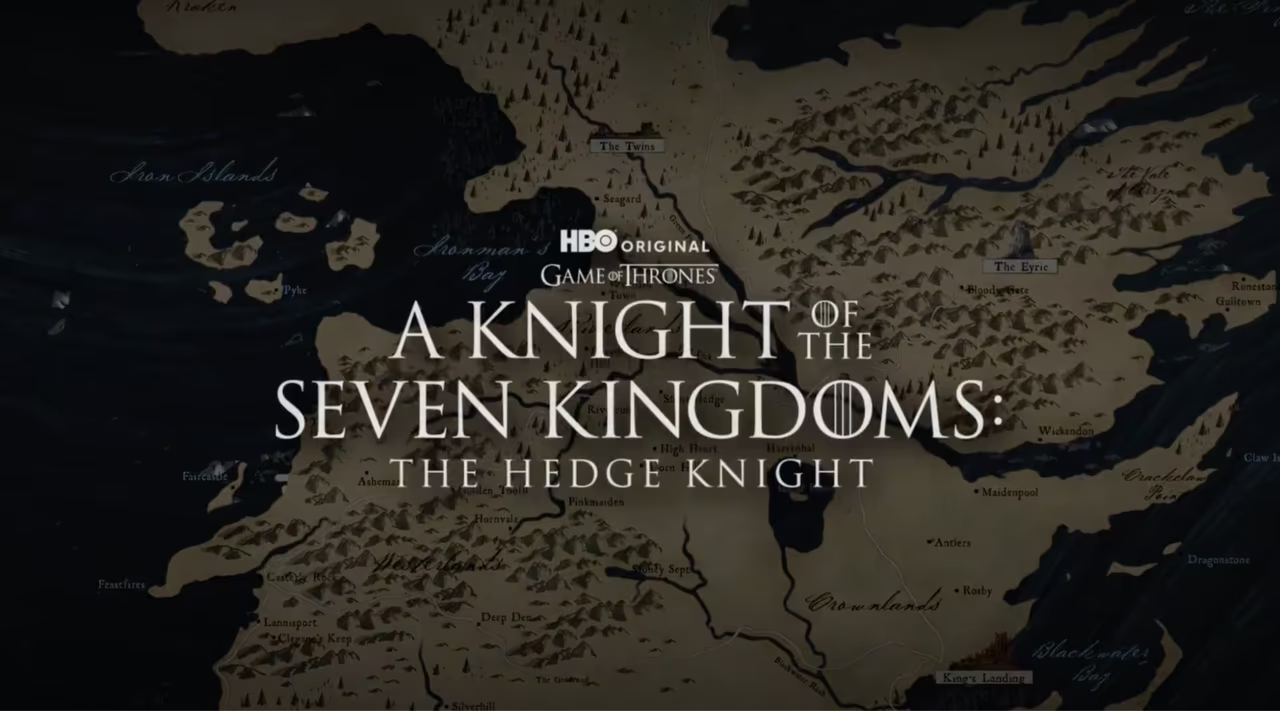
A Knight of the Seven Kingdoms arrives as one of the most unconventional entries ever produced within the Game of Thrones universe, deliberately distancing itself from the epic formulas that defined its predecessors. Rather than relying on sprawling maps, dynastic power struggles, or supernatural threats, the HBO series narrows its focus to an intimate, character-led narrative that unfolds almost entirely within the confines of a single tournament in Westeros. This shift in storytelling marks a significant evolution for the franchise and broadens its appeal to viewers who were previously resistant to high fantasy tropes.
The series is produced under the broader HBO umbrella, continuing the network’s investment in serialized prestige storytelling as seen in other franchise expansions available through platforms such as https://www.hbo.com y https://www.max.com, where the Game of Thrones catalog continues to draw sustained global viewership.
A grounded story in a familiar world
Set decades before the events of Game of Thrones, A Knight of the Seven Kingdoms follows Ser Duncan the Tall, known as Dunk, and his young squire Egg as they attempt to navigate the rigid social hierarchy of Westeros. Unlike the ruling houses that dominate earlier series, this story is told almost entirely from the perspective of commoners, offering a rare look at the everyday realities of a world usually depicted through the lens of power and privilege.
Although the Targaryen dynasty exists in the background, their presence serves more as social texture than narrative engine. The series uses their wealth and arrogance to highlight class divides rather than to fuel dynastic conflict, a contrast that reinforces the show’s smaller scale and more human tone. This narrative approach aligns closely with George R.R. Martin’s original Dunk and Egg novellas, which remain among the most accessible works in his bibliography, often discussed on platforms like https://georgerrmartin.com.
Comedy, restraint, and tonal reinvention
One of the defining characteristics of A Knight of the Seven Kingdoms is its comedic sensibility. While Westeros remains a harsh and unforgiving place, the series avoids the relentless brutality that characterized earlier adaptations. Episodes are shorter, pacing is brisk, and humor is woven organically into character interactions rather than used as spectacle.
The absence of dragons, magic, and large-scale warfare is not a limitation but a creative choice that allows character development to take center stage. This restraint results in a tone that feels more approachable and, in many ways, more emotionally resonant. The show demonstrates that tension and engagement in the Game of Thrones universe do not require escalating violence or mythic stakes, a realization that could influence future franchise projects developed under Warner Bros. Discovery, whose broader entertainment strategy can be explored at https://www.wbd.com.
Expanding the franchise without repeating it
With only six episodes, A Knight of the Seven Kingdoms functions almost like a theatrical chamber piece, confined in time and space yet rich in thematic depth. Its focus on honor, identity, and survival at the margins of power recontextualizes Westeros as a living society rather than a battleground for elites.
By proving that smaller stories can thrive within a massive franchise, the series opens the door to future adaptations that explore unexplored corners of Martin’s world. For audiences fatigued by epic fantasy excess, this reinvention offers a compelling alternative that remains faithful to the spirit of Westeros while redefining how its stories can be told.