Ancient Fire-Making Tools Suggest a Turning Point in Human Technology
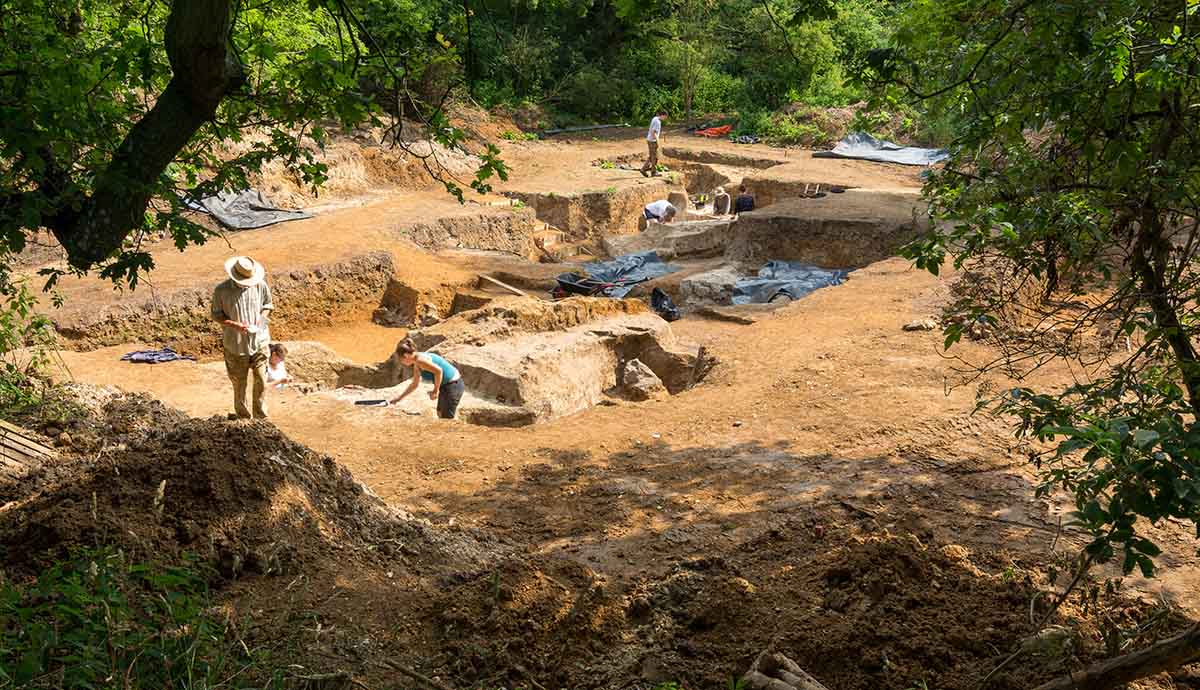
Archaeologists working in eastern Britain have uncovered a remarkable discovery: fire-making materials preserved at a site estimated to be 400,000 years old. This finding provides the earliest known evidence that early humans were not merely using naturally occurring flames but deliberately creating fire. The presence of iron pyrite fragments alongside fire-cracked flint handaxes suggests that these materials were intentionally transported to the location to strike sparks, marking a crucial technological breakthrough. The rarity of naturally occurring pyrite in the region, confirmed through a geological survey, supports the conclusion that early humans selected and carried stones suitable for generating sparks. Similar modern experiments explain how striking pyrite against flint can produce hot sparks capable of igniting dry plant matter, a method still demonstrated in many experimental archaeology programs available through institutions such as the Smithsonian National Museum of Natural History (https://naturalhistory.si.edu).
The discovery significantly pushes back the timeline for controlled fire-making by more than 350,000 years. It challenges earlier assumptions about how and when human ancestors developed the skills needed to initiate fire on demand. The site’s combination of tools, hearth-like features, and unusual mineral deposits suggests repeated use and deliberate technological behavior, characteristics that align with broader archaeological research on early human innovation from organizations such as Oxford Archaeology (https://oxfordarchaeology.com).
Social and Evolutionary Impact of Controlled Fire Creation
The ability to create fire from raw materials represents a major evolutionary milestone. Early humans who mastered fire gained access to expanded diets through the cooking of roots, meat, and other foods, resulting in increased caloric availability and potential changes in physiology. Fire also offered protection against predators and allowed habitation of colder regions, shaping migration patterns and survival strategies. Evening campfires provided time for social interaction, storytelling, and early forms of communication that may have supported the development of complex language structures. These behavioral shifts are central to anthropological discussions about community formation and cultural transmission, widely explored by research centers like The Leakey Foundation (https://leakeyfoundation.org).
Researchers believe that extended periods spent around controlled fires could have deepened cooperative behaviors and strengthened bonds among early groups. Discussions, teaching moments, or tool-making activities conducted after sunset would have increased group cohesion. The significance of these long nightly gatherings is emphasized by anthropologists who study the connections between firelight and social transformation.
Who Created These Early Fires? Neanderthals and Other Early Human Groups
While the exact hominin species responsible remains unknown, archaeological evidence from nearby sites suggests early Neanderthals may have occupied the region during the same period. A skull fragment discovered less than one hundred miles away indicates that Neanderthal populations were present in Britain around 400,000 years ago. This correlation has led many researchers to propose that early Neanderthals were likely the ones producing sparks with pyrite and flint at this newly identified site. However, it is also possible that other archaic human species, including early Homo sapiens, independently developed fire-making techniques.
Experts caution that fire-making was not necessarily a universally shared technology. Instead of a single discovery spreading quickly across continents, fire-making may have appeared and disappeared multiple times among different populations. Environmental factors, cultural traditions, and the availability of suitable materials likely influenced whether a specific group retained or lost the ability to initiate fire. This pattern aligns with current perspectives in evolutionary anthropology, which often highlight complex, non-linear technological trajectories similar to those documented by academic research organizations such as University College London’s Institute of Archaeology (https://www.ucl.ac.uk/archaeology).
The broader implication is that fire-making was not a straightforward technological progression but rather a fragmented series of discoveries occurring independently across regions. Some groups may have guarded the knowledge closely, while others might not have recognized its full potential. Over thousands of years, fire-making practices could have been learned, forgotten, re-invented, or exchanged as different populations migrated and interacted.
The newly uncovered materials from Britain expand the scientific understanding of early human ingenuity. They demonstrate that early humans possessed not only the physical tools but also the cognitive foresight to collect specific minerals, transport them across landscapes, and manipulate them purposefully to generate fire. This deeper appreciation of the complexity of early human behavior continues to shape ongoing archaeological investigations and opens avenues for further research into the origins of technology and social evolution.