For decades, scientists have estimated the age of dinosaurs by counting growth rings preserved inside fossilized bones, assuming that each ring represented a single year of life. This method, inspired by how tree rings reflect annual growth cycles, has shaped the understanding of dinosaur development, metabolism, and lifespan. However, new research suggests that this widely accepted approach may significantly overestimate the true age of many prehistoric species.
Recent studies conducted by paleobiologists in South Africa are now challenging this assumption by analyzing the skeletal growth of modern Nile crocodiles, one of the closest living relatives of dinosaurs. The findings reveal that growth rings can form more frequently than once per year, casting doubt on long-standing models used to calculate dinosaur age and growth rates.
By examining crocodile bones in detail, scientists are uncovering a more complex biological story—one that may dramatically reshape how researchers interpret fossil evidence and reconstruct the life histories of long-extinct animals.
Why Crocodiles Hold the Key to Understanding Dinosaur Growth
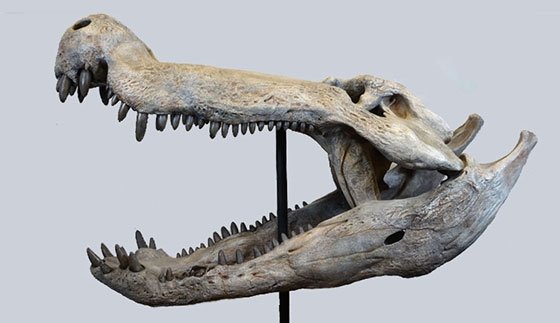
Because dinosaurs disappeared more than 65 million years ago, direct observation is impossible. To bridge this gap, scientists turn to modern species that share evolutionary roots with dinosaurs, especially birds and crocodilians. Crocodiles, in particular, offer a valuable model because their skeletal structure and growth patterns closely resemble those seen in dinosaur fossils.
Researchers studying Nile crocodiles found that the number of growth rings in young specimens often exceeded expectations. This discovery indicates that environmental stress, seasonal food availability, temperature changes, and metabolic fluctuations may produce multiple rings within a single year. If dinosaurs experienced similar biological responses, then many fossil specimens previously believed to be decades old may, in fact, have lived far shorter lives.
Institutions such as the and the have long emphasized comparative anatomy between modern reptiles and dinosaurs. These new findings reinforce the importance of studying living animals to refine interpretations of the fossil record and better understand evolutionary pathways.
Moreover, advances in imaging technology, detailed bone microstructure analysis, and biological modeling—frequently highlighted by platforms such as —allow scientists to examine skeletal growth patterns at unprecedented resolution. This combination of modern technology and comparative biology is revealing how much more dynamic and adaptable dinosaur physiology may have been than previously thought.
How Revised Growth Models Could Change Dinosaur Science
The implications of these discoveries extend far beyond adjusting age estimates. Dinosaur growth rates are deeply linked to theories about metabolism, behavior, reproductive strategies, and ecological dominance. If dinosaurs grew faster than once believed, they may have reached adult size in significantly less time, altering assumptions about survival strategies and competition in prehistoric ecosystems.
For example, earlier models suggested that a Tyrannosaurus rex required over 20 years to reach maturity. If multiple growth rings formed annually, that timeline could shrink dramatically, implying faster development, earlier reproduction, and potentially more aggressive competition for resources. Such insights could reshape interpretations of predator-prey dynamics, migration patterns, and extinction resilience.
Educational institutions like increasingly integrate these findings into their research and public exhibitions, highlighting how scientific understanding evolves as new data emerges. These updated growth models also influence how paleontologists interpret fossilized nests, juvenile skeletons, and mass death assemblages, providing a more nuanced view of dinosaur populations and their life cycles.
Beyond paleontology, this research contributes to broader evolutionary studies, shedding light on how environmental pressures shape growth strategies across millions of years. By understanding how modern reptiles respond biologically to climate and habitat changes, scientists gain valuable context for interpreting how ancient species may have adapted—or failed to adapt—to shifting prehistoric environments.
The Future of Dinosaur Age Research
The study of crocodile bone growth is opening a new chapter in dinosaur science, emphasizing caution in relying on simplistic biological assumptions. Researchers are now expanding their investigations to include other modern species and advanced laboratory techniques, seeking to build more accurate models of prehistoric growth.
As analytical tools continue to improve, future discoveries may reveal even greater complexity in dinosaur development, challenging long-held beliefs and transforming textbooks worldwide. The integration of evolutionary biology, environmental science, and high-resolution imaging promises to deepen understanding of one of Earth’s most fascinating chapters, offering fresh insight into how life once flourished on a planet very different from our own.
Through these groundbreaking approaches, scientists are not merely rewriting the age of dinosaurs—they are redefining how humanity understands the story of life itself.