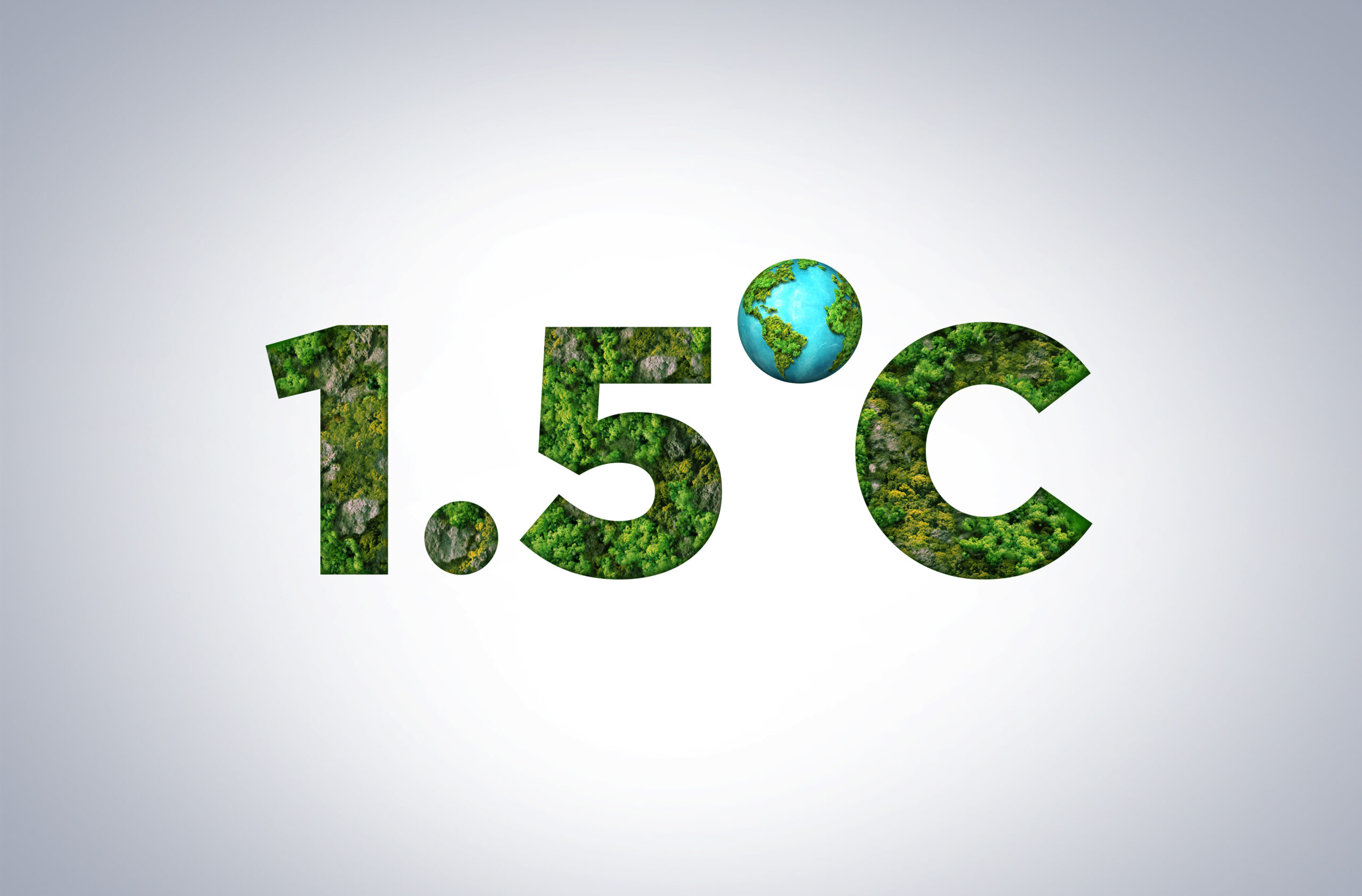
As global leaders enter the final days of COP30 in Brazil, negotiations are centered on how to curb warming, fund climate adaptation and determine what lies ahead as the planet moves toward temperatures that exceed the long-standing 1.5°C benchmark. For nearly a decade, this target has been considered the threshold to avoid the most catastrophic consequences of climate change. Yet updated climate assessments show that surpassing 1.5°C is now all but inevitable within the next decade, as current national commitments fall far short of the reductions required to keep warming within safe limits. If countries were to meet existing pledges, projections suggest temperatures could peak around 2.5°C by the end of the century. That increase threatens to set in motion profound, long-lasting shifts in Earth’s systems, many of which would unfold over decades and centuries and reshape human societies permanently.
The planet has already warmed 1.3°C above pre-industrial levels, contributing to intensified storms, extreme rainfall, prolonged heat waves and growing economic risks for coastal and agricultural regions. Scientific consensus now indicates that beyond 1.5°C, cascading feedback loops become increasingly likely, accelerating damage in ways that may be only partially reversible. These changes, known as climate tipping points, highlight how sensitive Earth’s systems are to every tenth of a degree of additional warming. They include the collapse of coral reef ecosystems, destabilization of major ice sheets in Greenland and West Antarctica, and the thawing of Arctic permafrost. Understanding these shifts is critical not only for policymakers but for communities, researchers and industries seeking long-term resilience strategies. Informational resources such as the U.S. Geological Survey (https://www.usgs.gov), NASA’s climate data at climate.nasa.gov (https://climate.nasa.gov), and global projections from the NOAA Climate Program Office have become essential tools for tracking these accelerating changes.
Coral Reefs on the Brink of Permanent Collapse
Coral reefs represent one of the earliest and most visible signs of climate destabilization. Although they cover a small fraction of the ocean floor, they support an estimated 25% of marine biodiversity and provide food, income and coastal protection for more than half a billion people. Rising ocean temperatures have triggered widespread bleaching events in recent decades, including global-scale bleaching in 2023–2024. When corals experience prolonged heat stress, they expel the algae that nourish them, turning the reefs stark white and leaving them vulnerable to mortality. While a single bleaching event does not guarantee collapse, repeated heat waves—such as those affecting the Great Barrier Reef and reefs in Florida—can eliminate an entire ecosystem within years.
Ocean acidification adds another layer of stress. As oceans absorb carbon dioxide from human activity, their pH decreases, reducing the ability of corals to build skeletons and recover from heat exposure. Studies suggest that if global temperatures surpass 2°C, as much as 99% of coral reefs may vanish. Already, human development, pollution and coastal degradation are compounding these threats, placing nearly half the world’s reefs in unlivable conditions by 2035. Researchers are racing to preserve these ecosystems by identifying potential refuge zones, selectively breeding heat-resilient coral species and improving coastal management strategies. Tools like the UN Environment Programme’s coral reef monitoring platform (https://www.unep.org) support global conservation efforts, although the window for protecting these ecosystems is rapidly narrowing.
Destabilizing Ice Sheets in Greenland and West Antarctica
The ice sheets of Greenland and West Antarctica contain nearly two-thirds of Earth’s freshwater and play a crucial role in stabilizing global sea levels. As the planet warms, both ice sheets are losing mass at accelerating rates. Scientists warn that if temperatures hover around or exceed 2°C, portions of these ice sheets could enter an irreversible decline. Unlike abrupt collapse, this process unfolds over centuries—similar to the gradual fall of a historic empire—yet the consequences will shape coastlines for generations.
Greenland has now experienced 29 consecutive years of net ice loss, with rare occurrences like rainfall at its highest elevation signaling advanced warming. Snow melt increasingly outpaces replenishment, pushing the ice sheet out of equilibrium. In West Antarctica, the situation is similarly alarming. A massive glacier comparable in size to Washington state is rapidly thinning and could break apart in coming decades. Should this glacier melt completely, global sea levels could rise roughly 2 feet. If the entire West Antarctic ice sheet were to disintegrate, sea levels could rise an estimated 12 feet, reshaping coastal cities, wetlands and economic hubs worldwide.
Although full collapse may take hundreds to more than a thousand years, the path forward depends heavily on how quickly global emissions decline. Slowing the pace of warming would give billions of coastal residents more time to adapt infrastructure, protect wetlands and manage relocation policies. Detailed projections available through NASA’s sea level rise portal (https://sealevel.nasa.gov) underscore how critical the next decade will be for long-term coastal planning.
Thawing Permafrost and the Release of Ancient Carbon
Permafrost, the permanently frozen ground covering vast expanses of the Arctic, is warming rapidly as global temperatures approach the 2°C threshold. Its thaw is already reshaping northern landscapes, ecosystems and communities. When permafrost melts, the ice within the soil turns to water and drains away, causing land to destabilize. Lakes can disappear within days as water escapes into the ground. Roads, buildings, pipelines and runways buckle as the earth beneath them sinks unevenly, creating infrastructure emergencies across Alaska, Canada and Siberia.
Thawing permafrost also carries global implications. For thousands of years, vast quantities of organic material—plants, animals and carbon-rich soils—have remained frozen. As temperatures rise, microbes become active, decomposing this material and releasing methane and carbon dioxide. This sets off a dangerous feedback loop: warming melts permafrost, releasing greenhouse gases, which in turn drive further warming. Satellite technology and improved Arctic monitoring efforts now allow scientists to measure these emissions more precisely, revealing that the thawing process is well underway and contributing to atmospheric greenhouse gases in real time.
How much carbon ultimately escapes depends on human choices. Rapid decarbonization, including shifts toward wind, solar and geothermal energy, can slow permafrost degradation and keep more carbon locked underground. International research networks and climate laboratories continue to emphasize that every fraction of a degree matters—and every reduction in emissions helps preserve Arctic stability. Continued collaboration across scientific institutions, governments and organizations remains essential for mitigating long-term climate risks.