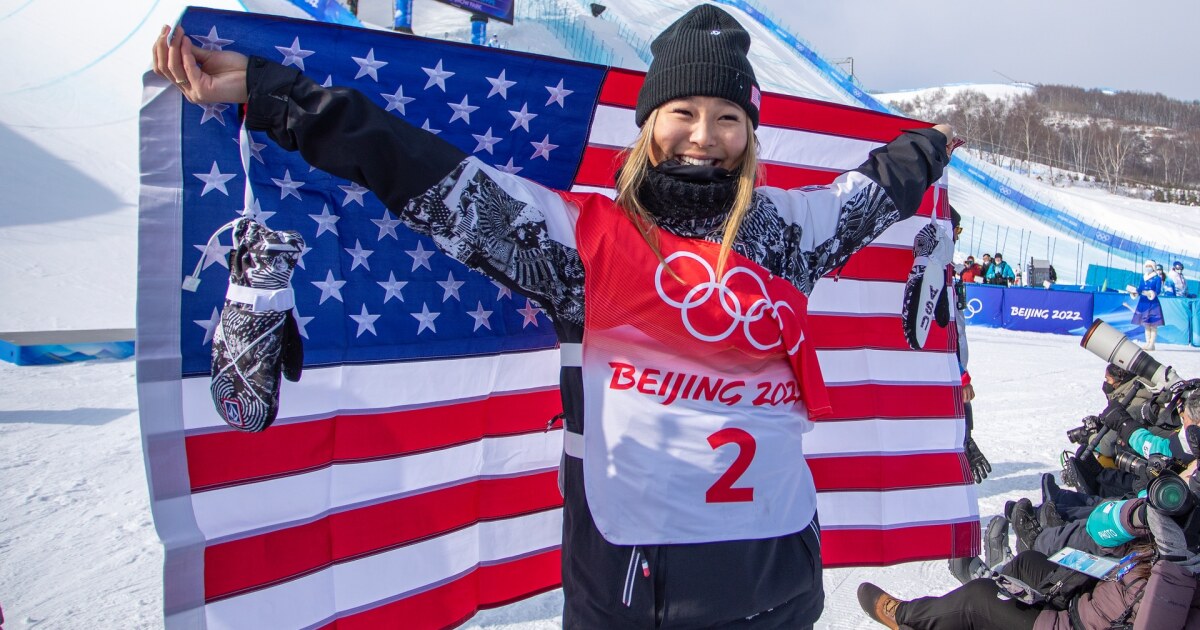
Chloe Kim is once again redefining excellence in Olympic snowboarding, entering the 2026 Winter Games in Milan with the chance to achieve a feat no athlete in her discipline has ever accomplished: winning three consecutive Olympic gold medals in the women’s halfpipe. At 25, Kim arrives with experience, confidence, and a remarkable ability to perform under pressure, even while managing a torn labrum in her shoulder. Her performance in qualifying demonstrated not only her elite technical skills but also her mental strength and composure on the world’s biggest stage.
Kim secured first place in the qualifying round with the only score above 90 among more than two dozen competitors, setting the tone for a final that could further cement her legacy. Her ability to deliver under intense scrutiny reflects years of elite training, strategic planning, and competitive maturity. As she prepares for another Olympic final, her journey continues to inspire athletes across the globe and reinforce the importance of resilience, preparation, and mental discipline.
Her career progression, from a teenage prodigy to one of the most accomplished snowboarders in Olympic history, aligns with broader developments in elite winter sports and high-performance training models promoted by organizations such as the U.S. Olympic & Paralympic Committee, which provides critical athlete support systems, medical services, and performance resources that help elite athletes thrive on the international stage.
A Career Built on Precision, Confidence and Evolution
Chloe Kim’s rise to prominence began at just 17 when she captured gold at the 2018 PyeongChang Winter Olympics, becoming the youngest woman ever to win an Olympic snowboard medal. Four years later, she defended her title in Beijing, demonstrating exceptional technical control, amplitude, and creativity. Now, in Milan, Kim stands on the verge of a historic three-peat, a benchmark that underscores her consistent excellence across nearly a decade of elite competition.
Her style has evolved alongside advancements in equipment technology, training science, and performance analytics. These improvements, supported by institutions such as the International Ski and Snowboard Federation, have elevated the global standard of competition. Kim’s routines now combine greater difficulty with refined execution, allowing her to maintain dominance even as younger competitors enter the field with increasingly complex trick combinations.
The American snowboarder credits her growth not only to physical training but also to mental development. She describes her current mindset as calm, focused, and intentional, a sharp contrast to the pressure-filled experiences of her early Olympic appearances. This evolution highlights how elite athletes benefit from long-term psychological conditioning, emotional regulation, and strategic performance planning.
Competing Through Injury and Managing Recovery
Kim’s journey to Milan was complicated by a torn labrum sustained during training in Switzerland, an injury that limited her preparation and temporarily cast doubt on her Olympic participation. Despite the setback, she returned to competition wearing a heavily taped shoulder brace, adjusting her riding mechanics to compensate for restricted movement.
Her medical support team, guided by best practices in sports medicine, has implemented a carefully monitored recovery plan. According to specialists affiliated with institutions such as the Mayo Clinic, labral injuries often require surgical intervention and extensive rehabilitation. Kim has confirmed that she will undergo surgery after the Games, prioritizing long-term health while remaining fully committed to her Olympic campaign.
This ability to compete at peak levels while injured underscores her resilience and elite conditioning. It also reflects broader trends in professional sports, where advanced rehabilitation techniques, biomechanical analysis, and injury prevention strategies play critical roles in athlete longevity and performance sustainability.
Olympic Pressure, Team Strength and Global Impact
Kim enters the final alongside fellow Americans Maddie Mastro and Bea Kim, reinforcing the depth of talent within the U.S. snowboarding program. Their collective presence highlights the success of developmental pipelines, coaching structures, and national investment in winter sports, as supported by platforms like Team USA, which promote athlete development from grassroots levels to elite international competition.
Beyond competition, Kim’s influence extends into cultural and social realms. As one of the most recognizable figures in winter sports, she has become a role model for young athletes worldwide, advocating confidence, authenticity, and perseverance. Her calm demeanor under Olympic pressure offers valuable lessons in emotional resilience and self-belief, qualities increasingly emphasized in elite athlete development programs.
Her presence at the Milan Games also aligns with the evolving role of athletes as global ambassadors. By competing at the highest level while managing injury and personal expectations, Kim continues to elevate the visibility of snowboarding and inspire broader conversations about mental health, performance balance, and long-term athlete care.
As the final approaches, Chloe Kim stands poised to rewrite Olympic history. Whether or not she secures a third gold medal, her journey through injury, pressure, and elite performance cements her legacy as one of the most influential snowboarders of her generation.