A Strategic Pivot Away From Beijing’s Periphery
The Trump administration’s foreign policy in recent months has signaled a decisive shift toward the Western Hemisphere, marked by bold actions and rhetoric that have redrawn Washington’s immediate priorities. From the forced removal of Venezuela’s leadership to renewed expressions of interest in Greenland, the administration has emphasized power projection closer to home rather than in East Asia, where China has long been viewed as the principal strategic challenger.
For Beijing, this geographic reorientation offers a mixed picture. On one level, the absence of direct U.S. military pressure in China’s immediate neighborhood has reduced short-term tension. On another, officials remain wary that Washington’s assertiveness reflects a broader willingness to intervene globally, potentially sidestepping international norms embodied by the United Nations. China’s leadership has historically been sensitive to regime security and external intervention, viewing such actions as precedents that could one day be turned against it.
Learning From Intervention While Guarding Core Interests
China’s caution is shaped by decades of experience observing U.S. military interventions. From the Korean War to post–Cold War conflicts, Beijing has studied how American power is deployed, often drawing tactical and technological lessons while benefiting indirectly when U.S. attention and resources were absorbed elsewhere. In this sense, Washington’s renewed activism in Latin America is seen as both a distraction and a reminder of U.S. capabilities.
At the same time, China has avoided confrontational responses to U.S. moves in Venezuela or Greenland, focusing instead on maintaining functional ties with the Trump administration. Preserving communication channels with the White House is widely viewed in Beijing as essential to preventing policies that could directly damage Chinese economic or security interests. Although instability in Venezuela complicates Chinese investment and energy ties, officials stress that Beijing’s engagement in Latin America is framed as economic cooperation rather than geopolitical rivalry.
Opportunity, Narrative, and the Question of a Grand Bargain
Trump’s emphasis on the Western Hemisphere has also strengthened China’s long-standing critique of U.S. foreign policy, reinforcing narratives that portray American interventions as driven by self-interest rather than universal values. This messaging resonates domestically and aligns with statements frequently echoed by the Chinese Ministry of Foreign Affairs, particularly as Washington downplays democracy and human rights concerns in favor of transactional diplomacy.
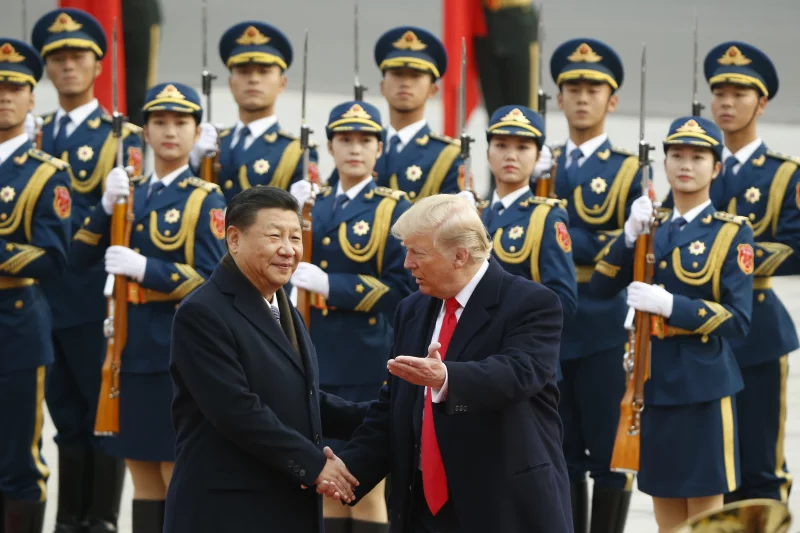
Some analysts see the contours of a potential U.S.-China understanding emerging from this dynamic. In theory, Beijing could limit the expansion of its economic and political footprint in the Western Hemisphere in exchange for greater U.S. accommodation of Chinese priorities in the Asia-Pacific, especially regarding Taiwan. Any such arrangement would inevitably intersect with longstanding U.S. legal commitments such as the Taiwan Relations Act, making the prospects uncertain. Even without a formal bargain, however, Trump’s interventionist posture has already reshaped the strategic environment in ways that China is carefully monitoring—seeking to minimize exposure while quietly capitalizing on the shifting balance of attention.