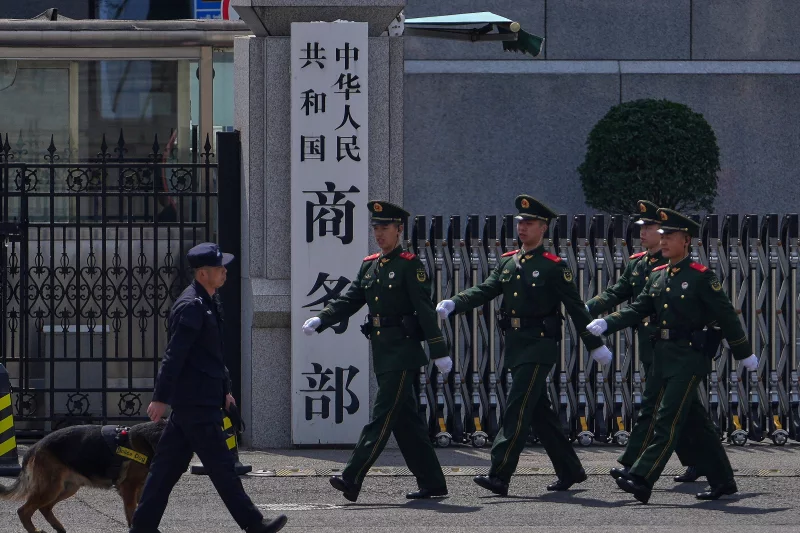
China has imposed new export restrictions on 40 Japanese entities, intensifying diplomatic and economic friction between the two countries. The measures, announced by the Ministry of Commerce of the People’s Republic of China , target organizations Beijing claims are contributing to Japan’s “remilitarization,” a charge that underscores widening strategic distrust in East Asia.
According to the directive, 20 Japanese companies have been placed on a strict export control list, while another 20 have been added to a watchlist requiring additional scrutiny. The controls focus on dual-use goods — products that can serve both civilian and military applications — and are framed by Chinese authorities as necessary to safeguard national security interests.
The announcement follows months of heightened tensions between Beijing and Tokyo, particularly after remarks by Japanese political leaders suggesting possible intervention should China use force against Taiwan. China views Taiwan as part of its sovereign territory and opposes any foreign statements perceived as supportive of the island’s autonomy.
Dual-Use Technology at the Center of Dispute
Entities placed on the export control list are barred from receiving dual-use items originating in China. These restrictions affect subsidiaries linked to major industrial groups, including Mitsubishi Heavy Industries, whose operations span shipbuilding, aerospace engines and maritime equipment. Companies tied to advanced manufacturing and electronics are also included.
Under the new rules, foreign organizations and individuals are prohibited from supplying China-origin dual-use goods to the listed firms. Ongoing transactions must cease immediately. Meanwhile, companies on the secondary watchlist face a more complex compliance process. Chinese exporters must now submit individual license applications, detailed risk assessments and written assurances that shipments will not be diverted for military use.
Among those named on the watchlist are subsidiaries connected to diversified manufacturers such as Kawasaki Heavy Industries, as well as technology and research institutions. The measures reflect Beijing’s stated concern that certain Japanese firms may play a role in defense-related supply chains.
Chinese authorities insist the restrictions are limited in scope and designed to target only specific entities rather than disrupt broader trade. Officials have emphasized that legitimate and law-abiding Japanese businesses should not be affected by the new controls.
Tokyo Responds With Formal Protest
Japan’s government has condemned the move as unacceptable and inconsistent with international trade norms. Officials from the Ministry of Foreign Affairs of Japan lodged a formal protest with China’s diplomatic representatives in Tokyo, arguing that the measures unfairly single out Japanese firms.
Japanese leaders have indicated they are reviewing the full implications of the restrictions, including whether key materials such as rare earth elements could be impacted. Some companies listed have signaled that their exposure to Chinese trade is limited, suggesting that the immediate commercial fallout may vary across sectors.
The dispute unfolds against the backdrop of shifting security policies in Japan, where recent electoral outcomes have strengthened voices advocating for expanded defense capabilities. Beijing has repeatedly criticized what it describes as Japan’s growing military ambitions, linking the export controls directly to those concerns.
As geopolitical competition deepens in the region, trade measures targeting advanced technology and dual-use goods are emerging as a prominent tool in the broader strategic contest between Asia’s two largest economies.