Growing Debate Over CDC’s New Vaccine Strategy
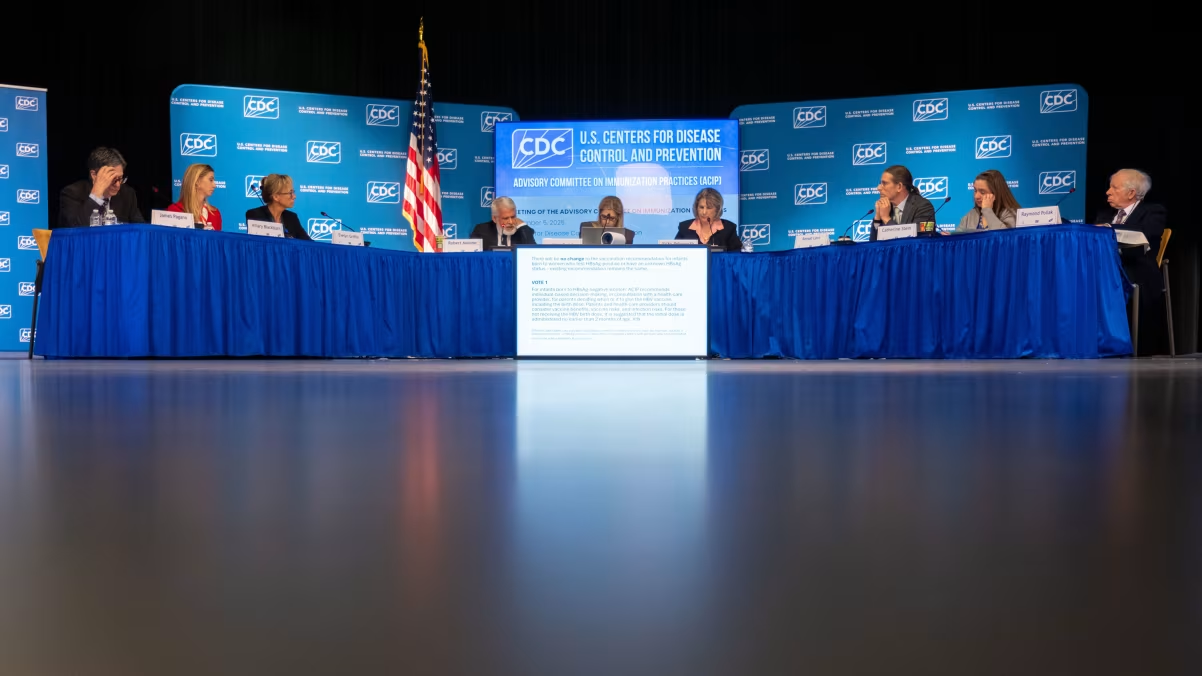
A major shift in U.S. public health policy has placed national attention on how newborns should be protected from hepatitis B. The recent decision by advisers to the U.S. Centers for Disease Control and Prevention (CDC) to step away from the longstanding recommendation of universal vaccination at birth has created widespread uncertainty among health-care providers. This change in the CDC’s newborn hepatitis B vaccine policy involves switching from universal to targeted vaccination. Targeted vaccination is based on prenatal blood tests.
Under the new recommendation, babies born to mothers who test positive for hepatitis B will continue to receive the vaccine immediately after birth. For mothers who test negative, parents are expected to make a joint decision with their health-care provider. This pertains to if and when their newborn should be vaccinated. Although insurance providers are still expected to cover the vaccine, experts worry that shifting responsibility to families could reduce vaccination rates overall.
Health-care systems across the United States are now reviewing what this change means for their prenatal and neonatal protocols. Organizations involved in maternal and child health stress that while testing remains a critical tool, an overreliance on it could recreate past vulnerabilities. The United States previously used a testing-dependent strategy in the 1980s and early 1990s. During this period, thousands of children contracted hepatitis B every year. This historical reference is central to today’s debate. Medical leaders examine how the new policy may influence infection rates. For additional context on how vaccination policies influence public health outcomes, readers can consult comprehensive medical guidelines available at CDC.gov.
Why Testing Alone May Leave Newborns Vulnerable
Medical experts emphasize that relying exclusively on prenatal testing introduces gaps that universal vaccination helped close decades ago. Although screening for hepatitis B during pregnancy is a universal component of prenatal care in the U.S., not all pregnant women obtain early or consistent medical services. Some individuals may not receive prenatal care at all. Meanwhile, others may be tested too late for proper intervention. In rare cases, the test result may be falsely negative, or a mother could contract hepatitis B after being tested. This leaves the newborn unprotected at birth, complicating the CDC’s newborn hepatitis B vaccine policy intentions.
Pediatric infectious disease specialists warn that this shift could send an unintended message to families that hepatitis B is no longer a concern for infants. Providers fear that many parents could misinterpret the policy as a sign that vaccination is optional or unnecessary. This concern is heightened by the nature of hepatitis B itself—a virus that often spreads silently, without symptoms. Because many infected individuals appear healthy, the virus can be transmitted unknowingly through blood or bodily fluids. More detailed information on hepatitis B transmission can be explored through resources at MayoClinic.org.
The risk of chronic infection is especially high in newborns and young children. Studies over the last several decades have shown that approximately 90% of infants infected with hepatitis B at birth develop chronic disease. Without the birth dose of the vaccine, infants may also face risks from other caregivers or household members who may be asymptomatic carriers. Even situations like sharing personal care items or exposure to open cuts can pose risks. Health advocates argue that universal newborn vaccination has served as a safety net. It protects babies not only from mother-to-child transmission but also from postnatal exposures that testing cannot prevent. The implications of not adhering to the traditional CDC policy are still being debated.
Medical Community Reacts as Policies Await Final Approval
The CDC’s updated recommendation will not become official until it receives final sign-off from the agency’s acting director. Although the CDC typically follows the guidance of its advisory panels, physicians and health organizations across the country are urging federal officials to reconsider maintaining universal vaccination at birth. Many hospitals and obstetric practices are already discussing whether additional testing later in pregnancy will be necessary. This is to compensate for potential gaps introduced by the new approach.
Professional associations representing pediatricians, obstetricians, and infectious disease specialists continue to recommend universal newborn vaccination. They advocate this regardless of the CDC advisory panel’s vote. They point to decades of data showing that when birth-dose vaccination became the national norm, cases of hepatitis B among infants plummeted by more than 99%. These results were unmatched by testing-only strategies. Organizations tracking infectious disease trends, such as WHO.int, have long emphasized that early childhood immunization is one of the most effective tools. This prevents chronic liver disease and cancer later in life.
As U.S. lawmakers, clinicians, and public health experts weigh next steps, families are left navigating increasingly complex guidance that varies by provider and state. Hospitals may revise educational materials for expectant parents. Additionally, pediatric practices may update their standard newborn protocols to maintain high rates of protection. Parents seeking vaccine schedules or broader immunization guidance can find detailed recommendations at HealthyChildren.org, an educational platform focused on pediatric health.
The coming months are likely to shape the long-term direction of hepatitis B prevention in the United States. Regardless of the final decision, medical experts agree on one point: protecting newborns from hepatitis B requires a strategy that is reliable, consistent, and easily understood by families. The debate now centers on whether the new testing-based approach can uphold the same level of protection. Universal vaccination has delivered this protection for more than three decades. It stood at the core of past CDC vaccine initiatives.