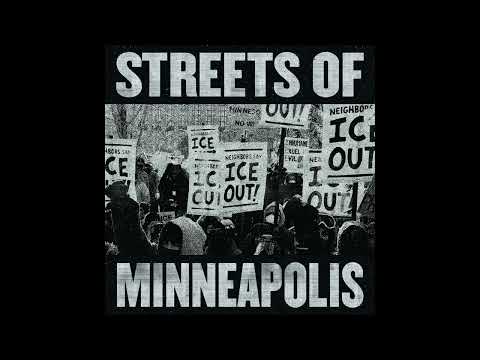
Bruce Springsteen has released a new politically driven song titled “Streets of Minneapolis,” positioning it as an immediate artistic response to escalating tensions surrounding federal immigration enforcement actions in the city. The track arrives amid renewed national debate over the role of Immigration and Customs Enforcement and the use of force by federal agents in urban communities. Known for using music as a vehicle for social commentary, Springsteen delivers a direct and confrontational narrative that reflects ongoing protests and public outrage tied to recent fatal shootings involving federal officers.
The song was written, recorded, and released within days, reinforcing its function as a real-time intervention rather than a retrospective reflection. Springsteen frames Minneapolis as a symbol of broader institutional conflict, using vivid imagery and explicit political language to highlight the lived experiences of immigrant communities affected by enforcement operations conducted under the authority of agencies such as Immigration and Customs Enforcement, whose mandate and tactics have increasingly come under scrutiny in recent years.
A Musical Response to Federal Enforcement Actions
“Streets of Minneapolis” unfolds as a full-band rock composition that draws heavily on Springsteen’s long-established sonic identity while sharpening its lyrical urgency. The song memorializes Renee Macklin Good and Alex Pretti, two civilians killed during encounters with federal agents, embedding their stories into verses that challenge official narratives and emphasize contradictions between eyewitness footage and initial government statements.
By referencing the role of Homeland Security leadership and senior political figures, the song situates these incidents within a wider policy framework shaped by immigration enforcement priorities. Public statements from federal officials following the shootings characterized the victims’ actions as threats to officer safety, yet subsequent internal reviews introduced alternative accounts of how events unfolded. This divergence has intensified public skepticism toward federal enforcement transparency, particularly in cities with significant immigrant populations such as Minneapolis.
The song’s rapid release underscores Springsteen’s intention to preserve these events in public memory, positioning music as a counterbalance to institutional messaging. His lyrics echo language commonly heard at demonstrations and community gatherings, where protesters have called for the removal of ICE operations from municipal jurisdictions. Similar demands have been voiced by local leaders, including Minneapolis Mayor Jacob Frey, who has publicly challenged the presence of federal agents in the city.
Minneapolis Protests and the National Immigration Debate
The release of “Streets of Minneapolis” coincides with sustained demonstrations against immigration enforcement policies that critics argue disproportionately impact vulnerable communities. Minneapolis has become a focal point in this debate, reflecting broader national tensions over federal authority, local governance, and civil liberties. Advocacy groups and civil rights organizations have increasingly monitored ICE activities, publishing data and policy analyses through platforms such as the American Civil Liberties Union, which has documented the human impact of enforcement practices across multiple states.
Springsteen’s song reinforces the idea that cultural figures can influence public discourse by amplifying voices that may otherwise remain marginalized. His framing of Minneapolis as a battleground between citizens and federal power resonates with ongoing legal and political challenges to immigration policy, including disputes over jurisdictional cooperation and the limits of federal intervention in local law enforcement.
Economic implications also intersect with this debate. Immigration enforcement strategies have measurable effects on local labor markets, healthcare systems, and public services, sectors that collectively represent billions of USD in annual economic activity. In cities like Minneapolis, where immigrant labor plays a significant role, aggressive enforcement can disrupt industries ranging from healthcare to construction, intensifying calls for policy reform.
Springsteen’s Longstanding Political Engagement Through Music
“Streets of Minneapolis” fits squarely within Bruce Springsteen’s decades-long tradition of politically engaged songwriting. Since the early stages of his career, he has explored themes of social justice, economic inequality, and government accountability. In recent years, his criticism of federal leadership has become more explicit, extending beyond lyrics into on-stage commentary and public appearances.
Earlier live releases and festival performances have featured direct condemnations of presidential administrations and senior advisors associated with restrictive immigration policies. By invoking figures such as Stephen Miller and Kristi Noem in his lyrics, Springsteen connects individual enforcement incidents to the architects of broader policy agendas. These references align his music with ongoing policy debates documented by institutions like the U.S. Department of Homeland Security, whose directives shape enforcement protocols nationwide.
The song also reinforces Springsteen’s role as a cultural historian, preserving moments of civic unrest through narrative storytelling. Rather than offering resolution, “Streets of Minneapolis” functions as an enduring record of dissent, ensuring that the names and circumstances surrounding these events remain embedded in the public consciousness. As immigration policy continues to evolve and federal enforcement remains a contested issue, Springsteen’s latest release adds a powerful artistic dimension to a debate that shows no sign of fading.