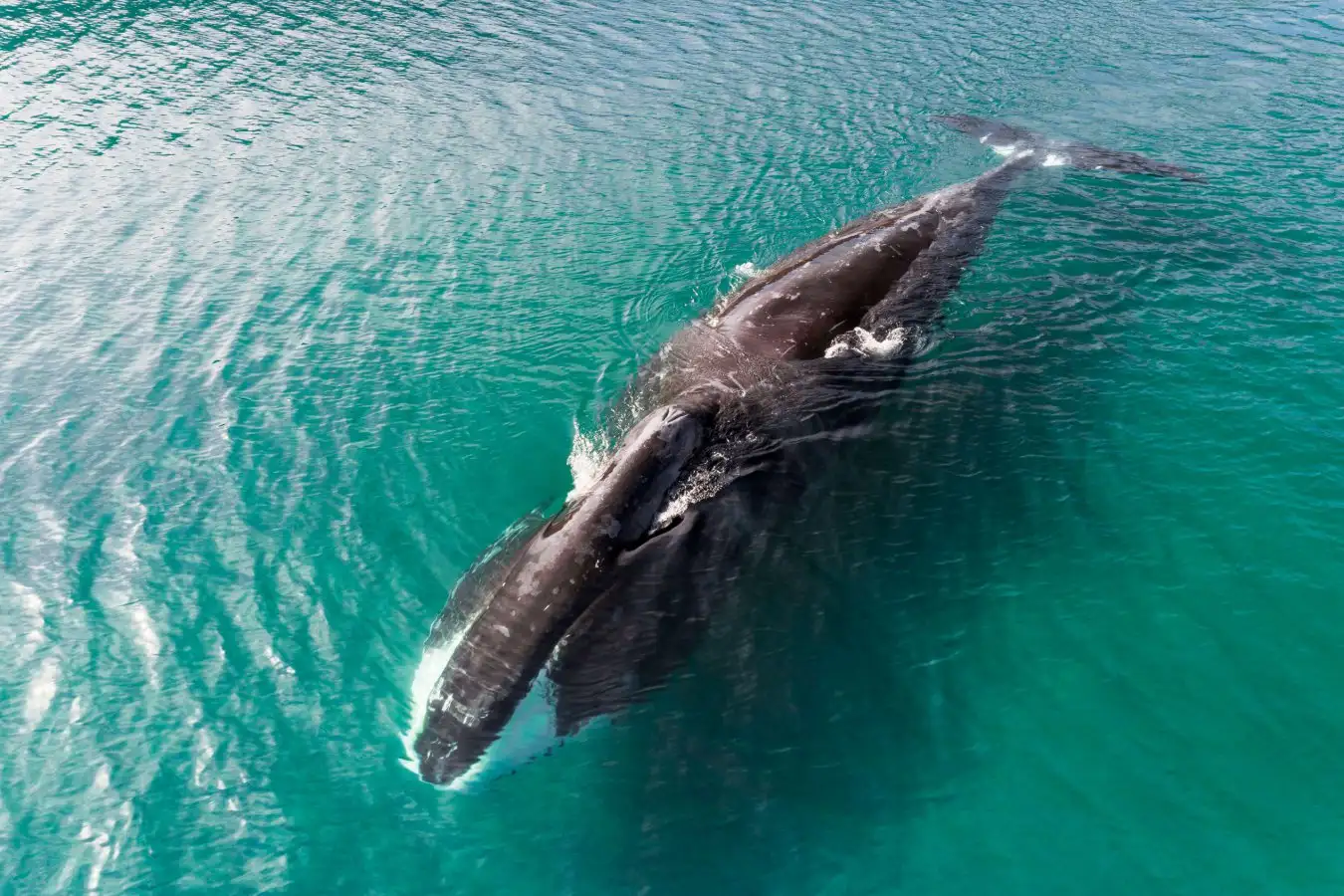
How a Long-Lived Whale Became a New Clue in Cancer Resistance Research
New investigations into the bowhead whale, one of the longest-living mammals on Earth, are offering scientists an unexpected blueprint. It is for strengthening human resistance to cancer. These whales routinely surpass 200 years of age and survive extreme Arctic environments. They maintain unusually stable cellular function despite their enormous size. Their biology challenges longstanding assumptions in cancer science. It also deepens the mystery behind why massive creatures with billions more cells than humans are not overwhelmed by malignant growth.
This contradiction, known in scientific circles as Peto’s paradox, has pushed researchers to analyze interactions. They look at how longevity, body mass, and cellular homeostasis interact in species that seem to defy basic evolutionary logic. As part of this exploration, scientists have turned to extensive oncology datasets from the National Cancer Institute. They also use genome-mapping resources from the National Human Genome Research Institute. Additionally, they rely on cancer-related biological data curated by the World Health Organization. These scientific platforms have helped establish a broader context for interpreting findings from bowhead whale tissue samples. They assess their potential implications for human health.
Exceptional DNA Repair Capabilities That Outperform Human Cells
The most striking trait uncovered in bowhead cells is their extraordinary efficiency in repairing damaged DNA. This is especially true for double-strand breaks that are typically precursors to genomic instability. Human cells possess multiple repair pathways that stabilize DNA integrity. Yet, the bowhead whale appears to execute these processes with dramatically higher fidelity. This efficiency prevents the accumulation of dangerous mutations over decades. Much of this resilience is linked to an unusually abundant protein known as CIRBP. It supports rapid and accurate repair before cells reach a critical failure point. Rather than relying primarily on eliminating precancerous cells, as elephants do with their expanded p53 gene copies, bowhead whales emphasize preservation and maintenance.
This strategy requires significant cellular investment but allows tissues to withstand centuries of environmental stress. Studies from comparative oncology are guided by molecular and genomic resources indexed through the National Center for Biotechnology Information. They reveal that CIRBP’s influence extends beyond longevity. It affects mechanisms that govern cellular response to cold, radiation, and oxidative stress. Experiments show that when human cells are engineered to overproduce this protein, their repair rates improve substantially. This reduces mutation accumulation and opens the door to potential therapeutic approaches inspired by whale biology.
Why Whale Biology Could Lead to Future Medical Applications
Beyond its scientific novelty, bowhead whale biology could help guide the next generation of medical innovation. Understanding how these mammals maintain genomic stability for centuries opens possibilities for clinical tools. These tools are designed to reinforce human DNA repair systems and delay age-related cellular decline. They also enhance resistance to carcinogenic damage. Researchers emphasize that translating these traits into human therapies will take time due to the complexities. This is particularly due to adapting mechanisms that evolved in a cold-adapted marine species. However, the potential medical impact continues to drive interest across global research institutions.
Conservation groups and marine biology networks, such as those documenting Arctic ecosystems through NOAA Fisheries, argue that studying long-lived species offers both biomedical value and ecological importance. As scientists further unravel the bowhead whale’s molecular strategies, new pathways may emerge. These pathways may prevent cancer and improve human health. The species serves as a powerful reminder that evolution has produced far more diverse and effective anti-cancer defenses than those currently understood in modern medicine. Some of the most profound breakthroughs may still lie hidden in the natural world.