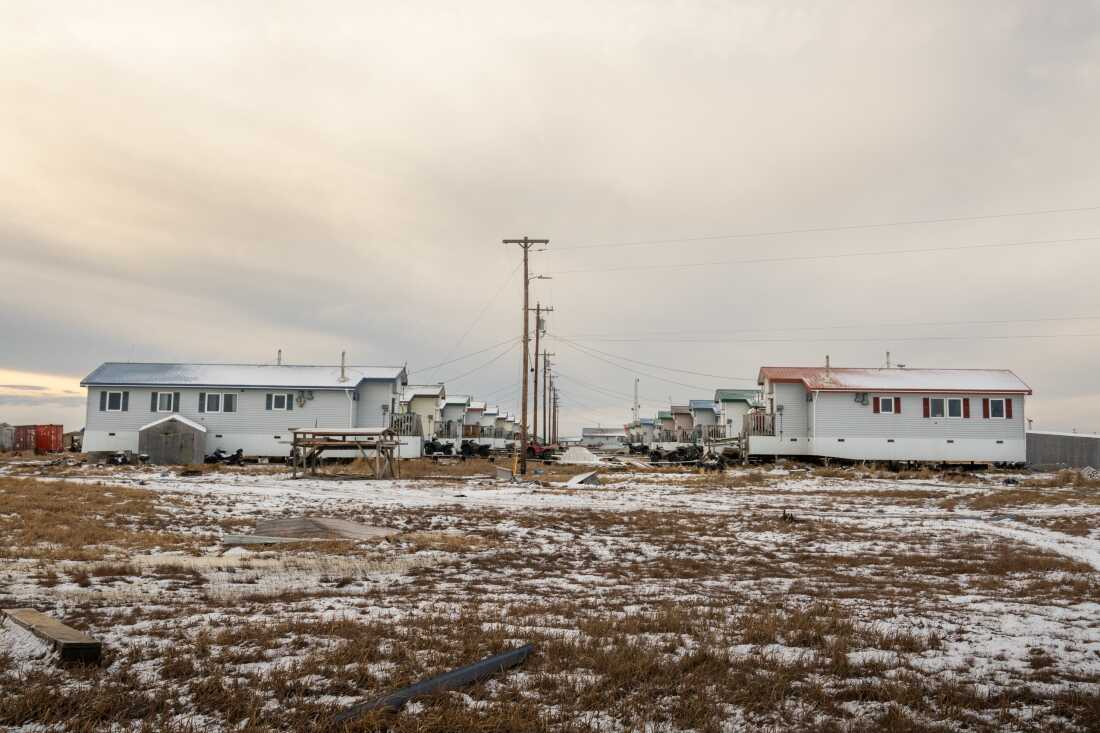
Residents of Kwigillingok, a remote Alaska Native village located along the southwestern coast of the state, are confronting a turning point after destructive flooding displaced dozens of families and damaged large portions of the community. The village, home to roughly 400 people, has experienced erosion and seasonal flooding for decades, but the most recent storm caused unprecedented damage, intensifying long-standing concerns about safety, housing stability, and long-term survival on vulnerable tundra land.
Many homes in Kwigillingok are built directly on wooden foundations placed atop frozen ground that is no longer stable. As permafrost continues to thaw, structures become increasingly susceptible to movement, collapse, and flooding. Federal climate assessments published by agencies such as the National Oceanic and Atmospheric Administration show that Alaska is warming at more than twice the global average, increasing the likelihood of destructive storm surges and coastal inundation (https://www.noaa.gov).
Community leaders say the storm accelerated conversations that have been ongoing for years. Local officials have repeatedly raised concerns with state and federal agencies about the lack of long-term funding mechanisms to support planned relocation, yet progress has been slow.
Climate Change and Infrastructure Vulnerability
The effects of climate change in western Alaska extend beyond rising water levels. Thawing permafrost destabilizes homes, boardwalks, fuel storage systems, and water infrastructure, creating compounding risks for public health and safety. According to data from the U.S. Environmental Protection Agency, permafrost degradation increases the likelihood of contamination in water systems and disrupts wastewater treatment in remote communities (https://www.epa.gov).
In Kwigillingok, access is limited to bush planes and seasonal travel routes, making emergency response more difficult during extreme weather events. Unlike urban areas, there are no road networks to facilitate rapid evacuation or infrastructure repair. When flooding occurs, residents often rely on temporary shelters or relocate to regional hubs such as Bethel or Anchorage, hundreds of miles away.
These relocations come with social costs. Community members warn that prolonged displacement threatens the transmission of the Yup’ik language, subsistence fishing practices, and cultural traditions rooted in the land. Cultural preservation has become a central argument in relocation planning, emphasizing the importance of keeping the community intact rather than dispersing residents permanently.
Challenges of Relocating Entire Communities
Relocating an entire village presents significant logistical and financial challenges. Previous relocation efforts involving Indigenous communities have required investments exceeding $150 million, largely due to the need for housing, schools, power generation, water systems, and transportation infrastructure. The Government Accountability Office has noted that no single federal agency is responsible for coordinating such relocations, often forcing communities to navigate complex grant systems independently (https://www.gao.gov).
In Alaska, state agencies such as the Alaska Department of Commerce, Community, and Economic Development have acknowledged the growing number of at-risk villages but face budget constraints and competing priorities (https://www.commerce.alaska.gov). Without dedicated funding streams, communities like Kwigillingok remain in a planning phase with limited ability to act.
Despite these obstacles, residents continue to advocate for relocation to higher ground further inland, arguing that proactive investment would ultimately reduce emergency response costs and prevent future loss of life and property.
Looking Ahead for Kwigillingok
Local leaders hope the scale of recent flooding will prompt renewed attention from policymakers. Emergency declarations can unlock short-term disaster assistance through programs administered by the Federal Emergency Management Agency, but long-term relocation funding remains uncertain (https://www.fema.gov).
As climate impacts intensify, Kwigillingok’s situation reflects a broader challenge facing Indigenous and rural communities across Alaska. The decisions made in the coming years will shape not only the physical safety of residents but also the preservation of cultural identity, language, and community cohesion in a rapidly changing environment.