The rapid spread of AI-generated images has intensified public confusion following the fatal shooting of 37-year-old Renee Good in Minneapolis, highlighting how artificial intelligence tools can distort real-world events and escalate misinformation within hours. In the aftermath of the incident, social media platforms became flooded with altered visuals that misrepresented the identity of the federal agent involved, amplifying public outrage and misdirected accusations.
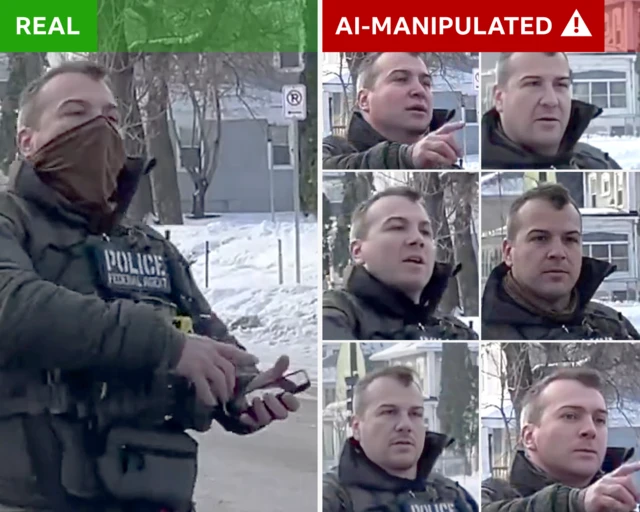
Eyewitness footage initially showed the Immigration and Customs Enforcement agent wearing a face covering during the confrontation. However, shortly after the shooting, images began circulating online that appeared to show the agent’s uncovered face. These images were widely shared and treated as authentic by users, despite lacking any verified basis. The altered visuals were reportedly generated through AI-based image synthesis, a technology increasingly accessible to the public through generative platforms.
How AI Image Generation Distorts Reality
AI-generated imagery relies on predictive algorithms that reconstruct facial features rather than restoring real visual data. This process can create highly convincing images that appear realistic but do not represent actual individuals. As generative AI continues to evolve, its misuse in sensitive situations has raised alarms among digital security experts and civil rights advocates.
The growing availability of image-generation tools has made it easier to manipulate visual narratives surrounding law enforcement actions. Agencies such as the U.S. Department of Justice have previously warned about the dangers of digital misinformation interfering with investigations and public safety, particularly when false identities are circulated online.
False Identifications and Online Harassment
As the AI-generated images spread, an unverified name became associated with the shooting, leading to harassment of unrelated individuals across multiple states. At least two people sharing the same name were subjected to online attacks despite having no connection to the incident or to federal law enforcement.
This phenomenon underscores how misinformation can quickly spill into real-world harm, especially when social media algorithms prioritize engagement over accuracy. The misuse of AI-generated visuals has become a growing concern for platforms attempting to moderate misleading content, as outlined in ongoing discussions by organizations such as the Electronic Frontier Foundation.
Challenges for Public Trust and Law Enforcement
The confusion surrounding the shooting has complicated public understanding of the incident and placed additional pressure on law enforcement agencies to address false narratives. Immigration enforcement agencies, including U.S. Immigration and Customs Enforcement, have faced increased scrutiny as digitally altered content circulates faster than official confirmations.
As AI tools continue to blur the line between authentic and fabricated evidence, the need for digital literacy and verification has become increasingly urgent. Government institutions and technology watchdogs emphasize that visual clarity does not guarantee factual accuracy, particularly when images are generated rather than documented.