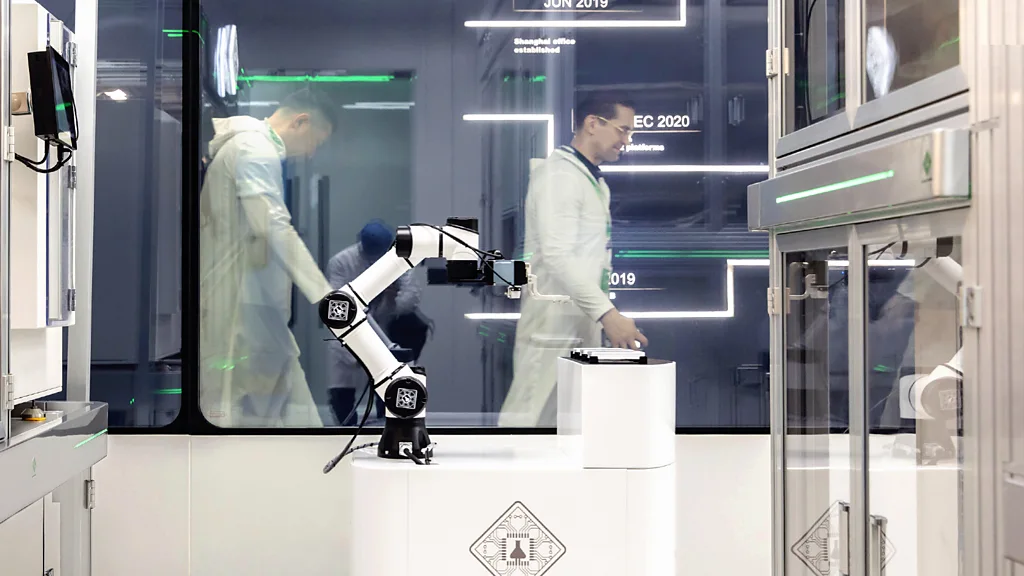
Artificial intelligence is rapidly reshaping the field of medicine, enabling scientists to search for new treatments at speeds that would have seemed impossible only a decade ago. By analyzing vast libraries of chemical compounds and biological data, AI systems are helping researchers identify potential drugs for diseases that were once considered nearly impossible to treat.
The impact is particularly significant in areas where traditional pharmaceutical research has struggled. Drug-resistant infections, rare genetic disorders, and complex neurological diseases have long posed challenges for scientists due to the immense complexity involved in discovering effective therapies. Advances in machine learning and computational modeling are now allowing researchers to explore billions of potential molecules in a fraction of the time previously required.
Health organizations monitoring global disease trends, including the World Health Organization, have warned that antibiotic resistance alone threatens to reverse decades of medical progress if new treatments are not developed quickly.
Fighting Antibiotic Resistance With AI
For decades, antibiotics have been among the most powerful tools available to modern medicine. However, bacteria have gradually evolved resistance to many of these drugs, making once-treatable infections increasingly dangerous.
Researchers estimate that more than 1.1 million people die each year due to infections caused by drug-resistant bacteria. Without major scientific breakthroughs, projections suggest that the annual death toll could exceed eight million by 2050.
Developing new antibiotics has traditionally been an extremely slow and costly process. Pharmaceutical companies often face high research expenses with limited financial returns, which has contributed to declining investment in antibiotic discovery.
Artificial intelligence is beginning to change this dynamic. Scientists can now train machine learning models to recognize the chemical patterns that make certain compounds effective at killing bacteria. Once trained, these models can scan enormous databases of molecules and predict which ones may function as potential antibiotics.
Research teams working with advanced AI tools have already screened tens of millions of chemical structures, identifying compounds capable of targeting highly resistant pathogens. Some of these experimental molecules appear to attack bacteria in entirely new ways, raising hopes that they could form a new class of antibiotics able to bypass existing resistance mechanisms.
Institutions advancing these technologies include laboratories connected with the Massachusetts Institute of Technology, where scientists have used AI systems to generate and test thousands of new chemical compounds designed to combat resistant infections.
AI Targets Complex Diseases Like Parkinson’s
Artificial intelligence is also being applied to diseases that have long resisted traditional drug development, including neurodegenerative disorders such as Parkinson’s disease. More than 10 million people worldwide are currently living with Parkinson’s, according to estimates compiled by the Parkinson’s Foundation.
The condition was first described in the early nineteenth century, yet scientists still do not fully understand the underlying biological mechanisms that trigger the disease. Current treatments mainly focus on reducing symptoms rather than stopping the progression of neurological damage.
AI is helping researchers explore the biological processes involved in Parkinson’s by analyzing the behavior of proteins that accumulate in the brain. These proteins form abnormal clusters known as Lewy bodies, which are believed to contribute to the degeneration of nerve cells.
Using machine learning, scientists can simulate how these proteins interact and identify small molecules that might interfere with their harmful buildup. This computational approach dramatically reduces the number of candidate compounds that must be tested in laboratory experiments.
Researchers report that AI-guided methods can screen billions of molecules in just a few days, while traditional laboratory techniques might examine only a few million over several months at significantly higher cost.
Repurposing Existing Drugs for New Treatments
Artificial intelligence is also transforming another promising strategy in medicine: drug repurposing. Instead of developing entirely new medications, scientists analyze existing drugs that have already passed safety testing to see whether they might treat other conditions.
This approach has become particularly valuable for rare diseases, many of which receive limited attention from pharmaceutical companies because the number of patients is relatively small.
Machine learning models can compare thousands of approved medications with thousands of diseases, searching for hidden biological connections that may reveal unexpected therapeutic benefits. Research teams using this approach have identified thousands of potential drug–disease matches that could eventually lead to new treatments.
Some projects focus on modeling diseases at the cellular level using AI simulations. Scientists create digital systems that mimic how healthy cells gradually change as a disease progresses. These virtual models allow researchers to test how different medications might influence the course of an illness before conducting expensive laboratory experiments.
Organizations promoting innovative medical research, such as the National Institutes of Health, have highlighted the growing importance of computational tools in accelerating drug discovery and improving treatment options for conditions that have historically lacked effective therapies.
As artificial intelligence continues to evolve, researchers are expanding its role in the earliest stages of medical discovery, identifying new drug targets, designing novel compounds, and revealing previously overlooked treatment possibilities across thousands of diseases.