As federal subsidies that lower premiums for Affordable Care Act plans approach their 2025 expiration date, a renewed policy battle in the Senate has left millions of Americans watching closely for signs of relief. The chamber failed to advance two competing health care proposals, deepening uncertainty over how lawmakers intend to address the expected surge in insurance costs once the existing financial support runs out. With stakeholders urging Congress to act before premiums rise sharply, the debate has grown into a defining test of how both parties plan to manage long-term affordability in the health insurance marketplace.
Partisan Divisions Shape Senate Failure on Health Care Proposals
The Senate considered two sharply different approaches, each requiring 60 votes to advance. The Republican-backed proposal received 51 votes, falling short after critics argued that the plan would offer limited support for families facing rising deductibles and premium increases. The measure would have authorized annual contributions of up to $1,500 into health savings accounts for qualifying households, yet it excluded the extension of ACA premium tax credits and restricted how the funds could be used. Deductibles on many marketplace plans often exceed $7,000, leaving many families concerned that new savings mechanisms would not offset growing out-of-pocket burdens.
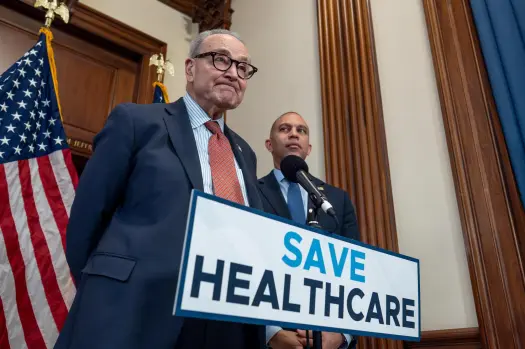
Democrats rejected the proposal, highlighting provisions tied to abortion access and gender-affirming care that they argued would add new limits for patients seeking coverage. They reiterated that any long-term health care plan must address premium spikes expected once subsidies expire. As partisan divisions intensified, the political strain of balancing affordability, coverage guarantees and regulatory constraints became more apparent across both parties.
Democratic Extension Effort Fails Amid GOP Concerns Over Oversight
In response to the anticipated lapse in subsidies, Democrats introduced a measure to extend the financial assistance for three years. The proposal reflected growing pressure from consumer advocates and organizations focused on lowering national health expenditures. Although four Republicans crossed party lines to support the measure, the bill ultimately failed with 51 votes, prompting renewed concern among marketplace enrollees who rely on subsidized plans.
Republican lawmakers emphasized that extending subsidies without structural oversight could open the door to what they described as inefficiencies in current marketplace systems. The debate revived longstanding discussions about health spending controls, eligibility requirements and potential revisions to the ACA framework. Legislators in both chambers have acknowledged that premium affordability remains a top concern for households comparing marketplace plans through resources such as Healthcare.gov, employer-sponsored coverage details on USA.gov, and state-level insurance guidance offered by the Centers for Medicare & Medicaid Services (CMS).
Competing House Strategies Highlight Broader GOP Divide on Health Care Costs
Attention has now shifted to the House of Representatives, where Republican leaders have signaled an interest in voting on new health care proposals designed to address rising premiums. However, the party remains divided on how far revisions to the Affordable Care Act should go. Some lawmakers argue that allowing subsidies to expire would force more systemic reforms, while others have joined bipartisan efforts intended to cushion consumers from abrupt cost increases.
One House proposal backed by members of both parties would extend ACA premium credits for two years while adjusting eligibility rules, reflecting a compromise-oriented approach. Another bipartisan plan seeks a one-year extension and has gathered support from lawmakers interested in avoiding disruptive coverage changes. Both proposals have advanced through a discharge petition, a rarely used parliamentary maneuver that allows bills to reach the floor without leadership approval if enough signatures are collected. As negotiations evolve, consumers following updates from federal agencies such as the Department of Health and Human Services (HHS) remain uncertain about how pricing, income requirements and subsidy structures may shift ahead of the 2026 coverage year.
The ongoing debate underscores how far Congress remains from reaching consensus on long-term health care affordability. With premium increases expected to hit families across income brackets, the legislative path forward will likely shape the future of marketplace participation, private insurance stability and the broader national conversation on cost control.