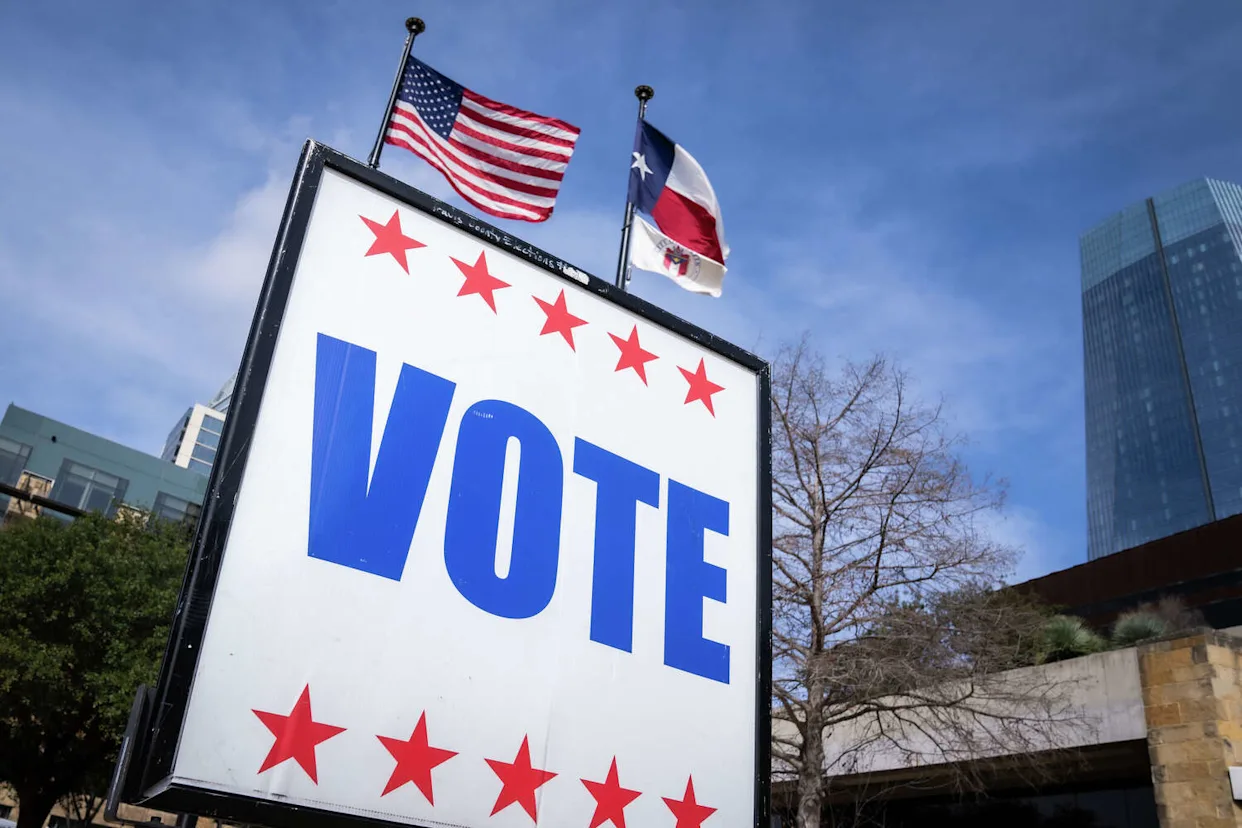
The first primaries of the 2026 midterm election cycle have concluded in Texas and North Carolina, offering an early glimpse into the political dynamics that could determine control of Congress. While some results remain pending certification, the outcomes already signal contentious Senate battles, growing vulnerability among incumbents, and renewed debate over voting procedures.
The contests in both states are especially significant because they involve competitive Senate races and House districts that could influence the balance of power in Washington. With control of the <a href=”https://www.congress.gov”>U.S. Congress</a> at stake, both parties are assessing strategy, messaging, and financial commitments for the months ahead.
Texas GOP Senate Primary Heads to Runoff
In Texas, the Republican Senate primary between Sen. John Cornyn, Attorney General Ken Paxton, and Rep. Wesley Hunt failed to produce a candidate with more than 50% of the vote, triggering a runoff scheduled for May 26. The three-way contest has already become one of the most expensive Senate primaries in history, with nearly $100 million spent on the Republican side alone. Analysts anticipate that an additional $100 million could be invested before the runoff concludes.
The extended battle highlights ideological tensions within the Republican Party. The race has been characterized by a divide between establishment conservatives and candidates aligned with former President <a href=”https://www.whitehouse.gov”>Donald Trump</a>’s political movement. Although Trump refrained from endorsing a candidate before the initial vote, his potential involvement in the runoff could reshape the outcome and influence party unity heading into the general election.
Meanwhile, mid-decade redistricting efforts in Texas have reduced the number of competitive House districts, according to election analysts. Fewer competitive seats could intensify the importance of statewide races such as this Senate contest.
Democrats Test Their Strategy in Texas and North Carolina
On the Democratic side in Texas, state Rep. James Talarico secured the party’s nomination after defeating U.S. Rep. Jasmine Crockett. The result sets up a challenging general election in a state where Democrats have not won a statewide race since 1994. Party leaders acknowledge that victory would require strong voter turnout, unified messaging, and outreach to moderates without losing enthusiasm among progressive voters.
The Texas primary also occurred amid broader discussions about Latino voter engagement and partisan shifts following gains by Republicans in 2024. Political observers are watching closely to see whether Democrats can regain ground in urban and suburban regions.
In North Carolina, the Senate matchup is now set following the retirement of Sen. Thom Tillis. Former Gov. Roy Cooper won the Democratic nomination and will face Republican candidate Michael Whatley, a former chair of the Republican National Committee. The open seat is one of the most closely watched races in the country.
Cooper’s campaign emphasizes affordability and independence, positioning him as willing to collaborate with the administration when beneficial to North Carolina while maintaining distance when necessary. The race unfolds in a state that has leaned Republican in recent presidential elections but remains competitive in statewide contests. Additional information about North Carolina’s election process is available through the <a href=”https://www.ncsbe.gov”>North Carolina State Board of Elections</a>.
Incumbent Challenges and Voting Disputes
Beyond the headline Senate races, the primaries revealed signs of vulnerability among incumbents. Several officeholders faced unexpectedly tight margins or advanced to runoffs. Texas Rep. Dan Crenshaw lost his primary, while Rep. Tony Gonzales entered a runoff in a closely contested race. In North Carolina, Democratic Rep. Valerie Foushee faced a narrow contest, underscoring a volatile political environment.
High reelection rates have traditionally insulated incumbents, but voter dissatisfaction and partisan polarization appear to be reshaping that dynamic. Data from <a href=”https://ballotpedia.org”>Ballotpedia</a> show that incumbents historically win at high rates, yet early 2026 results suggest a less predictable cycle.
Election administration issues also surfaced on primary day. In Dallas County, confusion arose after local Republican officials required voters to cast ballots in their assigned precincts instead of countywide polling locations. Hundreds of voters initially arrived at incorrect sites. A county judge extended polling hours, and subsequent legal action required ballots cast after the original closing time to be separated.
The episode reignited concerns about voter access and election management, especially in close races. As campaigns intensify and turnout efforts expand, disputes over procedures could continue to shape the political narrative leading into November 2026.